500 NEWS

Winter safaris at Tau Game Lodge in the Madikwe Game Reserve are often described as the most prolific, especially when it comes to game viewing.

The winter bush is lower in density, therefore making for easier game viewing. Not that spotting game in this reserve is ever a problem. However, with animals also less inclined to hide from a baking sun, the game sightings and convivial hospitality have guests from across the planet return for more of the same, often.

This resulted in Tau being rated outstanding by RoomsForAfrica travellers for 2018 in the prestigious Travellers Award.

Naturally, early morning and late afternoon safaris can get a little nippy but this is where the cozy safari blankets, delicious hot toddies and snacks make for unforgettable experiences.

Familiar with the habits and quirks of every species of game and bird spotted along the way, the rangers are informative about nature’s medicine chest in the bush. They also dine with their guests, which makes for captivating conversations at dinner.

The natural sounds of the bush, from a lion’s roar to the barking of a jackal or the trumpeting of an elephant, will keep you enthralled. By nightfall, you would have shed the last of your city stress or travel fatigue. Your final thoughts before drifting into slumber could include how bright the stars are and how big the sky is in this bushveld paradise.

The lodge is enclosed within the reserve, resulting in the humans being subtly fenced in, while game, including several crocodiles, roam free, as well as the prolific bird life which the Madikwe Game Reserve is recognised for globally.

The early morning safaris are spectacular, offering magical light for photography, with a pitstop for Amarula coffee and delicious buttermilk rusks overlooking the verdant bush.

Dinner is hosted in the boma, restaurant or dining deck, depending on the weather, always presenting a pleasant surprise element for guests.

Smaller game, such as the protected African wild dog, is flourishing in the Madikwe Reserve.

The Tau Cubz Club, Tau Spa Oasis and Tau Conference Centre make this an ideal malaria-free destination for romantic, family, leisure or corporate safaris. The two lodge swimming pools, of which one is an infinity pool, also offer vistas of the bush and waterhole. Gin, anyone?

A new wildlife web camera will soon be reintroduced, with a dedicated wifi connection to share the prolific wildlife interacting 24/7 via the web.

Tau Game Lodge opened its 5-star safari doors in 1995 and offers 30 rooms, from Standard to Luxury to Family Suites.

Winter Special at Tau Game Lodge
This special is valid for travel between 6 May – 31 July 2019 with a minimum stay of 2 nights (T’s & C’s Apply).

R3500.00 per person sharing per night
R4200.00 per single per night

This rate is inclusive of three meals (breakfast, lunch & dinner), two game drives per day and drinks & snacks on game drive. The rate does not include the park entrance fees R180.00 per person, the tourism levy (R10.00 per person per night at present), all items ordered from the bar, curio purchases, telephone usage, internet usage, laundry and all other extras. A compulsory Rhino conservation Fee of R150.00 per adult per night and R75.00 per child per night (2-12) is applicable to assist the Reserve in its anti-poaching efforts.


The oldest of the world’s great cognac-makers delineates cognac vs brandy for World Cognac Day.

Martell Cognac – the oldest of the world’s great cognac houses – celebrates what sets this most elegant of spirits apart on June 4 in celebration of World Cognac Day. Cognac is the royalty of drinks and the apex of success and achievement, both characteristics that the House of Martell embodies.

True to its French heritage, the bedrock of Martell’s reputation is its profound legacy of craftsmanship and excellence, and the connoisseurs who recognise it. This is the view of Hussain van Roos, Martell Cognac Lifestyle Brand Ambassador for South Africa, who says that World Cognac Day is the perfect occasion to celebrate what makes this special brown spirit different from brandy.

For a brandy to be called cognac, it must be made from specified grape varieties grown in the Cognac region in France,” says van Roos. “Regulated by law, cognac can only come from one region in the world. Brandy, on the other hand, refers to any spirit distilled from fruit-based wine – including grapes made anywhere else,” says Hussain.

Cognac’s distinction furthermore is that it is double distilled in copper pot-stills, explains Hussain. “Distillation is a highly delicate operation that requires the close attention of the Master Distiller and his team. To change the fruity wine into a perfect eau-de-vie, the time and temperature of the distillations must be precisely controlled. As it simmers away, the vapour rises up through the still head, passing through the swan neck and into the coil, where it condenses to form a clear, warm liquor.” In contrast, Brandy allows for both pot and column-still distillation, but the final blend must contain at least 30% potstill brandy.

Cognac is aged for at least two years in Limousin or Tronçais oak barrels, whereas South African brandy must be aged for at least three years in barrels no larger than 340l and these are typically French oak.

Lastly, cognac must have an alcohol content of at least 40%, while SA brandy content is either 38% or 43%. He says, “Alcohol influences flavour, or how flavour is perceived. A good balance is an indication of a fine cognac.”

Simply put, cognac is unique,” concludes van Roos. “On World Cognac Day, Martell celebrates all those who’ve boldly followed their passion on a courageous journey to change the game. The knowledge and skill of Martell’s Cellar Masters have been passed down to create the unique Martell style: elegant, complex and balanced.”


By Hanno Bekker

Mortality is unfortunately a reality for all of us and it is therefore crucial that every adult draws up a will stipulating what loved ones will inherit upon their death. But do you actually have a will drawn up at all yet and do not know how to do this? Or when last did you review the one you currently have? Do you even know what the do’s and don’ts are when it comes to drawing up a will?

A will does not have an expiry date – strictly speaking: However, it is recommended that you review your will at least once every three years. You should also do it sooner when major life events take place, ranging from illness, marriage, divorce, death in the family, newborns etc.

When you draw up a new will, stipulate that any others are no longer valid: At the top of your latest will, you should be very clear that this is the latest and only will that declares all older versions as void. By stating this, it will be helpful in the court should someone dispute the outcome of the will, as it will showcase the latest date and state that all others have expired as a result.

Make sure you name the executor of your will: This way, you will know that a competent individual is the one looking after your affairs when you are no longer there. However, an executor cannot be someone that is a beneficiary in the will.

Be as specific as possible in your will about who inherits what: Do not simply state that you are leaving all of your belongings to a spouse or other party. Specify each and every item of any value with clear instructions of who inherits it. Be as specific as you possibly can.

Communicate a death plan ahead of time: This way you can ensure that your most recent will be the one made available. State where your will is being held at all times, together with all other documents such as policies and more. That way, your loved ones will be aware of where your final testament and will is being stored. Remember, you will not be there to guide them while they are mourning you and you do not want to leave them behind with any unnecessary confusion.

Try and draw up your will at the same institute at all times: Whether you are using an attorney, a bank or another qualified individual or institution to help with your will, try to stick to one – that way their will not be confusion about what your last will says and what it stipulates.

You must have two witnesses, older than 14 years old, to sign your will: However, as with the executor of the will, these witnesses cannot be beneficiaries named in the will who will inherit something. Be very careful with this, because if one or both witnesses are beneficiaries, it can be claimed that they had influence on your decisions regarding your will, and it might lead to them inheriting a bare minimum, if not nothing at all.

Anyone drawing up a will must be of sound mind at the time of drawing it up: An invalid can therefore not draw up a will as it will not be considered as a legal document as it can be successfully argued that they were not in a sane state of mind.

You can specify what must happen to an asset after your beneficiaries death: This means that you can decide who will inherit the asset in turn after your specific beneficiary dies. You may do this for up to two generations. For example, you can leave your house to your son, but stipulate that he can only benefit from it after your spouse dies. Your spouse can therefore live there, rent it out as a source of income or benefit from it in similar ways. It is only after your spouse’s death then that your son will benefit from the house in anyway and the asset then transferred into his name.

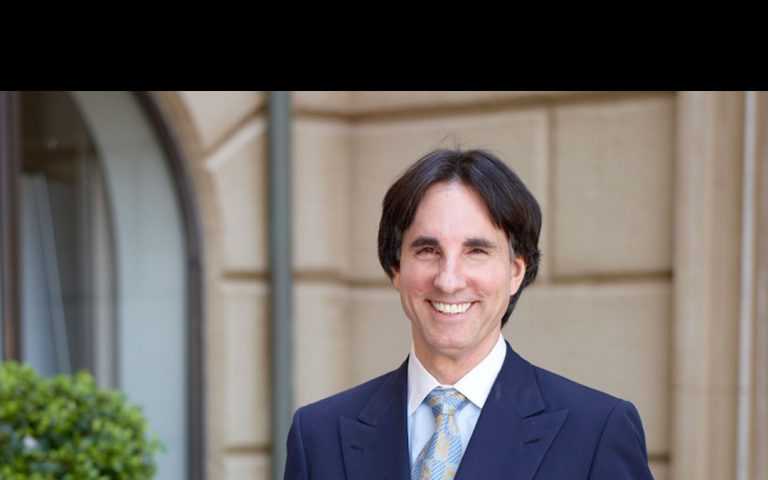
Human behaviourist Dr John Demartini discusses how to break through the seven most common fears and guilts that stop us reaching our full potential.

“Many of life’s failures are people who did not realise how close they were to success when they gave up.” – Thomas Edison

There are seven areas of life we are here to master: spiritual, mental, vocational, financial, familial, social and physical. These areas can either be powerfully supportive of your genius, or they can impede it. There are also seven common fears and guilts that fragment our full potential in each of these areas. The only difference between somebody who does what they love and someone who doesn’t, is that the former can identify their fears and has a strategy to break through them.

The first fear is the spiritual fear of breaking the ethics of some perceived authority. Morals are the rules we impose on ourselves, and ethics are the rules that others impose on us. Many people fear that others may not approve of them if they do what they love and express their genius – so they don’t.

The second fear is the mental fear of not knowing enough. In fact, you already have the capacity to do whatever you dream of doing. You attract opportunities according to your level of knowing, and as you know more, you’ll grow. Love yourself even when you don’t know as much as you would like to, and you’ll liberate yourself to learn.

The third fear is the vocational fear of failure. Have you ever failed to reach a goal you set yourself? Of course you have. But you’ve also succeeded many times. You’ll succeed and fail equally and constantly throughout life, so it’s important to embrace both equally.

The fourth fear is the fear of financial poverty; the fear that you won’t make enough money from doing what you love. However, if you love something and are committed to doing whatever it takes to succeed, if you value money highly, and if you follow the financial laws of success and saving, you can certainly build wealth doing what you love.

The fifth fear is the fear of losing your loved ones if you follow your heart. I think that what made my marriage stable was the fact that we didn’t so much need each other as love each other. There’s a big difference. We both had a life outside of each other, and if either of us had decided to leave, the other would still have been able to function.

The sixth fear, the fear of social rejection, is a big one. The truth is, acceptance and rejection will occur throughout your life, and the more extraordinary you become, the more you’ll experience both. Learn to appreciate both equally. People come and go, they’re transient, but you’re with yourself for the whole trip. It’s your life. Never sacrifice the eternal for the transient.

The seventh and final fear is the fear of ill health, death or disease. Ironically, though, the greatest cause of illness, disease, and death is not living your dreams. Inspiration and gratitude heal and empower, and if you’re not doing what you love, you’ll feel ungrateful and desperate.

There will always be fear in your life; it means you’re growing and challenging yourself beyond your comfort zone. You will either break through or break down in all seven areas of life. If you break down, you’re listening to your fearful self; if you break through, you’ve listened to your immortal self.

I have fears almost every day, but I know that fear is an incomplete view of what is happening. My approach is to identify the fear, bring it to completion and balance, and then walk through it. I suggest you do the same.

Dr. John Demartini is a human behaviour specialist, educator, author and the founder of the Demartini Institute. To read more about Dr Demartini’s teachings, visit www.DrDemartini.com

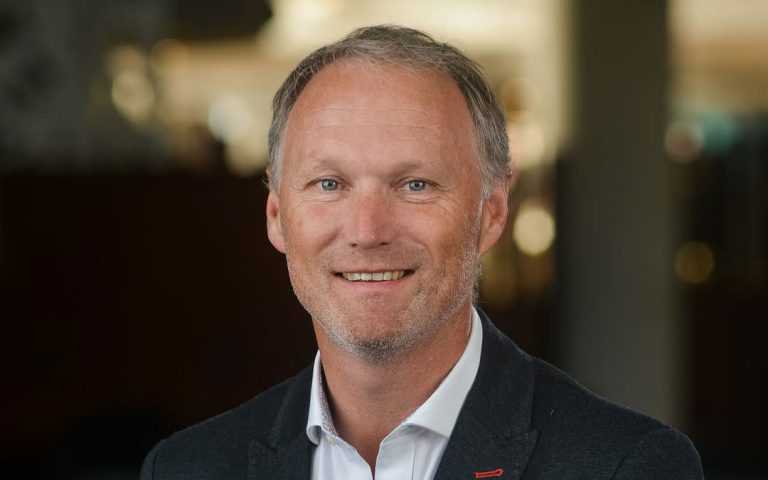
Garry Reed, MD of Evergreen Lifestyle Villages

Describe your leadership style
I am firm but fair. I believe that as you drive your team and constantly demand the best from them so you should also invest time to recognize them and reward them. Engaging on a social level has also taught me a lot about my team members and what makes them tick.

Your top tip to beat procrastination
To-do lists. Start the week with clear objectives on what you want to achieve, list them in priority order. Do the most difficult ones first. Similarly, on a daily basis set your tasks out for the day and ensure the most important ones are on top, this way if for some reason you don’t get to it all the important work is completed. This also works well in my personal life to prioritize family matters, kids events, medical checkups etc.

Favorite getaway destination?
It is almost impossible for me to choose one. I love the beach but equally enjoy the bush. As much as I enjoy a quiet holiday with the family in a remote location where we can swim, braai and chill out, I also love hustle and bustle of big cities like Hong Kong, Singapore, Dubai, London, Paris and Las Vegas.

Who or what inspires you?
I have been lucky to have had some great mentors in my career, many of which I still engage with regularly. My late father was a huge inspiration in my life. He encouraged me to follow my dreams. He taught me the importance of believing in myself and never giving up. Seeing people succeed that you mentored and assisted in some way during their career is one of life’s great rewards. I also draw inspiration from my kids, they surprise me daily and have taught me to look at life from different angles.

Your one wish for South Africa?
I really wish that people would take some time to learn all the different cultures in the country. We are so lucky to have such diversity, yet we live very insular lives. This will build a much better understanding and tolerance for each other and will bring us closer as a nation.

If you could have any 3 people over for dinner, who would they be and what would you serve?
Elvis Presley, Bruce Lee and Barack Obama – We will for serve have a traditional South African braai.

What five pieces of advice would you give to aspiring young business starters?

  • Life isn’t fair – the sooner you understand and accept this the sooner you will be able to move forward
  • Planning, planning, planning – I am a firm believer that any business success comes from 90% planning and 10% execution
  • Always have a plan B – this is something my dad taught me from a young age. There are multiple ways to achieve your goal
  • Reflect often – there is so much time and effort spent on forward thinking that we forget to look back and see how our journey has unfolded. We can learn from the past in order to make the future better.
  • Never give up – “Tough times don’t last, tough people do” No matter how hard life gets there is always a solution. Success is always on the horizon. “The only place where you will find success before work is in the dictionary”


  • What is the one thing most people don’t know about you?
    I am absolutely petrified of heights.

    What would you do with an extra hour in your day?
    Spend it outdoors with my children. Either at Clifton 4th Beach, Table Mountain Hiking or playing soccer in the park.


    A South African first

    KWV CEO, Boyce Lloyd, has promised to continue to delight the consumer with bold and refreshing innovations that reflect the treasured brand value of KWV and continuing its 100-year-old trailblazing tradition.

    In its most recent display of innovation, KWV has released SA’s most exclusive brandy: KWV The Centenary. This special blend includes its rarest and best brandies spanning the company and SA’s brandy-making history.

    Guarded and entrusted by many generations of brandy masters, The Centenary includes some of the very first brandy made by KWV back in 1926, along with brandy from the only barrel rescued from a fire that razed KWV’s historic cellars in 1942. The balance is completed with KWV’s rarest brandies, averaging 42 years of age.


    Limited edition buyers’ package

    Only 100 bottles of this extraordinary blend have been produced for release, and at R100 000 a bottle, KWV is hoping to invest in the future of brandy making.

    “Recognising the need for sustainable growth in the industry, KWV has committed to donate R20 000 per bottle sold to a bursary fund to invest in the future of brandy making,” says Nuno Fernandes, spirits marketing executive at KWV.

    In honour of this investment, KWV – in partnership with the five-star luxury Cape Grace hotel – is also offering an exclusive buyers’ package: business-class flights; a one-night stay at the premium Cape Grace property situated on a private quay between Cape Town’s V&A Waterfront and the serene yacht marina; VIP chauffeur services; and an exclusive tasting with De Bod where buyers will sample KWV’s premium potstill range, including the KWV Nexus and The Centenary.


    A proud pedigree

    Master distiller Pieter de Bod is decidedly proud of KWV’s The Centenary – the pinnacle of 100 years distilling “craftmanship, dedication, patience and trust”. Meticulously blended by KWV’s internationally acclaimed distilling team, it has the pedigree of the KWV stable – a global reputation of consistent quality.

    It carries titles for Brandy/Cognac Producer of the Year from the International Spirits Challenge and the Worldwide Best Brandy Producer Trophy title from the International Wine and Spirit Competition – a strong foundation that makes the launch of a product as exclusive as The Centenary a solid investment.

    KWV has been at the centre of innovation and development in the spirits and wine industry for the past 100 years, and its latest gem, The Centenary, is more than just an investment in your cabinet.

    By Kate McFarlane, Property Management Specialist at Decision Inc.

    In an industry where tenant retention and managing vacancies is critical, the property sector is driven by effective data analysis. Without it, property investors cannot hope to operate as effectively as their more digitally-enabled competitors and will lose momentum as 2019 takes shape.

    For many, the status quo involves outsourcing property management to different service providers. However, the past few years have seen a shift take place where property investors are starting to hold on to their data and looking at ways to extract better insights from it.

    As with many other industries, this entails a more dynamic way of analysing statistics to deliver measurable results. This involves examining the data from tenants, property managers, area-related statistics, and the industry in general to get a real-time view of what is required when it comes to service delivery and investment opportunities. This also helps to identify any trends and anomalies that managers need to be aware of.

    Similarly, property is as much about the physical management as it is about tenant satisfaction. This is where owning data is important especially when it comes time to developing data warehouses, using enterprise resource planning systems, leveraging business intelligence, and identifying key property trends.

    Mining data becomes a fundamental enabler for managing tenant morale. For example, using connected devices, think the Internet of Things to proactively alert property managers of maintenance requirements. This can also be used to analyse trends important to pre-empt preventative maintenance.

    Given the diverse nature of residential, commercial, and industrial properties, each segment requires a different approach. Property specialists can ill afford to ignore the value residing in the data they have collected, not only from tenants but from the industry. For example, this data can help identify elements such as rental trends, high growth suburbs, and even individual buyer preferences over a period of time for specific types of property.


    State of market

    The South African property market is being shaped by an increasing need for more affordable offerings. Given the difficult economic conditions in the country, tenants focus on affordability and property investors would do well to keep this in mind when acquiring these assets. Furthermore, we are seeing the inner cities of Johannesburg, Durban, and Cape Town experiencing a property rejuvenation especially within mixed-use precincts. Space in cities will always come at a premium and these environments provide savvy property investors with portfolio growth opportunity across residential and commercial segments of the market.

    Up to date area data allows investors to pay careful attention to property values and help identify investment opportunities.


    Analysis alignment

    Other trends require property investors to effectively analyse and manage their strategic objectives to that of prospective tenants (whether residential or commercial). Even though uncertain political conditions heading into the elections might see many adopt a wait and see mentality, this should not be the case for property investment.

    Instead, property managers need to intensify efforts to capture, manage, and analyse the data in these ‘quiet’ times. From operational data all the way through to financials, everything must be in alignment to understand buying patterns and rental trends where tenants are considering things like high-speed internet access, security, convenience in terms of location, and affordability. This is essential to stay ahead of the curve.

    Mapping geographic data on top of problematic rental units or buildings, overlaying this with LSM data and area statistics, and mixing in big data analysis, can combine to provide insights managers would not ordinarily have had been able to access.

    Of course, the best business intelligence in the world means very little if the underlying data is not of good quality and presented in a manner that drives better business decisions.


    Reporting elements

    Beyond data reporting is analysis that adds a critical component to the success of any property management and property ownership. Using tools that can report directly out of enterprise resource planning not only reduces the risk of human error, but it creates a consistent and seamless experience that requires no manual intervention. This greatly reduces the time to reporting and enables property companies to gain a better real-time understanding of their assets, and areas where to further enhance value.

    Furthermore, scenario analysis becomes an empowering way for property managers to determine (and plan) what the financial and operational impact would be if a building is sold. Everything from the financial position all the way through to nuances in the retail environment can be incorporated to do better planning and get an optimum return on investment.

    All told, the property sector is in for significant disruption in 2019. Embracing the data management needed to capitalise on it will be an important first step for any property investor.

    Nathalie Schooling Founder and CEO of nlighten

    Many people believe they have CX sussed, but so often at our nlighten masterclasses when we ask our delegates what they think customer experience means, or what they think they need to achieve great customer relationships, the same untruths surface every time.

    So, we want to put these untruths to bed once and for all.


    Here we bust 5 of the customer experience myths we hear all the time.


    CX is about tech
    Yes, tech is totally an enabler. We believe that digital customer engagement tools can truly give your business a competitive edge, but technology it isn’t a silver bullet. Investing in tech will only make your business stronger if it is used correctly. Technology is an opportunity to automate certain customer interactions, but it isn’t a replacement for human interaction – aside from streamlining processes and making your customers’ lives easier, your tech should be freeing up your employees to make meaningful connections and lasting impression with your customers.

    You need a big budget
    Improving CX doesn’t need to cost big bucks, it just takes big change a shift in paradigms. The only thing your organisation must invest in is spreading your message and ensuring that everyone is on board with constantly and consistently applying your CX principles across your entire organisation. The people, the product and the processes that impact on your customer must all be lined up like little ducks with your customer-centric principles neatly in a row. Consistency, not cash, is the key.

    CX is the remit of the few
    Implementing initiatives to enhance customer experience is about getting all 1,000 people that work for you to apply one small improvement, rather than a few people in your organisation to make dramatic, sweeping changes. For change to be meaningful, it must be universal. Enhancing customer experience is about changing your business at its core, and developing policies and strategies that permeate your entire organisation. Start with small changes, scale them up, then keep growing your initiatives. Ensure you record and communicate the incremental improvements and success to everyone in your business.

    If I am measuring customer satisfaction, then I am customer-centric
    Sadly, wrong. If you measure your weight, does that make you health-conscious? No, it just means you know what you weigh. That’s a good step towards health-consciousness, but it isn’t enough – you need goals, you need accountability and you need action. In much the same way, if the outcomes into your research into customer satisfaction are not linked to KPIs and accountability then you are totally wasting your (and your customer’s) time.

    The customer takes front and centre stage
    Your customer is your raison d’etre, of course, but there is someone at the core of your business who without you cannot and will not achieve positive customer relationships. Who? Your employee. Think of the people who work for you like an internal customer, because you cannot expect great CX without awesome SEX (staff engagement experience.) Your employer brand and reputation will impact on your commercial brand and reputation, but there is more at stake than that. The people who work for you are the most important part of your business because only when you get it right with them will they be getting it right with your customers. Forget that at your peril.

    It’s time to stop believing in these CX fairy tales that are preventing your business from gaining the competitive advantage that truly exceptional customer experience can bring. If you aren’t looking at CX as a strategic differential value, then you are behind your competitors, and it’s time to play catch up.

    A rising tide of digital disruption is sweeping the globe and pressure is mounting on businesses to digitally transform their operations to remain competitive and relevant. To do so companies must keep step with innovation, rival emerging digital native businesses and meet shifting customer expectations and demands.

    According to Accenture’s Technology Vision 2017 report, 78% of companies in South Africa already understand the need to digitally innovate at pace to maintain a competitive edge. In fact, larger companies in South Africa expect to generate 29% of total revenue from digital technologies, products and services by 2020.

    “The ‘digitisation of everything’ trend is evolving at pace and Africa cannot afford to play catch-up,” states Accenture Africa’s new Chief Executive Officer, Vukani Mngxati.

    He believes that Africa is largely unconstrained by the challenges posed by overhauling legacy systems, which creates opportunity for businesses on the continent to leverage emerging and maturing digital technologies to truly revolutionise and disrupt the status quo.

    “Due to the prevailing socio-economic landscape, it is unsurprising to see the ingenuity that has arisen from our proud continent. While these pockets of innovation have helped African nations make significant strides, more can be done to create a prosperous future. By embracing and tilting toward the future through digital transformation, a unique opportunity exists for African nations to leapfrog other industrialised countries and play a leading role in the modern digital economy.”

    Those organisations that lag the digital adoption curve will struggle to participate in this digitised future, and with new and nimble disruptive players entering the market, the need to transform at pace has never been more important to corporate Africa, suggests Mngxati.

    “While digital transformation has become a strategic imperative, embracing digitisation comes with significant complexities. The challenges most executives currently face include contextualising what digitisation means for their specific business and how they can apply it to meet their unique demands and requirements.”

    And it is Accenture Africa’s plan to enable this transformation by establishing itself as Africa’s digital accelerator. Since taking on the responsibility of CEO six months ago, after 20 years working in different roles within Accenture in both the private and public sectors, Mngxati is now leading a number of positive developments at the company.

    “We are committed to unlocking African abundance for all through the application of digital technologies. We believe that African organisations that embrace and harness digitisation intelligently will improve bottom-lines, while contributing to the economy and creating employment opportunities across the continent. Our business strategy and our new brand campaign therefore aim to drive meaningful digital adoption within Africa, starting from our base in South Africa.”

    As Africa’s most industrialised nation, Mngxati believes that the country is well positioned to drive the digital transformation agenda. “Increasingly, conversations in local boardrooms are being dominated by the need to implement digital capabilities that can boost organisational performance, unlock operational efficiencies and find new sources of growth.”

    To meet this demand, Accenture Africa has taken steps to position the company at the forefront of discussions around digital transformation. The central tenet of the company’s business strategy is applying relevant new technologies for impact in businesses across industries to enable them to “lead in the new”.

    “Companies need to adopt a new approach to organisational change. We call this approach ‘a wise pivot’. It involves a series of decisions about how to transform and grow the existing business, and how to continuously and synchronously scale new businesses. A wise pivot also requires the right strategy to ensure the timing, scale and direction of investments are calibrated adequately.”

    According to Mngxati, the key to success is building sufficient investment capacity for change and determining how to release resources within the organisation to enable innovation by design. In this regard, Accenture’s job is to help legacy businesses pivot their operation decisively and sustainably, while creating synergies between the old and the new to capitalise on opportunities and reimagine new possibilities.

    “How do you radically shake up a legacy business? Do you divest some parts while revitalising others? Do you have the capabilities to scale new investments at the right pace so that they neither miss the moment, nor overreach themselves? Answering these questions will be vital if companies hope to pivot their core business into the new, without compromising their long-term sustainability.”

    To help companies shift into new business activities and new markets with speed and confidence, Accenture offers an end-to-end solutions set that has been tested time and again both globally and locally.

    “Our capabilities stem from the strength of our transformation acumen, which is delivered though our corporate leadership, who have a birds-eye view of global industry movements and rapidly evolving innovation and technology trends, and the skills of our digital talent pool, which increasingly comprises individuals from the digitally-savvy Millennial generation. This is coupled with the horse-power of our technology solutions and new capabilities that reside in our leading Accenture Digital customer experience agency and our new local Fjord design studio.”

    In an age of perpetual disruption, shifting to the ‘new’ begins with a design-led process where Accenture spends substantial time with clients, strategizing how to co-create a digitally-enabled organisation that delivers products and services faster and better.

    “We then help our clients to answer real business challenges to unlock the economic opportunities that digital-enabled innovations create and convert those opportunities into real value. This is achieved by leveraging an ecosystem of meaningful and relevant technology levers which offer new sources of innovation, demonstrate tangible outcomes and free up capital for renewed growth in the new.”

    This is achieved through the application of intelligent operations (IO), which delivers the fuel for organisational growth, adds Mngxati. “In this regard, we partner with our clients to reposition them for growth and focus on their core differentiators through the use of diverse data. Driven by applied intelligence and human ingenuity, these capabilities will empower next-generation, real-time decision making, exceptional customer experiences and breakthrough business outcomes.”

    To grow the core business, it is also vital that organisations re-evaluate the health of their current revenue streams. “We believe that at the confluence of evolving digital technologies, increased friction in business-to-business and business-to-consumer value chains and increasingly blurred industry lines, the power of the platform economy will prevail.”

    By applying intelligence around data to contextualise and understand market needs more deeply, organisations can begin to deliver a seamless and frictionless customer experience through ‘platform plays’. In this regard. Accenture helps to link companies to suppliers, partners and consumers in relevant and personalised ways within a digital ecosystem that can unlock and rapidly scale new lines of business to create previously unimagined possibilities.

    According to Mngxati, it is the cloud environment that enables these forms of digitisation. “Migration to the cloud environment underpins the ability of businesses to achieve hyper scale and reap the benefits of greater speed and agility. Once in the cloud clients can ramp up or dial down at pace in response to prevailing market conditions. The cloud deployment model also stabilises the core, both from an infrastructure and cost perspective, which enables organisations to conduct more effective business, cheaper and more efficiently.”

    Beyond the experience of these digital touch points, all interactions must also be safe and secure, adds Mngxati. “By securing digital transformation we help our clients to establish digital trust among their customers and build resiliency from the inside out to ensure business success.”

    But in all of this, the biggest value that any digital evolution delivers is the ability to leverage technology to solve for big social challenges, such as access to healthcare and housing and the delivering basic services such as banking.

    To drive social impact on the continent, Mngxati explains that Accenture Africa is engaging and collaborating with the public and private sectors on projects that will have a big impact in Africa and will change how its citizens work and live.

    Mngxati believes that Accenture’s unique approach will drive the required step-changes and exponential growth needed to transform how companies do business in the digital economy. “It is a dynamic and continual process and there is no box-drop solution, which is why we also assist clients with change management and constantly engage with them. In this way we build a lasting partnership that is able to unlock long-term value. This will ultimately ensure that Accenture Africa and our South African and African clients are able to compete in the global marketplace, today and into the future.”

    While Accenture’s immediate focus is on entrenching its leading role in the local market, the CEO sees significant scope for growth into Africa in the medium term. “My immediate vision is to bolster our South African presence. We have specific business objectives around growth and revenue targets which we want to achieve before scaling the business throughout the continent.”

    When the time comes to expand, Accenture Africa will leverage the hub and spoke model perfected by its global parent to distribute the necessary resources and talent within Africa. “The opportunity is there and our aim is to scale the South African practice to deploy into Africa within the next 18 to 24 months.”

    Mngxati considers the numerous recent changes at Accenture Africa as a symbolic point of departure for this broader South African and African growth odyssey under his new leadership. “Having recently moved into new offices in Waterfall City, which offer a new and vibrant environment to base our operations, we are ready to shift the market and drive digital transformation under the banner of our new ‘United, for our new era’ brand campaign. I am honoured to be driving Accenture Africa’s bold new strategy at such an exciting time, both for our business and the country. It’s the start of a new dawn for both South Africa and Accenture Africa and we are excited about what the future holds,” concludes Mngxati.

    At the Top 500 Awards in 2018, Colin Coleman spoke about South Africa’s new ‘golden era’. Here, he outlines what it will take to fully realise it.

    “It will require a Herculean effort to unite South Africans on a path to renewed hope and prosperity for all. Adventurist politics or economics will be ruthlessly punished by investors and assets will reprice accordingly.

    “President Ramaphosa and his team will need to navigate a global audience of investors, rating agencies and public supporters and critics, alongside a domestic audience hungry for signs of progress of transformation, growth and opportunity.

    “If the President can demonstrate steady progress on this reform agenda, he will be able to steady the ship and sail into and through the 2019 national elections, emerging on the other side with calmer waters on which he can consolidate his power within the governing ANC and across the country. That is in everyone’s interest.

    “On the one hand the major flashpoints of the land, mining and public sector wage issues must be managed, resting as they do on the shoulders of the apartheid legacy, along with years of mismanagement and neglect. On the other hand, growth must be stimulated, through modernisation of the economy, beyond the 2% range-bound growth experienced since 2012.

    Such an economic modernisation programme will need an effective social compact between government, business and labour, with the following elements at the core of a jointly embraced agenda:

  • A more efficient public sector in which South Africans get ‘more bang for the buck’ for taxes paid for public investment, perhaps even with more being done by fewer public servants
  • Public sector efficiency savings releasing funds for productive investments in ‘shovel-ready’ infrastructure projects
  • Modernisation of the State Owned Enterprise (SOE) sector with private sector partnerships, concessions, and strategic equity partnerships to get our roads, ports, rail and power plants to operate more efficiently, at lower cost, for corporate and individual consumers
  • Undertaking industrial mega projects to create new job and industrial capacity to dynamise the sector
  • Embracing workers as key partners to the economy, with more participation in the governance and equity of the economy
  • Creating manufacturing hubs, with special economic zones offering labour and tax incentives to industry to invest in locally manufactured products for export
  • Targeted tax incentives for high impact economic sectors like tourism and the green economy, or for labour-absorbing projects.


  • “With the right mix of fiscal consolidation and a more dynamic economy, the environment for monetary policy easing will also give rise to growth-enhancing economic conditions, with the potential to approximate a target GDP growth rate closer to 4%, thereby adding closer to 800 000 jobs per year and eating away at the current 37% unemployment rate that threatens us all.

    “ We, as South Africans must all put our shoulders to the wheel to use this “New Dawn” to optimal effect and to seize the hopes for prosperity, transformation and growth.”

    By Adrian van der Merwe, CEO North Wind Digital

    The starting point for any accountant is the avoidance of risk. I say this because my background is in accounting – we typically approach work by saying that if the current system is functioning fine, there’s very little reason to change it.

    That said, the pressures of the Fourth Industrial Revolution are putting more and more pressure on finance people to provide more detailed insights – faster and more efficiently. With that comes risk – look at the importance of providing accurate information in the case of Steinhoff and the fraudulent reporting that brought about the VBS Bank situation which has had massive negative impact on millions of already-struggling South Africans.

    The rise of Cloud Computing, Robotic Process Automation and increasing adoption of Blockchain technologies can solve many of these problems – but not without creating conversations around the impact on the number of employees who could find themselves out of a job, as a result.

    Instead of using in-house platforms, a company’s data centres can be moved onto a cloud-based system which doesn’t require a significant capital investment – there are no data centre overheads and consulting costs come down, because of the more standardised approach that cloud delivers. Debtors or Creditors functions follow the same methodology, regardless of the business type, so rather than preaching expensive and unnecessary customisation, software vendors are able to supply standardised solutions that are simply scalable. By going that route, clients are have access to world-class finance platforms at a fraction of the historical cost.

    Having said that, because it’s now ‘software as a service’, clients can easily migrate between vendors because of this standardisation – moving is really just a question of migrating data. Instead of spreading the capex investment over three years, they now also have a monthly subscription cost, effectively allowing them to function in an operating lease environment, depending on how the accounting codes are applied. This massively reduces the financial overheads and support structures required by IT.

    Robotic Process Automation (RPA) massively reduces mundane, manual, iterative processes and therefore has an impact on staff resource requirements – it cuts down on the number of required debtors or creditors clerks and makes the finance function more efficient, with fewer resources. This raises an important socio-economic discussion in a country with massive levels of unemployment. We don’t want people losing jobs, but it’s problematic for corporates experiencing headcount freezes and asking fewer people to do more work, already. Perhaps a solution is to tax corporates on what they’re saving by automating processes and have them put that money into the education system instead?

    In a complex organisation where transactions lack an audit trail, Blockchain can deliver an effective solution, if its implemented properly. While the obvious application is in the financial services sector, there is potential in many other sectors as well. In many of those other industries, the question is around who pays for the Blockchain solution – the customer doesn’t want to pay more and the service provider doesn’t necessarily see why they have to foot the bill either. There’s an opportunity there for start-ups to provide the service – when customers start seeing the value in terms of the trustworthiness of the data they’re getting because there’s no room for manipulation – perhaps that’ll be the tipping point.

    Karl Westvig, CEO of Retail Capital

    Describe your leadership style.
    Good question actually. My leadership style is probably a more laissez faire, “gentle hands-off” approach. I don’t think I’m autocratic. I tend to rather build a relationship than use command or control. I’d rather let people do things because they understand why they’re doing it than be doing it because they’re being told to do it. I want people to take responsibility for themselves and their output and if I feel that they’re not coping, I’ll get involved.

    Top tip to beat procrastination?
    I don’t have one because I am a procrastinator. I tend to procrastinate when I’m not sure about what I want the outcome of the process to be.

    I try to process stuff in my head so that I won’t tackle something until I’m clear about what I want to achieve with it. For instance, if I go for a run in the forest, I start processing a whole lot of things that are bothering me subconsciously so that by the end of the run I often have solutions or at least an approach. Once you have the approach, then you could beat procrastination.

    If I know I’m about to go into an important discussion or presentation, I can forget about it for weeks and then on the day I feel like I need to deal with it, it pops out into my conscious and I’ll deal with it so it’s like trusting yourself and your methodology.

    Favorite getaway destination?
    I love the mountains, so I would say a mountain retreat with trails for running and exploring. I love skiing when I get the chance – it is so peaceful and serene. I also enjoy being in places known for good food and wine, from Europe to South America.

    Who or what inspires you?
    People who take ownership of causes. Someone who has the means to make a difference and uses those means. Noble people who take on causes at their own expense.

    For example, Bono. He created an international platform for himself through his music and then went on to try and solve a myriad of issues in Africa with his Red campaign. It was a noble effort as opposed to a PR effort. I’m inspired by people who have put their ego in their pocket to make a difference.

    Your one wish for South Africa?
    Mutual respect. It will solve all the miscommunications. Those who have means should be making an effort to build and support the less fortunate. We come from an unfair playing field with most South Africans and it is the duty of the beneficiaries to create opportunities for others.

    If you can have any three people over for dinner who would they be. And what meal would you serve?
    Bono, Mandela and Jeff Bezos.

    Bono is an inspiration in the work he’s done to support Africa, to the point where he worked with a professor to understand the real issues facing the continent. I would love to understand what drove him to choose this cause.

    Nelson Mandela is a once in a lifetime inspirational leader who managed to put his personal suffering aside to build a future for a whole nation, regardless of colour or status in society. It would be amazing to understand how he could be so selfless and self-assured.

    Jeff Bezos has built the most valuable business in the world by solving societal needs and wants and he continues to push the organisation to innovate. The future of the world will to some extent be led by Amazon and their innovations. He could share incredible insights into the new world of work and play and society at large.

    I would probably serve a vegetarian meal because of my commitment to sustainability.

    Starters would be crispy pastry tomato tartlets with a balsamic glaze. For the main course, it would be a mushroom risotto paired with a local Pinot Noir from Paul Cluver. We’re heading into winter in Cape Town and risotto is always a great homely dish. Dessert would be chocolate fondant with a melted centre. Rich and delicious. We would then finish off with a Boplaas Port to showcase our locals.

    What five pieces of advice would you give to aspiring young business starters?

  • There is never a perfect time or a perfect plan to start a business. People wait for these moments. It’s like having a child, you’re never ready for it. So when you decide you want to do something, you need an 80 percent plan because you’ll never have the perfect plan.
  • The second is the most powerful thing you have as an entrepreneur is your survival instinct. So my advice to them is once you decide what to do, put money into a bank account and start spending it. Because once you do, there’s no turning back and any problem you hit, you’ll find a solution as your survival instinct kicks in. And it’s amazing how much you can solve that you never thought you could solve.
  • The third piece of advice I give is that you cannot be an entrepreneur part-time. It’s 24/7 living in a dream or survival mode. All third parties also need to be 100% committed to the cause.
  • The fourth part is passion. You inspire other people to support you so if you’re solving problems, it’s your passion that brings people in. If you’re an inspiring entrepreneur with a decent plan, you will find the money you need.
  • And fifth is there’s no such thing as an overnight success. The biggest mistakes entrepreneurs make is they think short-term. You need to be looking at a minimum of three to five years before you’ve got a sustainable business. You need to ensure you have enough capital to tide you over. Keep your cost structure down and spread it as long as you can.


  • What is the one thing most people don’t know about you?
    Sometimes I can be fun. I think in businesses and in life in general, you put your responsibility mask on. So you tend to do things that are required to ensure your family and business is taken care of. Entrepreneurs tend to have this mask of responsibility and take life very seriously. Everything is planned and organised because we don’t want to have or create uncertainty. Our fellow colleagues look to the leader for direction and inspiration and the weight of responsibility can weigh heavily, especially when you have challenging times. There are times when you need a bit of humour and perspective and to “let down your hair”.

    What would you do with an extra hour in your day.
    I think I’d probably be doing more reflection, whether it’s yoga, meditation or even just reading to help reflect on things. Perspective is sometimes the most important thing you can have – it also determines your attitude.