
500 NEWS
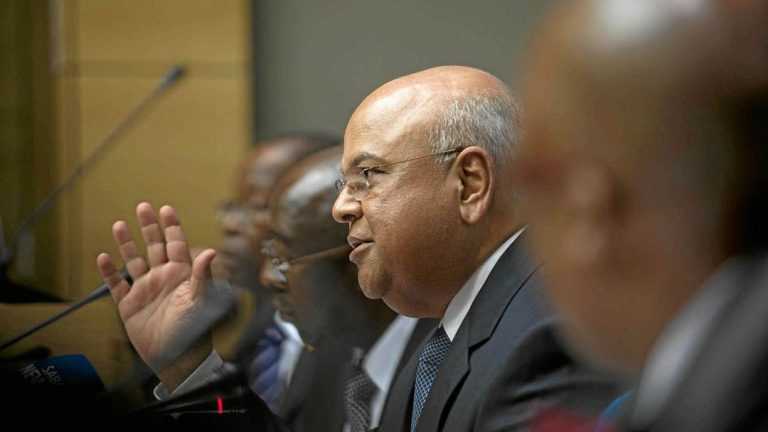
WHAT DO YOU SEE AS THE REAL EFFECTS OF BREXIT FOR SOUTH AFRICA – AND WILL THESE ONLY BECOME APPARENT IN 2017? The macroeconomic impacts of Brexit will largely depend on the nature and timing The UK is an important investor and trade partner for South Africa and authorities stand ready to work with one another to minimise the disruption. The UK accounts for 3.65% of South Africa’s total trade and 4.12% of SA’s total exports. SA’s biggest trading partner in the EU is Germany followed by the UK, which accounts for 20% of SA’s exports into the EU. In relation to agriculture products, it accounts for 25% of SA’s agriculture exports into the EU market. From a macro perspective, this is particularly important given the labour absorption in the agricultural sector. In 2015, SA exported R41.6-billion worth of products into the UK and imported R35-billion with a R6.6-billion trade balance in favour of SA. Whilst we expect that there will be more clarity in 2017, the timing of the Article 50 negotiations will have a critical impact. In |
|

WHAT DO YOU THINK NEEDS TO BE PUT IN PLACE IN THE SHORT- AND MEDIUM-TERM TO ENCOURAGE INVESTOR CONFIDENCE AND STRENGTHEN THE RAND? South Africa is facing a difficult global and domestic economic environment. Downside risks to global growth dominate. Domestically, SA looks set to grow at less than 1% this year. In adjusting to somewhat lower economic growth, South Africa is also adapting to changing patterns of global opportunity and pressing development challenges. A competitive, diversified and more inclusive economy is essential to improve trade performance, expand and sustain job creation and strengthen revenue generation. South Africa’s strategy for increased employment and growth and lower income inequality is set out in the NDP, and elaborated in a wide range of government programmes and policy documents. The budget gives practical expression to these plans for the three-year period ahead. It is critical that we should continue to raise confidence in the stability of our systems, ensure policy certainty in order to raise investment confidence, reignite growth and tackle our triple challenges of poverty, inequality and unemployment. Collaborative efforts between government, business and labour have already paid dividends by helping to stave off a downgrade in June. These have created conditions for confidence in the economy such as the SMME Fund and youth employment, advances made in electricity supply. |
Excerpt from an exclusive interview with Topco Group Editor Fiona Wakelin, as published in Top 500 – South Africa’s Best Managed Companies, 8th Edition. |

|
Kate Moodley, Franchise Director at Discovery Holdings, and author of Be the CEO of Your Brand, is one of the top business leaders in South Africa and will be presenting her secrets to success on 26 and 27 November 2014 at Emperors Palace, Johannesburg. “Have a commitment to excellence in everything you or don’t do it at all, and leave a legacy your kids can be proud of,” is one of the secrets to success Moodley reveals. The Secrets to Success Conference is a how-to guide to fast-track your business success, where industry leaders will give insight into their personal triumphs and demonstrate the impact they have made in their sector. The conference will be a learning and networking opportunity where attendees will uncover how to propel their companies to the next level, increase productivity by investing in people, raise global competitiveness, attract foreign investment, and expand into other African countries. |

|

EXPANDING INDUSTRIAL CAPABILITIESby Rob Davies, Minister of Trade and Industry The special economic zones programme entails coordinated and strategically sequenced interventions in three areas i.e. sector, regional and land development. Sector development entails clarifying the desired industrial capabilities, industrial clusters or product capabilities to be developed and supported. The regional dimension focuses on clarifying the regional context in which the desired industrial capabilities are to be developed as well as strengthening the regional innovation systems without which industrial development cannot be sustained. Land development focuses on administrative arrangements such as processing applications for permits and licences and compliance related environmental and other impact assessments. Clarity on these three areas is critical for an effective programme and has to precede its design, together with strategic interventions to unlock foreign and domestic direct investment and translate foreign direct investment into domestic industrial capabilities. Countries that succeeded in integrating and synchronising interventions in these three areas have generally performed better with their special economic zones programmes. In South Africa, special economic zones are an important component of industrial policy. While the global experience with special economic zones remains mixed, special economic zones have led to huge economic gains. In China for instance, some regions have undergone significant transformation from focusing on primary industrial activities to being modern industrial hubs. The Department of Trade and Industry intends to coordinate government-wide efforts to ensure that special economic zones effectively contribute to the country’s industrial development goal.. To read the full article, click here to order your copy now. |

by Anchen van Antwerpen The South African banking landscape has changed significantly over the last couple of years. New complexities have led the industry to assess their positions on local and global levels and strategies are being evaluated to align with new realities. The 2008 economic crisis has had a lasting effect on the global banking industry. The United States and Europe were most affected – and whilst this had direct consequences for South Africa, tight regulations and the average South African bank’s adequacy ratio being much higher than those of its global counterparts – has left SA relatively unscathed. This is not to say that South Africa does not have its own stumbling blocks to overcome. Higher inflation/interest rates, labour unrest, the weak rand, energy crisis and the retail industry showing its lowest YOY growth since 2009, are just some of the issues that are having an effect on the industry. These factors point out the importance of each bank’s agility in dealing with an ever-changing landscape. Traditional banking is giving way to a new focus on change and capacity for adaption to ensure progress. FUTURE STRATEGIESOne bank that has surpassed all expectations is Capitec. Capitec entered the market in 2002 as an affordable, transparent every-day banking service offering just one product – 30-day loans at a 30% interest. Twelve years later and it is set to rival the Big Four banks, consistently rolling out scalable transactional banking services. Capitec’s share price has grown by 172% since March 2014 and it is forecast that it will continue its explosive growth for at least the next four years. In absolute terms Capitec is already larger than Nedbank when it comes to overall growth, customer numbers and acquisition. There has also been an influx of international investment in the bank reaching an overall foreign shareholding of just over 16%. This is also set to increase exponentially… To read the full article, click here to order your copy now. |

|
With over 3.4 million telephone access lines in South Africa, assets of over R42-billion as well as an ever-expanding business into different platforms and areas of communication and IT,Telkom has proved once again that it is a top performing company. In the latest edition of Top500, Telkom has come up as the number one company in the field of fixed-line telecommunications. In a competitive economy, it is hard to rise above your peers and to stand out as a leader in your field. It is through key factors, such as financial performance, empowerment and an eye toward the future that see some companies rising above the rest. Find out which other companies have made it as the top performers in their fields in the latest edition of Top500. |

Bidvest Protea Coin is a leading provider of integrated security solutions tailor-made to satisfy the needs of the individual client. Some of the services that are available include physical guarding, mining and aviation security, disaster management and cash solutions. Since Protea Coin Group and Bidvest Magnum merged to form Bidvest Protea Coin in 2013; the company has become a respected and trusted leader in its field and has offices in every province in the country. Bidvest Protea Coin is not only a leader in its field, but is currently pursuing initiatives for the greater good of communities and the country. Recently Bidvest Protea Coin has become involved in Project Waterdrop, in aid of those communities that have suffered the most due to the drought in South Africa. Donating around 20 000 litres of water to the Jacaranda FM Waterdrop Project in the North West Province, Bidvest Protea Coin invests it time not only in business, but in people too. Bidvest Protea Coin was named the top performer in the Corporate Security Services category in the Top500 publication. Top500 celebrates and acknowledges South African companies in 100 sectors that have performed in their fields of business. Find out which other companies have made it as top performers in their fields in the latest edition of Top500. |
|

|
IBM will be delivering an enlightening presentation, which specifically targets chief marketers, on how to “embrace creative destruction” in order demonstrate that although technological advances are disrupting the status quo, industry convergence is creating new opportunities for growth. There will be ample opportunity to build relationships with the various attendees in a Fast Track Networking session – a unique, fast-paced and structured initiative in which key decision-makers convene to introduce and promote their business and share contact information with one another. |

|
By Christo Wiese SA Retailers have one huge factor in their favour which UK retailers lack –namely the opportunities that Africa offers for growth. This potential is best illustrated by Africa’s steady growth in real GDP – averaging 5% per year over the past decade; growth made possible by strong underlying fundamentals in terms of inflation, fiscal deficits and financial stability. It is now widely accepted that Africa is home to some of the world’s fastest growing economies. In fact, more than half of the world’s 10 fastest growing economies currently are in Africa. The World Bank’s latest projections are for these high growth rates to continue over the next decade and for sub-Saharan Africa to remain the fastest growing region in the world – outside Asia. Of course, it is true that these growth figures, impressive as they are, come from a low base, illustrated by the fact that sub-Saharan Africa as a whole accounts for only 2.5% of world GDP. This figure reduces to 1.3% if one excludes the region’s two powerhouses, South Africa and Nigeria. Secondly, one should be aware, that the business climate in every country in the region is different, as is the level of infrastructure development as well as the availability of skills. In the Pepkor-Shoprite group, we have been in the fortunate position to follow the transformation of the African landscape closely. Those of us who have a positive vision of the Africa of the 21st century are often accused of being bright-eyed optimists. I, for one, have never been able to see the point in being anything by positive. But, that aside, it seems clear that even the pessimistic investor will have to agree that the case for continued high growth rates in our region is a compelling one, as articulated in an ironic comment recently made by The Economist: “If potential were edible, Africa would have the best-fed people on earth”. Therefore, many of us remain very optimistic about Africa’s future and its continued growth in this century. As is often the case, this growth will not necessarily be linear and there are certain to be occasional setbacks. But despite all the challenges still faced by the continent, there is today a new level of stability and willingness to engage with business in most jurisdictions. This, combined with better access to information, easier communication, higher levels of education, transparency and the spread of democracy, has worked to substantially change our continent’s traditional image of a dark and dangerous place to do business … |