
500 NEWS

By Daniel Schwartzkopff, Co-Founder: DataProphet The rise of the machinesIn PwC’s latest report on the impact of automation, up to 38% of jobs in the US are at risk, with Germany (35%) and the UK (30%) not far behind. And it’s not manual labour that is most in peril: accountants, lawyers, call centre agents, machine operators, and insurance underwriters are at or near the top of lists of jobs most likely to become redundant, thanks to machines. South Africa and Africa most vulnerableSouth Africa’s latest unemployment figures paint a bleak picture: the official rate is 27.7%, or 6.2 million people who want to work but can’t find employment. A closer look, however, will reveal that the vast majority of the unemployed are without a tertiary education. Among graduates the unemployment rate is a mere 7.3%. Rethinking our approach to workThose wishing to future-proof their careers should stop relying on traditional notions of work. Many of the skills required for the future – such as data science and machine learning – are not yet formally offered at university level, and even where they are, the industry changes so quickly that by the time a student exits a four-year degree, much of their knowledge is already outdated. New skills for new jobsThis shift in skills development and training may pose severe challenges to those job seekers who are unable to pursue self-learning opportunities. Government, schools, and universities should therefore modernise their approach to training and education to ensure our immense talent pool is not left under- or unutilised. |

Requisite Organisation (RO) is the name given to a holistic body of work that offers proven principles and practices around how organisations should be designed and operated, based on building and maintaining strong relationships aimed at achieving goal directed outcomes.
RO, also referred to as scientific management, was pioneered by Dr Elliott Jaques and developed into an integrated set of models, tested principles and global applications across different industries over a period spanning more than fifty years. Some theory – The growth of organisational complexityOrganisations are complex adaptive systems and evolve by creating, adding, modifying or discarding pieces on their journey. New levels of work emerge to meet demands generated by higher level of contextual complexity, which may be self-directed or environmentally imposed. Organisations continually shape shift in response to their environments. Levels of work complexityRO states that in order for an organisation to be successful it needs to have clearly separated Levels of Work Complexity, with each theme performing unique functions:
The Added Value Domain is where operational efficiency, productivity and expertise are critical. It is where most businesses operate and is focused on achieving outputs in the most cost effective manner, providing efficient services and being able to respond or initiate quickly. Descriptors of work levelWork Level I or Quality is defined as using skills and training to produce an output that is largely prescribed, tangible, measurable and meets a specific need, within a specified time. This work is critical because it ensures the organisation’s viability and represents the first point of contact with the public and needs great care and attention. The importance of managerial leadershipRequisite Organisation has, through its research and observations, identified a number of core managerial leadership competencies that need to be used in daily and longer-term practices. Many of these practices are aimed at building trust and fairness. RO is formal and clear in the use of how to design a business from the ground up, including structure, role types and authority and accountably mapping to role type; as well as the minimum necessary managerial authorities and in effective tasking.
|

The green movement has been long in the making, although it has only recently been adopted as a way of life and indeed, the ‘it’ thing. From your living room, to the South African economy, sustainability is creeping into the very way we live our lives and interact with our surroundings. |
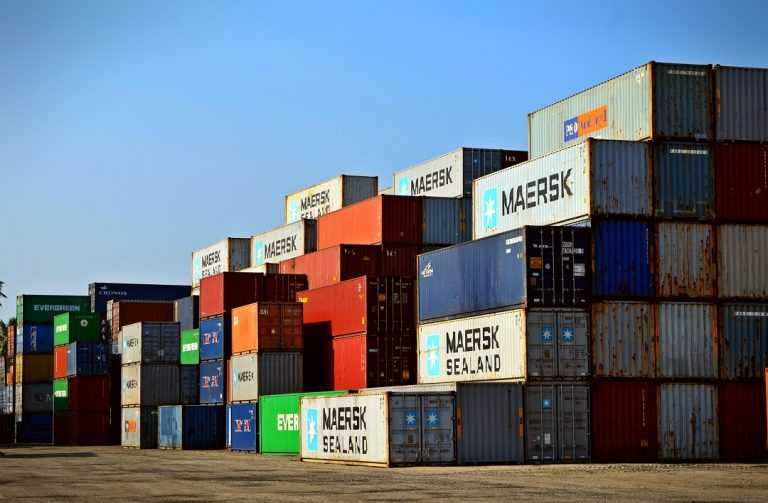
The shipping of containers celebrated its 20th anniversary this year. The concept to use containers to transport goods was developed by trucking entrepreneur Malcom McLean of North Carolina in the US in 1955. He realised that the ability to lift a container directly from the ship to the truck, and vice versa, without having to offload the contents within, was a much simpler solution to cargo transport. This resulted in the next 50 years of international cargo transportation and trade. Globally and in South AfricaThe shipping industry has made headlines in the last year for its decline in growth due to the worst-ever market conditions it has faced since the inception of global shipping trade. Since 96% of South Africa’s exports are conveyed by sea, the challenges the industry faces globally impact directly on our country’s economy. South Africa trades via sea with neighbouring southern African partners, Asia, the Americas and the east and west coasts of Africa, relying on this trade to boost our economy and export levels. A history of containersThe international standard for container size was issued in 1961. Commonly referred to as TEUs, container dimensions set by the International Organisation for Standardisation (ISO) are 20 feet long, 8 feet wide and 8 feet 6 inches high – that’s 6.09 metres long, 2.4 metres wide and 2.6 metres high respectively, in metric terms. The first converted container ship to carry cargo across the sea, Fairland, left from Port Elizabeth in the US to Rotterdam in the Netherlands in 1966 with 236 containers on board. This marked the beginning of global shipping trade, an industry which grew faster and more exponentially than expected. In 1969,18 container vessels were built, 10 of them with the capacity of 1 000 TEUs. By 1972, container vessels could fit up to 3 000 TEUs on board. Today, the biggest container vessel ever built, the Emma Maersk, can fit 15 200 TEUs on board. Technology and shippingTechnological advancement has, over the years, been a hot topic and closely followed within every industry of every economy in the world. Technology is innovating and disrupting what we have always known and the benefits that come with it can certainly be used to advantage within the shipping and container industry – especially when considering the industry’s undeniable slump early in 2016 due to China’s trade slowdown. There is small irony to be found in the world’s oldest globaliser – the shipping trade – relying on the modern world globaliser – technology – for its transformation. Containers are particularly well travelledIn 2008, the BBC started tracking a container, dubbed the BBC Box, in order to better understand the distance a container travels, the routes it takes and the challenges it may encounter. The study aimed to shed light on international trade and globalisation (and was open for the public to follow online) – according to Rose George’s Ninety Percent of Everything, containers “have fuelled if not created globalisation”. Containers repurposedEven old, battered, well-used shipping containers have a second chance at life. Repurposing old containers has become somewhat of a trend over the years. They’re strong, mobile and stackable, making their uses various and unlimited. If you type into Google “what can you do with shipping containers?” over four million search results come up, all demonstrating the various uses of old shipping containers. How containers work in 10 steps1. A South African shoe store places an order with a Chinese manufacturer in China for 500 pairs of the latest, trendy shoe. The shoe store collaborates with a freight forwarder to arrange transport of the shoes from China to South Africa. |

Despite tough trading conditions across nearly every sector of South Africa’s economy, there are still companies who continue to demonstrate a commitment to corporate social investment (CSI). Here are South Africa’s most generous companies…
|
Speaking at the 10th annual Business in Society Conference in Johannesburg during May, Cathy Duff, director of consultancy firm, Trialogue said that CSI expenditure in South Africa totalled R8.6 billion in 2016‚ significantly up from R2.9 billion in 2006. Discussing trends over the past 10 years‚ Duff shared research in which 82 companies and 219 non-profit organisations were surveyed. Anglo American has retained its position as the company perceived to be having the most developmental impact – and was rated first in 2016. Other companies that have been in the top 10 across the years include SAB‚ Old Mutual‚ MTN and Telkom.
Non-cash giving as a portion of total CSI spend increased over the 10 year period – from 6% in 2006 to 13% in 2016. Product and service donations accounted for the vast majority of this. In 2016‚ 29 companies reported donation figures equal to 19% of their total giving. By comparison‚ 11 companies quantified the value of their employees’ volunteering time‚ which accounted for less than 1% of total giving. CSI expenditure continues to be concentrated nationally (37%)‚ in Gauteng (20%)‚ and in the Western Cape (11%). Educational institutions and schools received the most support in 2016‚ with over 90% of companies supporting the sector‚ and its share of CSI spend increasing from 33% to 48% over the past ten years. A total of 80% of corporates supported government institutions – schools‚ universities‚ hospitals and clinics – in 2016, equalling a third of total CSI spend (34%). This is significantly up from 27% in 2011. The support includes scholarships and bursaries. It is followed by support for community development (15%) and health (9%) – the latter dropping 7% from 2006. Within education‚ most funding continues to go to school-level education (51%). Support for early childhood development has increased to 17% in 2016. Article first appeared on in The Sunday Times Business (18 May 2017), click here to read it.
|
|

Several rich South Africans looking to get their hands on U.S. investment visas more than doubled over the last three years. During economic and politically unstable times, many South Africans are considering the benefits and advantages of having an exit plan. |
Recently released data revealed that South African demand for US EB-5 visas, which enable investors in American companies to obtain a green card, increased noticeably since 2014. A U.S. EB-5 visa can be attained by investing at least $1 million (or $500 000 for projects in a “targeted employment zone”) and creating more than 10 full-time jobs in the U.S. within two years. The $500 000 at current exchange rates would require a Rand millionaire to make a R6.66 million investment. Administered by the United States Citizenship and Immigration Services (USCIS), the EB-5 program approves and designates Regional Centers, such as the LCR Overseas Regional Center, to attract foreign investment into the U.S. Since the program was created in 1990, thousands of immigrants have received permanent U.S. residency, creating tens of thousands of jobs at no cost to the U.S. taxpayer. Applications in 2014 amounted to 14 in total, with an increase to 40 during 2015 demonstrating the growing demand for the investment visas from South Africa, according to IOL. South Africa was recently downgraded to junk status by both S&P Global Ratings and Fitch Ratings after a surprise cabinet reshuffle by President Jacob Zuma at the end of March, which included the removal of respected finance minister, Pravin Gordhan. South Africa is home to around 40 400 dollar millionaires with the ability to launch applications for the program, with combined wealth holdings of US$171 billion between them, according to The South Africa 2017 Wealth Report. Original article appeared on AFKInsider.com. CLICK HERE.
|
|



When Asher Bohbot founded technology services group EOH Holdings 19 years ago, he instilled an ostensible company culture that is lived and breathed by every EOH employee – from the top executive to the mailroom clerk.He still considers a definitive ‘company culture’ as the concrete foundation (or building blocks) for any organisation that strives to be successful. EOH has delivered impressive returns for shareholders for many years, and Bohbot’s influence will be sorely missed (he’ll step down as CEO at the end of June). During his keynote speech at our Top 500 Awards earlier this year, Bohbot shared with delegates his six key secrets to starting and managing a successful company. They are: |
1# CULTURE: The culture of a business is the glue that keeps your company together. It’s the environment, the feeling, the connection to your people and the thread that runs throughout the organisation. In today’s world, a strong office culture means that employees generally happier and tend to enjoy themselves more. A company’s culture is what drives people to get up in the mornings and come to work, rather to go somewhere else. Culture is paramount. It’s also the most difficult thing to get right. It requires time and effort and you have to LIVE IT!” 2# PURPOSE: “Your company must have a specific purpose in society and the economy. If it doesn’t, people cannot relate to their place of work. People don’t work for the sole purpose to earn a salary, pay the house bond or support their habits. People want to get up in the mornings, and come to work for a business with a purpose. EOH’s purpose is to provide technology, skills and know-how that are critical to developing countries like South Africa.” 3# THE ROLE OF BUSINESS: “The business role, according to our belief, is to take up human development over society, the employment of people and giving life and purpose to its employees and people. Government’s role is to provide the right environment and everything it takes for people and companies to want to invest. But what really makes society go around is business. Only business. Business is life.” 4# BUSINESS DRIVERS: “We believe that in business, a company needs to decide on one dominant driver and everything else will be attended to by focusing on that one specific element. At EOH, our driver is people. Everything you look at, you look through the eyes of people. You need to look at your business with the focus on one dominant element, and the rest will fall in place. That way, you know exactly what you are doing.” 5# STRATEGY: “Business schools talk about strategy all day long. In today’s world, things keep changing and evolving all the time – not just in the technology space, but all industries are disrupted at some point or another. One should have a business philosophy that’s always opportunistic; always looking at what’s changing; and always be willing to capitalise on the opportunity, as opposed to implementing a a strategy that’s rigid and unyielding. We have no idea what’s going to happen in the future, so how are you going to make decisions and assumptions, and build businesses around it, only to discover that it’s not going to happen. The one thing I know for certain is that whatever you think is going to happen, I can guarantee you that it WILL NOT happen.”
|
#6 BUSINESS CONDITIONS: “There is no good or bad reality, only reality. If you are willing to say: “This is the reality. I’m going to grow and develop my business, and look for new opportunities within the current economic conditions, then your company will enjoy grow! But if you’re going to sit around and wait for conditions to be conducive, I can guarantee you that your business won’t be around for long. There are no good times, no bad times, just the conditions that are prevailing now. As a business, you have the responsibility to say, “How am I going to grow the company in these conditions?” We don’t know if conditions will ever improve, so make the best of what you currently have.” |

Despite the headlines, foreign and local investors should not lose sight of the fact that South Africa remains a highly attractive – and sound – investment option. But which sectors offer the best opportunity for international stakeholders? |
A long, relentless road to democracy (paved with sacrifice and suffering) means many South Africans tend to be somewhat ‘overcritical’ about issues pertaining to our country’s livelihood. But instead of yielding to the pessimistic rants or gloomy, negative outlooks from the naysayers and doom-prophets, South African should celebrate the fact that our economic outlook looks brighter than ever. With a growing nation of entrepreneurs and resilient citizens, strong-performing industries and revival of the Rand (including the global economy) are grounds for optimism. Africa is still considered the continent of the future – destined for massive growth and expansion in coming years – and South Africa – the gateway to that market – remains an attractive and viable destination for foreign and local investment. No country is devoid of challenges and South Africa is no exception either. However, we’re a country with incredible potential. Those who’ve managed to see the investment opportunity through the noise of politics and other socio-economic issues have been well rewarded in the past. Will history repeat itself? We think so… The Global Investment Trends Monitor of the United Nations Conference on Trade and Development (UNCTAD) reports that South Africa experienced a 38 percent increase in foreign direct investment (FDI) inflows in 2016, translating to $2.4 billion (R31.15 billion). More than 2 000 European companies operate within South Africa and have created more than 350 000 jobs. The EU also contributes about R1.5 billion to infrastructure development for domestic and regional programmes. Paul Boynton, CEO of Old Mutual Investment Group agrees that South Africa offers an ideal investment environment for foreign and domestic investors. “South Africa has generally been a good performer in the market and it remains a great investment destination. We believe that South Africa will continue to offer return that’s globally competitive.” READ THE FULL STORY in the next issue(s) of Top Performing Companies and Public Sector & Top 500 Magazines. SUBSCRIBE NOW – Click here |
|



Murray Legg is an entrepreneurial thinker with a track record of growing innovative technology businesses. He holds a PhD in biomedical engineering, has four years of experience as a corporate financier and co-founded a business that develops polymer heart valve replacements, SA Cardiosynthetics; and an influencer-marketing platform and digital agency, Webfluential. SA Cardiosynthetics is a venture business looking to develop, and one day commercialise, a polymer heart valve replacement designed for emerging market patients. Rheumatic Fever causes valve disease in over 500 000 people annually that goes untreated because no product is currently available. Murray and his surgeon co-founder are working on addressing this need. Webfluential addresses market demand for access to digital influencers and their audiences so that brands and consumers can interact on the web. The platform has grown globally, providing access to brands for over 10 000 influencers, with a combined digital audience of over 350 million people. We asked Murray about African unicorns, Silicon Valley and the digital revolution. A unicorn is a start-up worth $1-billion or more. What is your take on the potential for African unicorns?Africa contributes about 2.4% of the global GDP. So as a player on the global stage, any business starting in Africa will reach a ceiling in terms of its capabilities on our continent. However, there’s nothing stopping applicability of locally grown businesses expanding into countries outside of Africa – the key is being able to understand what the world needs, and address that need appropriately and at scale. We’ve seen SAB recently in a trillion rand deal, never mind a billion. Yet that business was founded 120 years ago. Reaching a billion dollar valuation for the sake of it shouldn’t be a goal, in my opinion. There are some great businesses that are worth a fraction of that but provide all the right experience to local entrepreneurs in learning about their product-market fit, working with technology and people, and not worrying about valuation. I think there’s potential for an increasing number of African unicorns in the next five years, but it will be as a result of funding rounds where investors are happy to pay around R150-million for 1% of a company – a unicorn – likely to show revenues in a year of R3-billion. You were one of 22 South African entrepreneurs sent by Investec and En-Novate to Silicon Valley in the US. What were your four key takeaways from that experience?Seeing and speaking to the entrepreneurs there – the daily challenges that they face and the small wins that they celebrate, their degree of ambition and the skills and grit of their teams – all make me believe that we as South Africans have what it takes to make brilliant businesses ourselves. So much content and hype exists around the “untouchable” Silicon Valley entrepreneurs, but if we really get our minds focused we’re not far behind them. Something the entrepreneurs there take very seriously is the feedback from their customers on how they use their products. Empathy as a part of the creative product process is crucial to finding product-market fit. Assuming that your product will be adopted the world over without asking a lot of questions from the people who use it, is a fatal flaw. So much effort is put into believing in their mission as entrepreneurs. People really believe that they can put a dent in the universe – even in their daily tasks – and they live and breathe their company mission. We met with Google Maps team – the team consists of 100 people spread across the whole world. But they’ve been able to do all of what Maps offers (including the project of Streetview and public transport system integration) because each one of those 100 people believes that their work makes the world a better place. They set 10X goals. Whether it’s user numbers, page views, revenue or profits, each company we spoke to have a target of what they were working on to scale 10 times within a year. Many have electronic dashboards in the office to track these, how they’re broken down into one-week metrics and if they’re ahead or behind. Please speak about the opportunities afforded by the digital revolution and how technology is changing the business landscape, using Webfluential as an example of a success story.If there’s a book to read that looks into the future and maps out the possibilities of the impact of technology, it’s The Rise of the Robots, by Martin Ford. In it, he outlines how it’s more the white-collared worker, than the blue-collared, that should be concerned about the effect of technology. Artificial Intelligence is going to be the biggest theme of our generation, and it will be used in all sorts of interesting ways that we haven’t even considered. I attended a talk by the head of IBM Watson, where he gave an example of the use of AI in cancer research. They’ve fed in all the literature on cancer, as well as patient files from around the world, and the insights about early detection and treatment are just remarkable. Google recently handed over the running of all its data centres to Deep Mind, its AI engine. Within the first month, the technology saved 15% of the energy bill. In our influencer marketplace called Webfluential, we’re excited about all the new earnings channels we’ve created for people and the commensurate value we’ve created for brands that now have an additional method to reach an audience. On our platform, we’ve been able to reduce the degrees of separation from micro-publisher or celebrity to a brand, and automate the performance tracking of digital content. It’s great for us to see the medium of communication changing from a uni-directional “spray and pray” approach of television and radio to an intimate conversation on platforms you heard about less than a year ago (like Snapchat). If you were to advise anyone on starting up his or her own business, would you add anything to “work hard, dream big”?Maintaining a great work ethic and chasing your dreams I think could be a reasonable motto for someone in their life; it’s certainly mine. People tend to get caught up in the human race, believing that they can only go Faster, Higher, Stronger, and sometimes take for granted that the challenge in work is the reward, not the financial or fame aspects that often come with it. Through our lifetime the disruptive effect of technology will rip apart normality, as we know it. People will be replaced, companies will fall from grace, and careers will become obsolete. If I had more advice to give, it would be being humble, because sometimes you’re ahead, sometimes you’re behind, and you’ll always either need a favour or have reason to deliver on one. |

It’s true: Income is scarce and global growth is sluggish. Tomorrow’s returns may not match yesterday’s. In light of all the crises of the past two years (think Eskom, NeneGate, NkandlaGate and #CabinetReshuffle) – throw in the recent downgrade from ratings agencies like S&P and Finch – investor’s confidence has hit an all-time low in South Africa. Despite the gloomy forecasts, we’ve been keeping a close eye on a few companies currently trading on the Johannesburg Stock Exchange (JSE), and four of them, we believe, will offer investors great value in 2017. |
Company #01: Remgro. Through Stellenbosch-based investment group, Remgro, investors are exposed to listed assets such as Mediclinic and the First Rand Group, but also to a number of quality, unlisted shares comprising around 22 percent of the net asset value (NAV) of the group. While Mediclinic share price dropped significantly, due to one-off events, such as the Al Noor Hospital Group transaction amounting to R788 million, buying Remgro shares will provide investors with exposure to Mediclinic at a marked reduced price, a quality unlisted portfolio and a premium bank, First Rand – at an attractive discount. Dividend Yield: 2.29% |
|
Company #03: Hudaco Industries. Hudaco Industries remains a well-managed company despite tough business conditions, resulting from a slump in industrial production and mining industries. But Hudaco has managed to diversify its product range and its share performance is likely to beat market expectations. While it’s an unloved share in terms of its rating, it will create opportunities for patient investors. Dividend Yield: 3.82% Company #04: Shoprite. 2016 was a very tough year for South African retailers. The economy ground to a halt and along with the drought, retailers’ profit margin declined. However, Shoprite managed to grow revenue at double-digit rates. It’s also said that the largest shareholders of both Shoprite and Steinhoff have initiated and facilitated discussions to combine their respective African retail businesses with the aim to create a retail business with significant scale and an international footprint. Dividend Yield: 2.45% |
Company #02: Metair Investments. Although down-rated significantly over the past few year, mainly as a result of its struggling European operations (on the back of deteriorating political relations between Turkey and Russia). With the tension behind us, business as usual conditions will restore confidence in Metair and improve margins. Alwyn van der Merwe, director of investments at Sanlam Private Investments, told BusinessTech.co.za that he expects Metair’s earnings per share to jump from R1.50 in 2016 to R2.44 in 2017 – an immense 62% growth. “This puts the share on an 8 times forward earnings multiple, which is very cheap. If Metair’s operational results do turn around as expected, this share will certainly reward investors,” he says.Dividend Yield: 2.86% |
|


South Africa had some difficulty going online and connecting to the rest of the world. But progress to Internet connectivity began when three pioneering Rhodes University students – François Jacot Guilarmod, Dave Wilson and Mike Lawrie – used salvaged and donated equipment to create their own gateway, giving Rhodes University its first IP number and established the first email link in South Africa. That was in 1988, one year before Berners-Lee invented the first ever web page, and in 1990 the first TCP/IP connection attempt successfully linked Rhodes University to the University of Cape Town, after which all universities across South Africa were similarly connected, creating the ZA domain which was officially registered in that same year. Although progress was being made, there was a series of difficulties that had to be confronted, all within the same timeframe: South Africa was not yet connected to the rest of the world, despite the email link and domain support; and although the establishment of Telkom happened in 1991, the cost to lease a line to the USA was still too exorbitant; all the while, dial-up costs were getting costlier, with Rhodes’ bill reaching the thousand(s) rand mark; and the ZA domain was also giving its fair share of trouble causing “domain storms” – with multiple requests being triggered by unresolvable ZA domains. Eventually, in 1991 the first Internet protocol connection was made to Portland, USA; in 1993 South Africa’s first commercial Internet service providers popped up, a turning point in South Africa’s internet connectivity; and the co.za domain was established and administered with UNINET. <Why did the Internet have a slow start in South Africa?> Sanctions against South Africa meant that countries such as the USA were reluctant to, or couldn’t (by law), cooperate with South Africa to establish an international Internet connection. Email was already around in the States by the mid-seventies, only arriving in South Africa in 1989. The apartheid government also placed restrictions on the South African public, stopping communication and international relations, with strict censorship policies on information sharing. The government banned the use of thousands of works of literature including books and posters, films and music; newspapers and television were banned from publishing the goings-on, further isolating a country already denounced by the rest of the world. Mike Lawrie writes in his account of the Internet’s beginnings in South Africa, The History of the Internet in South Africa: how it began, that their bringing the Internet to South Africa was done so at the country’s most turbulent time, with the government “doing its utmost to control the flow of information out of the country”. In an article explaining the emergence of email published in Rhodes University’s newspaper, Rhodos, in 1989, entitled “Email: A major breakthrough”, it is explicitly explained by the author that email “use is restricted (by law) to messages relating to your function at Rhodes University, and you may not send or distribute messages that are unrelated to this”. <South Africa connects to the world> Up until 1993, the only people to have access to the internet (email) were university bodies and academic institutions: matching Berners-Lee’s vision of free access for educational purposes and information sharing. When South Africa’s first commercial Internet Service Provider, The Internetworking Company of Southern Africa (Ticsa), came to fruition in 1993 it released a statement to communicate its intention to “extend Internet services in the region to those who have previously not had access, such as commercial organisations and other non-academic bodies, as well as those in neighbouring countries”; the service provider already had four companies connected to the Internet and advised the public that it was a not-for-profit organisation, based on the founders’ wish to keep the costs as low as possible. <Remember the Big Black Box?> Dial-up connections were the way of the day in 1997, with ISPs such as MWEB offering dial-up packages such as the Big Black Box. Throughout the 1990s and early 2000s, most Internet users connected using dial-up connections which consisted of a telephone landline, a computer and a modem – typically slow and temperamental, and limited the kind of access to the Internet that broadband brought to the table a few years later. Telkom brought broadband to South Africa in 2002, launching their first commercial ADSL product, with faster download speeds and a permanent connection to the Internet, without having to dial-up through a modem. Soon after, in 2004, companies such as Vodacom 3G and iBurst began offering broadband wireless solutions, moving South Africa into the era of Internet we enjoy and rely on today. <The Internet of today and tomorrow> 2016 saw an increased rollout of fibre-optic cables throughout South Africa. Although fibre-optic technology has been around for almost a decade, its accessibility and visibility is only recent. The South African government announced its national broadband fibre-optic policy, South Africa Connect, in 2014 and aims to provide fibre connection to every home by 2020, ensuring faster, more reliable, stable, affordable and accessible Internet services. Currently, most South Africans are connected to the Internet through ADSL lines, and replacing those five million (ADSL) copper lines with fibre-optics is both an expensive and time-consuming project. However, research shows that developed countries owe more than 50% of their economic growth to technological progress; therefore the long-term benefits of fibre-optic broadband Internet connectivity will see major advancements in technology, which will contribute to growing our economy. |

Top500 is growing by leaps and bounds. The eighth edition has 25% more content and five times the number of clients than its predecessor. This is a fine reflection of the robust nature of the best-managed companies in South Africa, many of whom have shown remarkable resilience, and indeed growth, under difficult global, regional and national economic circumstances. With the flux in the economic landscape in 2016 came opportunities for shifts in the rankings amongst the sectors and we noted with interest that there was a 17% change in the number one position for the period under review. |
Top500 celebrates icons in the South African economic landscape – the logical conclusion of this is the interview with our Finance Minister Pravin Gordhan: Rand Strengthener on page 72, which provides first-hand insights into the economy, what Brexit means for South Africa and the fiercely-debated wealth tax. The golden thread that runs through this edition is one of looking to the future through the lens of technology and how technological advancements are changing the face of the world as we know it. We are therefore delighted to have on our front cover Asher Bohbot, CEO of JSE-listed IT services group EOH, awarded Business of the Year accolade at last year’s National Business Awards. The Internet has become so intertwined with our private and professional arenas that it seems hard to imagine life without it – but in reality it was as recently as 1988 that Rhodes University established the first email address in the country – and the article found on page 126 traces what is, in fact, the very recent history of the ‘Net. We take a look at how technology is changing the face of e-commerce on page 102, and the interview with biomedical engineer and digital entrepreneur, Murray Legg gives us insight into African unicorns and polymer heart valves capable of being replicated using 3-D printers. By 2025 approximately 75% of the world’s population will be urbanised – this is in less than 10 years’ time – so what does that mean for planning, development and the infrastructure of our urban spaces? Cities for a Smarter World, page 94, reviews the development of smart cities around the globe with a focus on Modderfontein Zendai, Africa’s first smart city. The core of the publication remains the invaluable business intelligence in the form of the listing of the top 500 best-managed companies in the country as determined by our research department using the methodology developed in conjunction with the Development Policy Research Unit at the University of Cape Town.
|
|

It has been a pleasure compiling the content of this important annual B2B publication – and my heartfelt thanks goes to the team who worked tirelessly ensuring cover-to-cover quality. FIONA WAKELIN |
[et_bloom_inline optin_id=optin_1] |