500 NEWS

Optometrists suggest that using glasses with lenses that filter out blue light from digital screens and LEDs can alleviate strain caused by computer usage and even potentially protect your retinas from long-term damage.

So-called “computer glasses” are currently in vogue and these purple-blue coated lenses can be spotted in open plan offices around the world. But aside from looking cool, the glasses serve an important purpose – they alleviate the eye strain caused by continuous computer or tablet use and filter out blue light emitted by LED lighting and digital screens. This, in turn, helps people to get a better night’s sleep and may even protect them against the formation of cataracts or long-term retina damage that could result in macular degeneration.

What’s so bad about blue light?
Blue light is part of the normal light spectrum that we experience on earth every day. It’s also known as high energy visible (HEV) light. This light has a very short wavelength and therefore produces a higher amount of energy.

While exposure to blue light is not bad in itself, overexposure can cause damage to your retinas over the long term. A Harvard medical study points out that “HEV blue light has been identified for years as the most dangerous light for the retina. After chronic exposure, one can expect to see long range growth in the number of macular degenerations, glaucoma and retinal degenerative diseases.”

In our modern world, we are exposed to blue light not just through sunlight, but inside and at night too. LED lighting in buildings and all high definition screens, including computer screens, TV screens and cellular phones, which also use LED light, emit a high proportion of blue light.

Much has been written recently about the effects of this blue light in suppressing the production of melantonin and disrupting the body’s circadian rhythms (which affects sleeping patterns and overall health). But now scientists and optometrists are also cautioning that the increased exposure to blue light may damage your eye health.

Managing blue light exposure
Andre Horn, senior optometrist and Mellins i-Style’s managing director, explains that one way to limit blue light exposure is to choose spectacles with proper anti-reflective coating, which specifically eliminates the blue-violet light emitted from LEDs, TVs, computers and tablet screens. He says that Zeiss offers such a product, DuraVision BlueProtect, which ensures that the glare from digitals screens is less harsh on the eyes.

There are also apps available for mobile devices that help to minimise the blue light emitted, including Bluelight Filter for Eye Care, EyePro-Blue-Light Filter and f.lux.

How “computer glasses” help
Horn says however, that the most effective “computer glasses” are actually anti-fatigue or accommodative support lenses, with the added purple-blue coating.

Accommodative support lenses are designed to support “near focus” ability. They are especially effective for people in their 30s and early 40s who are experiencing near vision discomfort for the first time. Horn explains that they are designed to support the ciliary muscle. This makes it easier for the wearer to switch vision between near and distance focal ranges and may help to prevent blurred vision, tired or dry eyes and neck strain.

For people older than 40, Horn recommends investigating bifocals or multifocal lenses, which will help if focusing on things that are close by is a challenge.

Four important tips for better eye health at the office
Even with lenses that help filter out blue light, you may still experience eye strain (which in turn can cause headaches and fatigue) at the office if you’re unaware of your bad eye health habits.

Mellins i-Style, has compiled some tips for better workplace eye health:

1. Follow the 20/20/20 rule: Take a 20 second break from your digital screen every 20 minutes to relax your eyes, by focusing on an object 20 metres away. If you ever experience blurred distance vision after doing a few minutes of near work, it usually indicates eye strain.

2. Position, position, position: Ergonomics are important, so choose a comfortable and supportive chair and position it so that your feet are flat on the floor. Adjust your computer screen and all other equipment at your work station to reduce possible eye strain. Your computer screen should be about an arm’s length away when sitting back in your chair. Position your computer so that your eyes are level with the top of the monitor and you look slightly down at the screen. Sit slightly further back if you have a large screen.

3. Tweak your computer settings: By changing your font size and brightness, it will make it easier to read text on your screen and minimise eye fatigue due to squinting. Text should be about two to three times the size of the smallest text you can read. The computer screen’s brightness should be the same as the area directly behind it and you may need to adjust settings throughout the day if your workspace is lit by natural light.

4. Blink more or use eye drops: When you work at a computer or on a tablet, you are less likely to blink. Blinking keeps your eyes moist and reduces dryness and irritation. If your eyes become dry and blinking more doesn’t offer relief, especially when wearing contact lenses, use eye drops recommended by your optometrist.

By Terry Billson, CEO of Genergy

South Africa presents potentially lucrative opportunities for US firms involved in green building technologies. According to McGraw-Hill Construction in the World Green Building Trends survey, the growth of green building in South Africa exceeds that of established sustainability building regions such as Europe, Australia, United States, United Arab Emirates, Singapore and Brazil.

While we are playing catch-up to our developed and developing counterparts, the survey pegged the take up of green building to grow three-fold, from a measured 16% in 2012 to 52% in 2018. A total of 60% of firms in the survey reported future green commercial developments by 2018, while retrofits came in at 58%. The South African Government, with the private sector, recognises the need for energy-efficient building systems and practices. But to achieve a green and sustainable building culture, South Africa requires extensive financial and technical support from developed countries, around green building technologies and practices.

Once considered a niche and potentially risky investment, clean energy technology is now mainstream and is a massive opportunity for businesses, which marries South Africa’s youthful tech startup scene with a well established international green energy sector. Robust support from governments and hunger for green solutions offers an additional reason to be optimistic.

The declining costs of clean energy, cheaper data processing and consumer demand is driving investor interest in clean energy assets. The momentum behind South Africa’s push to build a leaner, cleaner economy is likely to accelerate green tech startups racing to corner the market.

With large-scale change very likely to happen as Eskom decommissions ageing coal plants, there’s a need to begin to understand the world of innovation rather than the world of energy generation and distribution. And we suspect the objective is to learn and make more strategic decisions in energy production.

As increasing environmental pressures take hold in South Africa, our major construction companies and developers have shown they are focusing on pursuing green practices and projects, particularly in renewable energy where opportunities are emerging. There is a growing recognition that climate change opportunities exceed risks, and companies now seek to develop capabilities around greener practices and technologies on a wide-scale across business units.

The Industrial Development Corporation (IDC) plans to inject billions of Rand into green industries over the next five years as part of a larger disbursement plan. The IDC has indicated that the green economy has emerged as a primary focus for the development finance institution (DFI), owing to its potential to create jobs and lower the carbon intensity of the South African economy, and as a result, is planning to inject substantial funds into green industries.

For clean energy tech startups, this represents an unprecedented opportunity to benefit from this boost in investment and interest and create new systems to power homes, businesses, and vehicles and to bolster growing demand and incorporate clean energy into the mainstream supply in a riposte to naysayers who have criticised the intermittent and unreliable supply from renewables in the past.

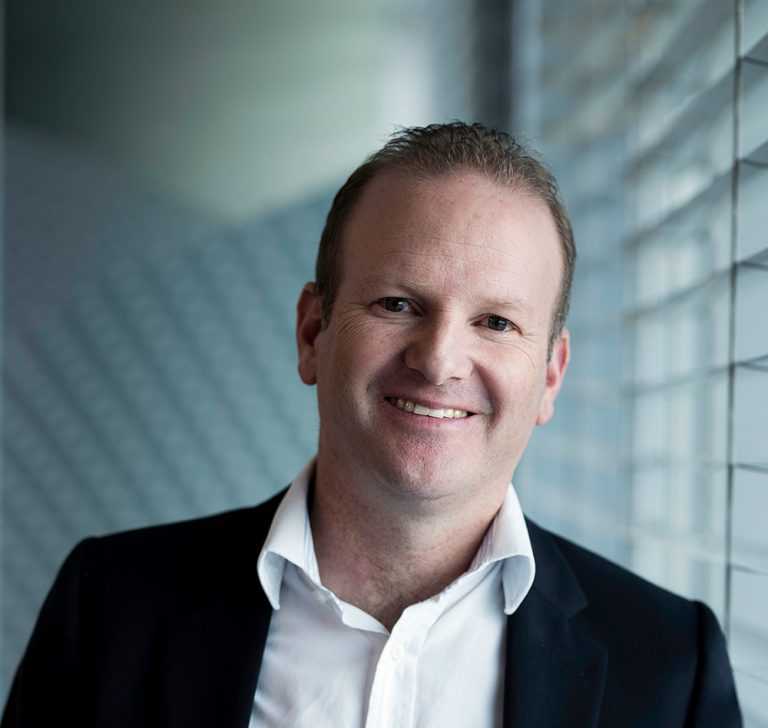
Anton studied actuarial science at the University of the Witwatersrand, completing his Bachelor of Economic Science majoring in statistics and actuarial science. He joined as CEO of Discovery Insure in July 2011 and was part of the development of the company since then. During this time the business grew from a startup to establishing itself as a top 10 insurer in South Africa and a leader in the field of telematics-based insurance globally. Anton is a director of the SA Actuarial Development Programme, promoting and funding actuarial science to previously disadvantaged individuals and a director of the South African Insurance Association. He is also a past president of the Insurance Institute of South Africa.

Describe your leadership style
I like to be accessible to all staff at all levels. I believe it’s important to lead by example, if you aren’t prepared to do a particular job, you can’t expect your staff to do it. I believe in empowering staff and giving autonomy to my team. I believe in getting consensus but to be decisive when the need arises. I try push my team to reach their full potential.

Your top tip to beat procrastination?
It helps to have an accountability partner and trust the team you delegate to. Decide each day what you plan on getting done and work through this until it’s complete.

Favourite getaway destination?
Any game park, especially the Kruger National Park

Who or what inspires you?
Hearing about people succeeding against all odds really inspires me. I’m also inspired by technology that finds efficient ways to solve problems, for example the effect Uber and Google have had on our day to day life.

Your one wish for South Africa?
I have many wishes for South Africa. One of the important ones for me is to ensure safety on our roads – there should not be a need for anyone to lose their life on the roads.

If you could have any 3 people that are no longer with us, over for dinner, who would they be and what would you serve?
My brother Brandon, my mother Sharon and Steve Jobs. I would not serve anything containing broccoli and mushrooms. Thankfully, my wife is an excellent cook.

What five pieces of advice would you give to aspiring young business starters?
• Ensure the right partnerships / investors are in place and values are aligned
• Surround yourself with a team of people who share your vision, can challenge your views and will help you to succeed (e.g. mentors)
• Start somewhere. It’s good to have all the plans in the world but it’s all in vain if you don’t take the plunge
• It is important to position your business to take advantage of opportunities that come up. For example, you can use social media and technology, including artificial intelligence, to enhance your business’ growth
• Ensure you understand the modern day business risks such as cyber-attacks and reputational risk

What is the one thing most people don’t know about you?
If I wasn’t an actuary I would have pursued computer programming. Also I’m a big fan of SA music.

What would you do with an extra hour in your day?
Spend more time with my family.

This year a new model, the Oyster Perpetual Yacht-Master 42, joins the Rolex sailing watch collection. With a diameter of 42 mm – a new size for the Yacht-Master range – it houses the new-generation calibre 3235. Made of 18 ct white gold, the watch is fitted with an Oysterflex bracelet and equipped with an Oysterlock safety clasp, also in 18 ct white gold, that includes the Rolex Glidelock extension system.

The Oyster Perpetual Sea-Dweller makes its first appearance in a yellow Rolesor version, combining Oystersteel and 18 ct yellow gold. The name “Sea-Dweller” on the dial is marked in yellow.

The Oyster Perpetual GMT-Master II is presented in Oystersteel, with a bidirectional rotatable bezel and a two-colour 24-hour graduated Cerachrom insert in blue and black ceramic, fitted on a Jubilee bracelet. This watch is driven by the new-generation calibre 3285, launched in 2018.

An Oyster Perpetual Cosmograph Daytona in 18 ct yellow gold features a paved black lacquer dial. Thirty-six trapeze-cut diamonds are set on the bezel in lieu of the tachymetric scale.

For the first time, the Oyster Perpetual Day-Date 36 is equipped with calibre 3255, a movement at the forefront of watchmaking technology. In 18 ct yellow, white or Everose gold, the new variants of this emblematic model are introduced with dials presenting a concentric gradient, in decorative stone, or entirely diamond-paved with a rainbow of sapphires for the hour markers.

The new Oyster Perpetual Datejust 36 and Oyster Perpetual Datejust 31 watches in yellow, white or Everose Rolesor versions (combining Oystersteel and 18 ct gold) are all proposed with elegant and refined dials. They are equipped respectively with calibre 3235 and calibre 2236, new-generation movements first introduced on these two models in 2018.

Like all Rolex watches, these new variants carry the brand’s own Superlative Chronometer certification, symbolized by a green seal. This certification guarantees that they satisfy performance criteria which exceed watchmaking norms and standards in terms of precision, waterproofness, self-winding and power reserve.

By Peter Olyott, CEO at Indwe Risk Services

With GDP growth prospects forecast at a meagre 1.3% for 2019, and 1.7% in 2020, business confidence in mid-2019 remains at an all-time low. Exacerbated by policy uncertainty, debilitating bouts of power cuts, challenges in industries such as mining, and political events like national elections, getting out of the slump continues to be a pipe dream for corporate South Africa.

But, what past experiences have taught us, is that South Africans are resilient when faced with adversity. Some of our country’s most successful individuals and entrepreneurs such as Patrice Motsepe (African Rainbow Capital) and Herman Mashaba (Black Like Me), overcame economic, and socio-political hardship to initiate and lead successful businesses. Ian Fuhr (Sorbet) endured severe financial pressure to get his start-up off the ground, while Jannie Mouton (PSG Group) had to pick himself up after getting fired at age 48. Even Discovery Group was not established in a financial boom – in fact, in the late 1980s and early 1990s, South Africa’s future appeared to be on the figurative cliff edge. The common thread between them all, is that they all found opportunity during trying times. It’s a phenomenon that has been engrained in South Africans’ DNAs, in that, when the odds are stacked against us – and we find ourselves in “interesting times” – our survival instinct kicks in, and we pull out all the stops to reach the top.

During times of uncertainty, as hard as it may be, leaders need to look for opportunity with zeal and vigour, all of this of course whilst simultaneously trying to keep their existing businesses afloat. If the opportunities were that easy to spot, or provided a sure-fire business revival solution, then everybody would be doing it. Now, more than ever, our quintessential Yenza uhlelo; ‘n boer maak ‘n plan; or “Tougher-er™” (with acknowledgement to Toyota) gees or character, needs to ignite us from within. These opportunities are potentially infinite and could mean, inter alia, identifying other revenue streams, saving clients’ money, realigning business spend, creating new products or services, or simply forging ahead as business-as-usual while industry counterparts throw in the towel.

Essentially, leaders in the South Africa of today need to ensure that they spend sufficient time reviewing and identifying opportunities, and not just to focus on the day-to-day trials and tribulations of the business. In the financial services sector, there is no point being content with a redundant business model.

Without purporting to be the holy grail of “how to survive tough economic times”, there are some core fundamentals one should not cast aside in striving for relevance and sustainability:

1. Don’t compromise on integrity
Integrity equates to trust, which is why operating with integrity is vital for a business. Technology has brought with it greater transparency, so businesses need to be honest in their dealings with the general public, and deliver on their promises to customers, or face the wrath of consumer action or risk being boycotted. Remember, integrity is simple to measure – one either has it or doesn’t. There are no degrees of integrity.

2. Don’t cut your rates to win business, sell quality harder
We’re often tempted to discount our rates, thinking it will win us more customers and drive growth. The reality is that absorbing the costs of a rate cut, means something else will need to get cut, and more often than not, it is the level of service that gets compromised. Sell quality harder – it’s the differentiator that sets your business apart from the others, and what clients value more. By the same token, if you are operating a bloated business model, look at putting in measures to make it lean.

3. Relook your business model and adapt to service the current climate
Knowing how to successfully navigate changes, and develop appropriate and effective processes to stay ahead of changing customer needs, new competitors and evolving technology, is critical to the success of a business operating in today’s environment.
Quite often, the solutions can be discovered with some introspection. The results from internal self-assessments are often completely opposed to the current business model. Yet organisations fail to implement change because it may mean letting go of certain clients, loss of revenue, downscaling etc.

4. Don’t reinvent your business – keep your identity and play to your strengths and make sure you have real differentiation
As technology continues to improve, businesses will be forced to adapt according to their customers’ ever-changing demands and expectations. But, in times of uncertainty, all a business could need is realignment to its true identity. It’s easier and more cost-effective to focus on the purpose of the business – why it entered a market in the first place – and to play to its strengths, and play them well, rather than trying to re-invent itself. Although in some extreme cases, this is what some businesses have had to do.

5. Lastly, business leaders should always ask themselves the following:
How can you help your clients to make more money, save more money, better use their resources, achieve an optimal balance of risk and reward, boost revenue, and enhance their market offering?

While resilience and being optimistic play a part in driving growth when business confidence is low, seeing potential and finding and exploiting opportunities are, as we believe, the real silver bullets.

How a new era of enhanced cloud computing is rendering many devices obsolete…

By Colin Thornton, MD of Turrito

For those who haven’t noticed, internet connectivity is getting faster. Just how fast and robust the connection is always depends on where you live and work – but worldwide, internet speeds are accelerating. According to a 2018 report by Ookla, an internet analytics company, the world’s average mobile download speed of 22.82 Mbps increased 15.2% in 2018, while mobile upload speed increased 11.6% to reach 9.19 Mbps. Additionally, the world’s average download speed on fixed broadband was 46.12 Mbps, 26.4% faster than in 2017 – while upload speed increased 26.5% to 22.44 Mbps.

For both businesses and consumers, faster internet speeds are propelling a global shift towards enhanced cloud computing and a diminishing reliance on ‘traditional’ hardware. Indeed, as connectivity gets faster, the less intelligent and complex hardware and devices need to be. We can already see this happening in the online gaming world, with Google’s new cloud gaming platform Stadia. The platform, dubbed an early beta of the future of gaming, will stream games from the cloud to the Chrome browser, Chromecast and Pixel devices. Stadia’s processing power will sit entirely in the cloud (i.e. a data centre) as opposed to in the gaming hardware itself.

This is nothing short of revolutionary because in the past, gamers have needed very expensive machines with top-end graphics cards, lots of RAM and powerful CPU’s to have the kind of experience that Stadia will offer. The same applies to graphic designers, video editors, architects and more. So as sophisticated cloud computing becomes more entrenched, the need for complex hardware across use cases will decrease. On the other hand, ultra-fast internet connectivity will become essential.

Rethinking the hardware equation

There can be no doubt that the growing reliance on cloud computing will change the face of the traditional IT hardware industry. Already, businesses have to begin to think differently about their hardware procurement and internet connectivity solutions. This cloud-driven transformation can enable huge increases in productivity, while also decreasing costs – provided that businesses plan ahead intelligently.

So what needs to change?

To begin with, many businesses still choose their connectivity solutions based on the advertised speed (e.g. 100Mbs). However, as reliance on the connectivity speed increases, this will no longer be good enough.

Businesses should be asking their internet providers (ISPs) how contended the line is, i.e. How many other users share it? Another key consideration is latency: How long does it take to send and receive data from a specific place?

When having these discussions with their ISPs, businesses must have a clear understanding of their most critical applications and where they sit in the overall IT equation. For example, if an architectural firm intends on using Amazon Web Services to host and process their CAD software, then they’ll need to choose connectivity which has the lowest latency to Amazon.

Investing in a cloud-based future

Although this fundamental shift in computing will not immediately be tangible in the South African context, it will probably start becoming more relevant in early 2020. As a result, businesses must take the cloud revolution into account when considering any expensive hardware purchases and long-term connectivity contracts.

Arguably, businesses should look more carefully at cheaper and less powerful machines/devices. And with the threat of rolling blackouts (load shedding) always ominously present, choosing micro computing devices and less power hungry hardware is a smart move.

From a cost perspective, IT support costs will likely decrease because managing the hardware on-site will become simpler. That said, the cost of having ultra-fast internet (which is managed properly) should be factored in.

Powerful computing for everyone

Looking ahead, the era of enhanced cloud computing and sophisticated streaming capabilities will transform the way we work and learn. In the past, hardware costs limited accessibility. Soon, that will no longer be the case. Within video editing and production companies, for example, there is often just one very powerful machine in the office for rendering video. Now, everyone can potentially have this computing power at his or her fingertips. The same can happen with architects who render high-res 3D images of their building designs. And the impact on education could be enormous, as suddenly a school can offer these types of practical applications to students (without having to purchase hundreds of expensive and power hungry desktop computers).

As with any major technology shift, however, organisations have to buy into the long-term vision in order to truly reap the benefits.

Digital transformation has been a focus area for companies for some time now. However, many organisations are finding that their digital transformation efforts have been inefficient, and as a result are having to re-think current projects due to a wide range of organisational, technical and operational barriers to change.

“People are still confused about what digital transformation is. While the term summons the idea that it will result in a complete metamorphosis of how a company uses technology, the reality is much more complicated,” says Chris Volschenk, CEO at Nexio.

He adds that the end customer generally expects reliability and simplicity, but that achieving these goals requires organisations to contend with more complexity than they can comfortably deal with. “Digital transformation is not a project, and it is about far more than digitising analogue processes. It’s an ongoing activity that requires buy-in at almost every level of the business. It is about understanding – and working with – the reality, rather than being driven by the hype and buzzwords. It’s about creating a culture of innovation and making digital thinking central to everything that a business does.”

The hype: Digital transformation is about modernising
The reality: It is about innovation, a mindset and transformation

To remain competitive, companies must meet the requirements of their industry and customers faster than ever before. This means that organisations must be able to react faster, and many look to digital transformation to enable this. However, too many businesses focus on one or two elements, losing sight of the fact that effective transformation requires all of a company’s assets – digital, analogue, and human – need to be managed, driven and integrated effectively, Volschenk says.

“Transformation of the whole company should be the ultimate goal, because that is how opportunities for innovation are created. Innovation cannot be achieved by smarter decision making, or faster processes, or new technologies alone. It requires a holistic approach that includes every single component of the business, including its people. Until the technology, people, processes, and information are integrated and transformed together, with an overarching view on security, a company can’t achieve real change,” he explains.

“Merely modernising or digitising analogue processes is not transformation. The business needs to understand what assets they have, and how these can be used to create something outside of the norm. This is incredibly complicated for big organisations to get right.”

The hype: Digital transformation is technology-driven
The reality: It requires a holistic approach integrating technology, processes and information. Most importantly it must be people-driven

While the broadly-agreed definition of digital transformation is that it is about adopting technology and harnessing its power to overcome business challenges and unlock growth opportunities, too many companies forget that at its core, digital transformation is about fundamentally changing the way that organisations design and deliver services and how they operate internally.

“Digital transformation starts from the top. If the will to change isn’t part of it, any digital initiatives will fail. This means that digital transformation must include every department, from HR, to finance, to marketing, and all of the others, in order to drive a culture of innovation. Digital transformation is a team sport, not an individual one, and before the technology comes into it, a company must develop programmes for staff to join the journey. Once the digital thinking is in place, the business can create a platform where the technology enables everything the company is trying to achieve,” Volschenk says.

The hype: Digital transformation is a project to be completed
The reality: It is a journey that includes continuous improvement

Volschenk points out that digital transformation should be an end-to-end programme, because the company’s game plan can change continuously to meet changing market requirements. “If a company doesn’t focus on the fact that they should have an iterative approach, they will not gain the benefits – or achieve transformation,” he says.

“Given that customer behaviour is changing alongside the pace of innovation, and innovation is being driven by the capabilities of technology, ongoing digital initiatives have become a business imperative. What is effective today won’t be as effective tomorrow, and even less so a month from now. Organisations must therefore be able to always have access to the latest and best technologies, while their people and processes continuously keep up. That, in turn, requires constant fine-tuning of how the business operates. Given that digital transformation is about dealing with change than about the tools that enable this, organisations should approach digital transformation as part of a philosophy of continuous improvement to boost competitive performance.”

The hype: Digital transformation will immediately offer benefits
The reality: You will fail at least once

According to Volschenk, the very nature of digital transformation forces failure. Companies should therefore adopt an approach promoted by digital leaders across every sector: Be prepared to fail, but fail fast.

“If the organisation doesn’t adopt a culture where failure is part of ultimate success, they should not embark on digital transformation initiatives. If they aren’t failing, they aren’t being aggressive enough. If the organisation can accept failure, it can stop wasting time on things that aren’t working and move on to the next initiative, allowing the company to start gaining the benefits of a more agile and innovative approach.”

Reshaad Sha is the CEO of Liquid Telecom

Describe your leadership style
Some of the places where I have worked tend to label my leadership style as rebellious. That was and will always remain a compliment for me, primarily because of the results that I have been able to deliver with my style of leadership. Other than the benefits seen in results, I believe that I should continue to harness my leadership style as encouraging people to pursue their learning objectives which is a core component of this style.

Your top tip(s) to beat procrastination?
I use a few different approaches to beat procrastination in my own life:
Switching off your email: When I am focusing on completing a task, I prefer to actually close my emails (the whole application) and give the task at hand my complete attention, especially when it is a large chunk of work.
Bite-sized approach: I usually break up very large pieces of work into smaller tasks and set definitive deadlines for them, rather than trying to complete the entire task in one go.
Setting deadlines: As I mentioned in the previous point, I always set very specific deadlines for myself and these deadlines are non-negotiable. Once I set my deadlines, I schedule these activities into my calendar so that I can block out the time to be able to deliver on them.
Investigate: There are always some activities that we constantly keep putting off. What I do in this case is unearth the issues that are at play, so that I become aware of the reasons behind me delaying the activity over and over again. This helps me understand whether there is a pattern of some kind so that I am able to tackle the issue.

Favourite getaway destination?
The destination of my getaways really doesn’t make a big difference, what matters is the quality time that I get to spend with my family and being able to unwind.

Who or what inspires you?
Steve Jobs inspired me because of his disruptive nature and reinvention capabilities. It is commendable how he not only managed to successfully reinvent the company multiple times, but also his own leadership style.

Your one wish for South Africa?
My primary wish for South Africa would be for the country to have sustainable economic growth. This growth is not going to come from any short term fixes but rather from an investment in the education of our population.

If you could have any 3 people over for dinner, who would they be and what would you serve?
1. Alexandria Ocasio-Cortez – US House of Representatives
2. Shinzo Abe – Prime Minister of Japan
3. HH Khalifa bin Zayed Al Nahyan – President of UAE

I would make the evening a co-created Italian dinner where the guests would take part in making the breads, the Italian salads and homemade pasta. This would allow for the preparation time to extend the time that I have with these guests in getting their insights and perspectives of the world we live in.

What five pieces of advice would you give to aspiring young business starters?
• Learning – immerse yourself in a constant state of learning, it is a mechanism to allow you to remain humble while increasing in knowledge
• Hard work – In the instant gratification world that we are now in, people often neglect the need to work hard and relentlessly pursuing ones goals.
• Financial savviness – Everything that you do will require a level of financial management and thus this should form part of your core knowledge.
• Customer – knowing who your customer is and what their needs happen to be are critical for success. A sleek, intelligent and innovative engineering solution that solves a problem that a customer does not have is worthless but a very simple solution to a customer’s problem is worth millions.
• Time – manage your time like you would any scarce resource. It will be in short supply especially during the early phases of developing the business and subsequently when engaging your potential customers.

What is the one thing most people don’t know about you?
I would prefer for that to remain unknown.

What would you do with an extra hour in your day?
If I had one extra hour in my day, I would definitely use it to catch up on my reading which I never have enough time for.

Reconnect with nature and escape the city noise this summer at Sibani Lodge.

Situated on the world heritage site of Mt Savannah and a mere 40 minutes’ drive from Johannesburg, Sibani offers local and international guests real value with the choice to stay at either their premier manor lodge, available on either a per room rate or as an exclusive-use villa, or alternatively the option to get fully immersed in the South African bush experience, with a few added carefully curated creature comforts of home.

An all-inclusive rate covers three daily meals, turn down and daily game drives to ensure you’re spoilt with both unsurpassable South African hospitality and real value.

The luxury extends to an on-site spa, where you’re able to choose a treatment under the trees, near the watering hole, or indoors. This newest addition to Sibani’s activity line-up aims to appeal to both overnight and day guests, where special event requests are welcomed.

The plentiful game on site includes a variety of antelope and other non-‘Big 5’ predatory animals, which allows for walking trails on-site and the opportunity to roam the expansive property at your own free will.

A ‘boma’ area caters for all guests as the central watering hole, offering the chance to come together and share a feast as well as telling tales of the daily sightings around the campfire, under a ceiling of stars.

Be warned: this is luxury camping where hot water and down duvets come complete with the outdoor dream.


By Jan Badenhorst, CEO of Skills Academy

Below, I share the lessons I learned through my many failures in the hopes that other aspiring businessmen and women will feel inspired enough to take the next step towards achieving success.

1. The first step is the hardest
One of the biggest lessons I learnt in my career is knowing when to walk away from anything that no longer grows or challenges you. Choosing to become an entrepreneur is easily one of the hardest things I have ever done, but it has also been the most rewarding. Take the plunge and start the business you been dreaming of but told yourself is too risky. My current business took 1000 days to build up to critical mass and profitability. It all begins with taking that first step.

2. Don’t quit: every step counts
Success or failure is dependent upon whether or not you keep at it. By taking one more step towards your goals every day, you increase the possibility of becoming a success. Having a vision and consistently working towards this vision, multiplies your chances of success. My advice? Never quit. Winners are people who are too stupid to give up.

3. Having too much capital masks your businesses actual success/ failure
You only learn how to make a business work, once the money runs out. While you have the luxury to live on capital, you can avoid the tough decisions needed to make a business work. However, once the money is gone, you learn, and fast!

4. Establish a strong foundation from which your business can grow
In the early days of running a business, money is scarce but if you take it day by day and do what you can, eventually things turn around. Take the time in the beginning stages of your business to establish a strong foundation, as once you start growing rapidly, the business will need the support to sustain its growth.

5. Take as many risks as possible
As an entrepreneur taking risks is part of growth, and if you stop taking risks you and your business’s growth will stagnate. Whether the risk ends up being a success or failure doesn’t matter, as it is most definitely always a lesson. Some of the wealthiest businesspeople in the world have been bankrupt more than once.

6. Marketing is the voice of your business
I learned this when I took a failing business and turned it into a success just by changing the way I was marketing my business. This was when I realised that there are very few problems that can’t be solved by a few extra sales. How you sell your businesses as well as the campaigns and strategies you use, can make or break your business, so it is important to know what you are doing or use people who do.

7. Thinking your first business must be a success
One of the biggest assets that would enable me to build a successful business in 1000 days was gained through having built a failing business. Failure is an opportunity to learn how to do things better and enables you to handle success. It is also often easier to start over than it is to fix a big broken business.

8. Underestimating the role organisational culture plays in your business
Employees are a business’s most valuable asset by creating a culture of respect and honesty you create a positive environment that encourages growth. By keeping your employees informed you instil brand loyalty and accountability within your organisation. In my experience, I learnt that when you luck upon the right people, you do what you can to hold on to them, as the right employees are unbelievably valuable.

9. Integrity and good business relationships matter
When my business was going through a tough time, and I was looking for ways to keep going, the only thing that saved me was the business relationships I had established. It was these relationships that allowed me to play open cards with my service providers and negotiate longer payment terms, which gave me the time I needed to get my business back on track.

10. Doubting yourself and your ability to succeed is your biggest weakness
Success begins through believing in what you do. Don’t let other people discourage you in your path to success. When I started my entrepreneurial journey, many people didn’t believe that I had created a sustainable business model, but it didn’t matter as I was following my passion. Passion is the driver of success if you have passion you are halfway there, if you don’t have passion, chances are your business won’t succeed.

Entrepreneurship is about taking calculated risks and playing the odds; but if you keep at, success is inevitable. The only real failure is giving up or not starting and often the seeds to success can be found in the heart of failure.

By Hans Zachar, MD for Technology Strategy at Accenture, Africa

Digital commerce is growing at an accelerated pace the world over, including among business-to-business (B2B) companies in emerging economies such as South Africa.

The phenomenon of digital commerce has piled up more pressure on B2B sales executives to relook and overhaul the way their organisations deliver goods and services to customers in this milieu.

Essentially, outdated B2B business models and customer service channels that are not immersed in digitisation mean certain companies stand to lose out from amassing fantastic profits brought about by the world of digital commerce.

The latest survey conducted by Accenture of over 1 000 B2B sales executives to understand the changing digital landscape of the B2B market, shows that by 2020, revenue from B2B digital commerce will almost double, accounting for around half of all B2B revenues.

For instance, in the United States alone, the B2B commerce market will hit $1.2-trillion by 2021. Meanwhile, global revenue from offline commerce channels will decrease by almost 20% in the same period, raising the need for local B2B companies to digitise their channels.

This shift has far reaching implications for how B2B organisations in South Africa need to think about their digital channels and reimagine their existing traditional ones. Thus by building their digital commerce strategies, benchmarking performance and aligning resources, capabilities and tools, they can deliver revenue growth through digital channels.

Digital commerce is the buying and selling of goods and services using the Internet, mobile networks and commerce infrastructure. It includes the marketing activities that support these transactions, including people, processes and technologies to execute the offering of development content, analytics, promotion, pricing, customer acquisition and retention, and customer experience at all touchpoints throughout the customer buying journey.

Latest literature on this subject seem to indicate that digital commerce is at an inflection point. For example, the B2B digital experience is in early stages of the maturity curve. In fact, a little over half of B2B companies only started implementing a digital strategy in the last three years.

What this means is that, the time is ripe for South African B2B organisations to embrace digital commerce by revamping their customer experience to digital and by launching digital sales channels and maximise profits.

One of the important reasons for local B2B organisations to embrace digital commerce is that digital commerce is expected to account for almost 50% of B2B businesses’ total revenue over the next two years, up from 29% in 2017.

Online transactions will almost double from 24% to 42%. In some markets, for example, some B2B companies are dialling up digital services such as online-only loyalty programmes (42%), online training for teams and clients (35%) and incentives for making online sales (32%).

South African B2B companies must move away from thinking that digital is simply a commercial order entry channel. Instead, they need to see it as a driver of omnichannel, end-to-end customer experiences combining branches, distributors, salespeople and contact centers seamlessly with the web.

Across industries, 69% of customers want omnichannel and multichannel services, and multichannel customers are typically 15% more profitable than digital-only customers. They’re 25% more profitable than “human-only experiences,” according to the Accenture Survey.

In this regard, B2B businesses across industries must respond to the changing needs of their customers, new market entrants and the often hard-to-spot investments of their competitors.

Ignoring these will put their market share at risk and diminish their differentiating qualities, even if their core products and services are unique in the market.

In our view, companies who have invested in technology and services the most thus far will invest even more aggressively. We also foresee a future where big players will only get bigger, while companies that have invested and are currently investing modestly will fall behind.

If B2B companies do not know where their customers are, what they need and how they interact, they will miss out on profitable opportunities. Hence, we urge South African B2B organisations to start thinking about this, planning for this and digitise their channels and platforms.

In the final analysis, the advance towards a digital commerce worldwide has begun in earnest and by 2020 digital customer experience and digital sales channels will become the primary points of differentiation for B2B companies.

South African brands that adapt to the changing expectations and behaviours stand to benefit, while those that ignore the trend will risk losing significant market share and see their businesses disrupted.

Thus we appeal to local B2B organisations to join the party by transforming to a world of digital commerce.

By Jenni Pennacchini

As the African National Congress (ANC) celebrates its 2019 election victory, South Africans will now be turning their collective attention to President Cyril Ramaphosa to see if he can deliver on his party’s promises. Yet we surely cannot afford to ignore one of the most startling statistics to emerge from these elections: only 61% of SA’s youth registered to vote in 2019 – which means that 6 million youngsters did not vote in the recent May elections. According to the Electoral Commission of South Africa (IEC), these figures mark the lowest youth representation seen in an election since 1999.

Why should we be concerned?

Well, in simple terms, today’s youth are tomorrow’s political, economic and social leaders. The youth represent 36% of our population, and the country’s fate will soon be in their hands.

Disillusioned and disengaged
While statistics can only paint a portion of the full picture, our youth have clearly disengaged from the country’s complex political discourse. South Africa’s young people are apathetic when it comes to their leaders, and often express deep-seated disillusionment with local politics.

As Tshidi Madia accurately notes in a News 24 article (21 Jan 2019): “In the ANC, it has often been said that, due to its leaders only getting an opportunity to govern late in life, they should be allowed to continue because they earned it. But the party’s insistence on deploying cadres to senior government positions has stymied its ability to organically grow and promote young leaders through the ranks.”

Indeed, this is an interesting and worthwhile consideration. In many ways, it reflects a similar and deeply concerning dynamic that is emerging in today’s workplace – where the youth are struggling to integrate and make their mark.

Modern misfits?
This dynamic was reflected in the KLA/More Beyond survey whereby many of the ‘negative’ narratives pertained to challenges with leadership in organisations. Given that the Millennial outlook and worldview is fundamentally different to previous generations, these challenges should come as no surprise. Millennials are ambitious, achievement-orientated and have high expectations of employees. Importantly, they are also agitators for change and are unafraid to question authority. A common Millennial complaint is that once they enter the workforce, they are not taken seriously – and their views and ideas are dismissed. Within this context, Millennials quickly become disenchanted, and often leave.

Without doubt, the challenges that young people face in the workplace – and in broader society – cannot be viewed as separate from the widespread political apathy we are now seeing. The critical question then becomes: how can we enable the youth to take start taking on the mantle of leadership?

Today, leaders across economic, social and political spheres have to think more deeply about the youth – and how we can better understand their unique perspective. Unless their passion, ambition, energy and talent can be harnessed for positive change, we risk steady decline on all fronts.