500 NEWS

Stephen Timm investigates artificial intelligence − and its possible impact on job security

A concerning debate is growing over jobs and the effect that artificial intelligence (AI) will have on the world of work. A 2016 study by Cape IT Initiative (CITi) and the Oxford Martin School at the University of Oxford estimates that AI could result in the loss of as many as two-thirds of jobs in South Africa. A more recent estimate from Accenture, in January 2018, puts the figure closer to 35%.

The manufacturing sector will not be the only one affected. Ryan Falkenberg, co-CEO of AI firm Clevva, believes that in a developing country like South Africa, there will be significant job losses in any area where staff perform repetitive work, the kind that machines can easily replace. While his AI platform – by using algorithms to better analyse data – has helped a local bank to increase sales of financial products by 52% and an oil company’s call centre to resolve nearly all suppliers’ technical issues, it’s not clear how many jobs this has cost. He says while developed countries have the luxury of workforces that have high skill levels and the ability to move up the value chain, in South Africa many lack the capability to do so because of poor education.

“As a result, they need to rely on their emotional intelligence as well as multilingual and cultural skill sets to offer a differentiator to AI,” he says. Falkenberg believes that it is therefore critical that South Africa focuses policy and investments on augmenting staff with digital intelligence rather than simply focusing on full-automation alternatives.

“We need to help people transition to different roles, and companies need to be incentivised to invest in AI solutions that existing staff can leverage to increase existing productivity without being excluded altogether,” he argues.

Order your copy of Top 500: South Africa’s Best Managed Companies to read more.

Email marketing@top500.co.za to place your order.

The biggest African gathering of entrepreneurs and innovation thought leaders comes to Cape Town

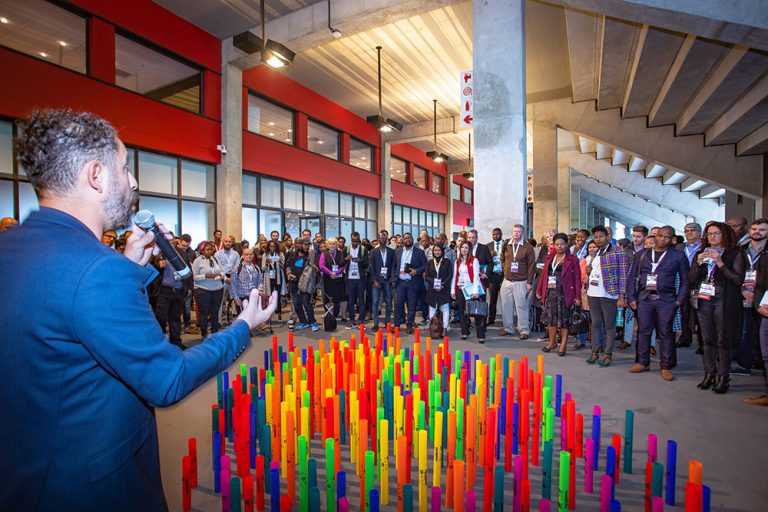
The stage is set to accelerate the entrepreneurship space, with the brightest minds in the innovation sector gathering for three days of pitching, partnering on and showcasing the most innovative products and services in Africa.

The SA Innovation Summit, taking place from Wednesday 11 to Friday 13 September 2019 at the Cape Town Stadium, will bring over 3500 delegates from 32 countries together to facilitate more than R1bn in deals between investors and start-ups representing the future of innovation.

The Summit is Africa’s biggest tech start-up event and provides a powerful platform for nurturing, developing and showcasing the very best of African innovation, as well as facilitating thought-leadership around innovation. Around 22 universities and research institutions, along with over 600 companies and organisations will be represented at the 2019 event.

Now in its 12th year, the Summit provides the ideal ecosystem to match over 1500 entrepreneurs with more than 200 potential investors. In 2018, the Match and Invest platform saw 2400 meetings scheduled over the course of two days.

“The technology and start-up space is underfunded in Africa, yet it yields the greatest results in any economy over time. In the UK every pound spent on innovation and tech start-ups yields nine to the economy. Africa still needs to leverage this potential return in its emerging economies,” says Dr Audrey Verhaeghe, chairperson of the SA Innovation Summit.

“The Summit serves as a catalytic event that strengthens and builds the tech start-up sector. We have evolved into Africa’s biggest and most exciting tech start-up event on the calendar and this year will be no different.”

The 2019 Summit will offer an unmissable line-up of world-class speakers, panel discussions and master classes. Experts from across the continent will deliver insights into the innovation landscape, and provide the knowledge and tools for start-ups to achieve exponential growth.

Two key opportunities offered for start-ups to access are the ANDZA Pitching Den and the Africa Cup.

The ANDZA Pitching Den, in collaboration with the SA SME Fund, carries a first place prize of R250 000 and will also give SA’s top entrepreneurs the chance to be considered for R10m in investment funding and acceleration. This competition aims to develop SA entrepreneurs and fast-track them to success, with a focus on seed, venture and growth stage businesses.

The Africa Cup (formerly the SA Innovation Summit Pitching Den) will see the winning start-up – credited for disrupting traditional ways of doing business – receive an investment offer of R5m. The second place start-up will receive an offer of R2.5m and the third place start-up will receive an offer of R1m. The first and second place prizes include acceleration based in Silicon Valley, Budapest or Lagos. Finalists will pitch their businesses in front of an esteemed panel of judges on the final day of the SA Innovation Summit.

A new feature for this year is the partnership between the SA Innovation Summit and the Unicorn Group, a pan-African investment company targeting innovative ideas, start-ups and early stage companies in tech and tech-enabled sectors. The Unicorn Group is also proudly sponsoring the prizes for this year’s Africa Cup.

Tickets for the SA Innovation Summit are available at innovationsummit.co.za/ticket-sales-2019.

From preventative medicine to smart mobility to 5G – the 2020s will see significant trends driving global growth over the next decade.

The Roaring Twenties of nearly 100 years ago was defined by a surge of consumerism, a brightly revitalised global economy and the arrival of the concept of ‘mass culture’. It was the era of jazz hands, fresh ideas and glamorous invention. It was also a time of significant political and social change – an undercurrent that charged conversations and technological innovation. Into this decade of post-war ennui and awareness came the telephone, the radio and the instant camera along with a slew of other inventions that changed the course of history. Today, the world awaits the 2020s, with eager anticipation and much excitement, as a decade likely to be defined as much by further leaps in technological innovation as by its socially influenced political and economic upheavals. The resultant landscape, filled with roaring changes, will inevitably require a much more comprehensive level of understanding to most effectively capture the resultant growth opportunities.

“There are seven major themes that will drive global growth over the next decade,” says Jonathan Sieff, Senior Portfolio Manager at Sasfin Wealth. “These will change the way we live, the way we travel, how we engage and collaborate, and how we work. Each of these themes should form part of any forward-thinking investment portfolio to ensure it is capable of benefiting from these specific market forces.”

Healthcare innovation is the first theme that will dominate the decade. The cost of medical solutions has reduced exponentially over the years – the complex process of mapping the human genome cost over US$1-billion when it first emerged, but by the mid 2020’s it will be mapped for less than a few hundred dollars. This has huge ramifications for preventative medicine as doctors can use genome mapping to assess cell mutations and invest in preventative care that could mitigate the health impacts of obesity, cancer and so much more. This will be complemented by further advancements in robotic surgery, preventative diagnostic equipment, improved education and medical intervention techniques.

“The second trend is smart mobility, which includes combining materials like lithium and cobalt with metalloids, such as silicon, or innovative organic compounds to produce the batteries of the future; new technologies required to drive the concept of e-mobility forward,” adds Sieff. “The next decade will see significant refinements to connected vehicles and mobility solutions that will fundamentally change the way we travel such as autonomous vehicles that bypass fossil fuels entirely.”

The third trend lies in a buzzword that dominates media today but has yet to deliver on its promise – the Internet-of-Things (IoT) and its enabler, 5G. IoT involves digitally animating the physical world, using a vast array of devices, with 5G enhancing the speed and reliability of connections across the globe. For now, 5G penetration is still relatively low globally. For example, the concept of the smart home has yet to entrench itself as a modern living standard. Only 3% of homes in the United States are smart homes, with seamless communication between devices to enhance quality of life. The next few years should see this concept become increasingly accepted and entrenched as the costs of internet access, mobility and technology reduce further.

“In addition to 5G enablement, robotics and artificial intelligence (AI) will continue to have a huge impact on the Fourth Industrial Revolution (4IR),” he says. “Technology and cost efficiencies will redefine consumer robotics and improve quality of living by automating a number of previously menial human functions.” AI-assisted diagnostics will be able to provide personalised care and improved treatment outcomes, and by considering all available evidence, deliver predictive analytics to detect hidden factors and reduce side effects through personalised drugs.

One of the major trends that will continue to lead in the Roaring Twenties will be digital entertainment and eCommerce. In terms of digital entertainment, “online content and how people access and aggregate their information will continue to innovate,” explains Sieff. “Online streaming TV is fast replacing cable and satellite delivery and this trend will accelerate. Alongside this trend, the world of advertising is clearly trending towards programmatic advertising, which will have a powerful impact on personalisation and eCommerce growth.”

In many countries, eCommerce is still not fully established. Even the United Kingdom has only 30% of its consumer base embedded in digital. The 2020s will see the omnichannel retail world continue to shift on its axis to become increasingly accessible and relevant to the consumer. This will be particularly obvious in developing countries, such as South Africa, where the online market remains limited but is now showing signs of significant growth.

The penultimate theme is cloud computing and cybersecurity. This market is growing exponentially and is extremely competitive. It will be defined by continuous innovation, embedded cybersecurity, and privacy of information. These factors will influence which organisations thrive and which wither over the decade as those that adapt will likely grow alongside cloud demand.

“Finally, the clean energy conversation will dominate in the 2020s,” says Sieff. “There is an increasing awareness of the need to live more sustainably and to invest into renewable power innovation. Innovation has become a necessity, given the environmentally harmful nature of fossil fuels over and above their finite nature. It has also improved the relative cost advantage for renewable options as population growth and ongoing urbanisation continue to drive the increased consumption of electricity, particularly in a world of more interconnected devices.”

“These seven trends will govern how we live, work, commute and entertain, and will redefine the infrastructure within which we operate. They are interconnected and dynamic, making the landscape even more exciting in term of its potential and how it will influence investment and markets.”

The world has lived through a hunter-gatherer economy, an industrial economy, and an information economy. However, today, travel industry analysts are diving head-first into what modern-day marketer Seth Godin calls the ‘connection economy’.

This new economic era is also commonly referred to as the ‘relationship economy’, the ‘experience economy’, and, even, ‘the dream society’. It is characterised by meaningful connections or relationships and, in the context of access to information, personal choice and competitive pricing, the connection economy prioritises a personal connection, ie: “I want to do business with you because I like you, trust you, I believe in your cause, your values; we have a relationship.”

As futurist Keith Coats puts it: “It is that simple, it is that complicated.”

Although person-to-person ‘connections’ depend on human interaction, technology is helping employees to build connections with their customers through intuitive solutions.

FCM Travel Solutions General Manager Nicole Adonis says in corporate travel, technology can reveal patterns, trends and business insights to help profile the corporate traveller.

“As a global organisation, FCM recognises that data is a critical resource to build connections. We recognise too that the ability to analyse and mine data will shape your business travel programme. And we recognise that high-quality, clean, transparent and organised data offered in real-time and with a wide range of reporting functions can be the lifeblood of your business – and ours,” says Adonis.

By interpreting Big Data, FCM has significantly reduced traveller friction, the term used to describe wear and tear frequent business travellers experience. “By identifying how your travellers behave in the travel decisions they take, you’ll be able to forge a closer connection with them and help reduce traveller friction and increase compliance with the travel policy,” adds Adonis.

Adonis says more than 80% of travel managers have shown an interest in looking further into the impact of travel on travelling employees.

“Often, account managers are asked to model specific programme enhancements that would make travellers happier, for example, moving from economy to premium economy on heavily-travelled routes, the cost of a minimum standard of nightly hotel rates and improvements to car rental programmes. FCM has found that, in some instances, changing an element of the policy to give travellers greater allowances resulted in a win for traveller satisfaction, while the cost increase to the programme was minimal,” Adonis reveals.

Another example would be when an organisation has a frequent traveller who spends half of the year on the road, she says. “It is essential to understand the stress they are under as a result of that travel. It could be cheaper to adapt the travel policy to suit their needs, within reason, than to replace a valued employee.”

Personalisation is also vital, Adonis maintains. Does the traveller prefer unlimited Wi-Fi to a daily breakfast? Do they prefer flying on a legacy or a low-cost carrier? That is where Big Data helps Travel Managers to understand and deliver on their business traveller’s demands for a personalised experience, Adonis maintains. “Predictive functionality presents only the choices that are going to be most pleasing to that individual traveller, speeding up the process of planning and booking and even further cost savings.”

Seth Godin coined the term ‘connection economy’ and defines the concept as built on three pillars: co-ordination, trust and permission. Co-ordination creates value by bringing people together; trust establishes grounds for a relationship; and permission means it is essential to talk to those who will listen. “The connection economy is a great way to view corporate travel and the relationship between TMCs, travel buyers and time-poor corporate travellers.”” Adonis concludes.

Wouter Vermeulen is the General Manager: Southern African Region at Air France-KLM

Describe your leadership style
Coaching leader

Your top tip to beat procrastination?
Differentiate between what is important and what is urgent. Focus on the important stuff.

Favourite getaway destination?
Amsterdam! I lived there for many years and I am still in love with the city, the canals, the restaurants and the nightlife.

Who or what inspires you?
My wife and kids; colleagues and friends. Actually everyone has something that can inspire me, a different view on things, the way they approach challenges. Generally authenticity or authentic people inspire me a lot.

Your one wish for South Africa?
Get rid of corruption. Corruption undermines progress and the efforts reducing inequality and improving standard of living for all South Africans.

If you could have any 3 people over for dinner, who would they be and what would you serve?
Tiger Woods, Roger Federer and Nikki Lauda. All great sportsman who had amazing comebacks in their careers. I would love to learn more from them about their experiences and how they overcame their challenges. What would I serve them… My grandmother’s (Dutch-)Indonesian rice table. A table full of small harmonised traditional Indonesian dishes.

What advice would you give to aspiring young business starters?
Be brave, be fearless and remember that success is a string of failures without losing your enthusiasm.

What is the one thing most people don’t know about you?
I love to cook! (But hardly ever get to do it at home as my wife out-cooks me easily).

What would you do with an extra hour in your day?
Spend it playing with my 2-year-old son.

When the acronym VUCA (volatile, uncertain, complex and ambiguous) was coined by the US Army in the 1990s to describe how crazy the post-Cold War years were, those early proponents had no idea that this would continue to be true for years to come. VUCA continues to be applied in our 21st century world to describe the effect of frequent change in organisations and the global economic climate that can be a cause of disruption, hyper-competiveness, turbulence, high velocity and radical flux.

“We know that strategic workplace change can be effectively achieved when it is done with clear intention and planning,” says Stephen Rothgiesser, MD of The Change Consulting Group. But too much change or change that is impulsive or insufficiently planned for can push employees over the edge in terms of their ability to cope with daily responsibilities. To add to this, there is an upward trend in the level of stress and uncertainty about future job security, often due to the introduction of new technology and the perceived threat of workplace automation and robotics. This can have a knock-on impact on workplace productivity, as well as the mental and physical wellbeing of employees.

Rothgiesser adds that “most organisations don’t have clear systems in place to achieve successful change implementation; added to this, the pace and on-going nature of organisational transformation requires an agility and resilience that many organisations simply haven’t yet developed.”

The consequence is that stress, anxiety and depression are shooting off the charts. According to the 2018 Benefits and Trends Survey conducted by Aon Employee Benefits in the UK, the number of employers reporting employee stress and mental health related illnesses rose from 55% in 2017 to 68% in 2018. On top of this there is a worldwide stigma about reporting mental health issues in the workplace. So, it is likely that the true extent of mental health issues in the workplace is under-reported.

In May 2019, the World Health Organisation (WHO) included burn-out for the first time on its International Classification of Diseases (ICD-11) list, which is the global benchmark for health diagnosis. Burnout has been classified by the WHO as “a syndrome conceptualized as resulting from chronic workplace stress that has not been successfully managed”. In other words the concept of burnout is only applied in the context of work because of the prevalence of this phenomenon worldwide.

The WHO officially identifies three dimensions of burn-out:


1. Feelings of energy depletion or exhaustion
2. Increased mental distance from one’s job or feelings of negativism or cynicism related to one’s job
3. Reduced professional efficacy

Alongside the human cost of mental illness, there is also a considerable economic burden. For example, in 2017 the Financial Mail reported that mental health problems cost the South African economy billions each year. Dr Ali Hamdulay, CEO of the Metropolitan Health Group explains that “mental illness in the workplace leads to decreased productivity, increased sick-related absenteeism, poor work quality, wasted materials and even compromised workplace safety”.

Looked at another way, studies have linked increased employee wellbeing with a positive impact on job performance, healthy competitiveness and profitability. To realise these mutual benefits there needs to be an organisational paradigm shift from employers trying to ‘squeeze every last drop’ out of their employees to instilling a culture that values work-life balance and a sense of personal wellbeing. It also means that proactive stress management and wellbeing strategies need to be built into organisational transformation planning and implementation.

Somatic psychologist and author of The Mindful Body, Noa Belling is a Principal Consultant with The Change Consulting Group specialising in corporate wellness in the context of organisational change. Alongside important factors like easy access to healthy food and allowing spaces and activities that promote relationship building and harmonious teamwork, Noa has the following tips to offer for individual on-the-spot stress relief that can be easily incorporated into the workday. Over time these kinds of mindful interventions can make a significant difference to our ability to think clearly, be productive even in the face of challenges, promote emotional resilience and feed into a sense of wellbeing.

• Take any opportunity for physical activity during the workday, especially when sitting at a desk for long hours. Examples are taking the stairs instead of the lift, breaking for a brisk walk to clear the head and allowing some meetings to occur while walking rather than always sitting at a desk. Physical activity is an excellent way to release stress hormones and can also stimulate creative thinking.


• Pause at your desk now and again to carry out a quick body scan to release tension (such as by consciously relaxing, stretching out or breathing into areas that feel tense) before resuming work.


• Adjust your posture to be more centered and upright while taking a few deep breaths to encourage your feeling comfortable in this position and not tense. This simple act can trick your brain into believing that you, not your stress, are in charge. As a result feelings like anxiety and overwhelm can move more into the background as a clearer, more focused and determined headspace moves to the fore.

• Take a one or two minute break at your desk to deepen and even out your breathing. This can help build a sense of emotional strength and resilience again as you trick your brain to believing that you are taking charge of how you are feeling. For example, inhale to a count of 3 or 4 and exhale to the same count, repeating a few times. This simple act has been found to energise your body and activate your prefrontal cortex, which is your brain’s home of intelligent thinking, good planning and clear-headed decision-making. One study in the banking sector linked 10 minutes a day of even, deep breathing (in this case carried out in one go once a day, but that you could break up through the day) with consistently better decision-making and reduced stress levels. In other words the simple act of breathing deliberately and evenly can be empowering.

For organisations, where high stress and burn-out are taking a noticeable toll, Rothgiesser advises taking a strategic approach where the systemic challenges are first properly diagnosed, and appropriate remedies are identified and planned so that a sustainable solution can be implemented. For example, issues could sit with a few vocal individuals, or could affect the entire organisation. A staff engagement survey can be used that is targeted to address this question in order to glean valid data. Or focus groups could be run in various parts of the organisation, or the HR function and line managers can be used to identify concerns in this regard as they arise. As part of this it is important to ascertain what the true cause for the frustration or burnout is. Is it a personal issue pressing in on work? Is it a tiresome relationship dynamic in the team or with a leader? Or is it to do with organisational culture? Different kinds of triggers require different kinds of remedies.

“There’s no one-size-fits-all wellness programme,” says Rothgiesser. “Organisations are highly variable and the causes of anxiety and burn-out are multi-faceted and ever-changing given the life-cycle of an organisation and the challenges currently facing employees.” For this reason and in order to implement sustainable organisational solutions, wellness programmes should be based on an accurate understanding of the people and organisations involved.

Dr John Demartini offers six steps on how to change your career halfway through your life.

Do you feel unfulfilled in your current job? Are you daydreaming about a career you’d rather be doing? Do you dread Mondays? The honest answer to these questions might very well lead you to the conclusion that you are, indeed, in the midst of a mid-career crisis and it may be time for a change.

Staying in an unfulfilling job until you retire may not be the wisest path. Retirement from an unfulfilling job itself is a man-made social projection and the value of spending your life – doing what you love and loving what you do – is priceless.

Many people believe that youth is a ‘heavenly’ time of optimism and energy before the ‘hellish’ decline into old age and death. That’s only true if you make it so, and you really do have the power to choose such a perceptual path at any time along your career.

This pernicious retirement myth has little to do with the reality of life and human potential. I know many people in their 70s, 80s and 90s who are still doing what they love and loving what they do and still going strong. Chronological age is certainly not the only determining factor.

1. Know when you are ready for change. While it sometimes takes a crisis for the most stubborn of us to make a change in our lives, a good indication that you are no longer fulfilled in your job is a lack of energy and enthusiasm on a daily basis. When the pain of desperation overrides the pain of action, you’ll move into your new career.

2. Interview yourself. The quality of your life is based upon the quality of the questions you ask yourself. Think about what you would truly love to do as a career and ask yourself what your most inspiring job would ultimately look like.

3. Expand your mind. Take the time to read, research and study this area or areas of interest. Look for mentors and people in your desired profession or skill area to speak with.

4. Make a plan. Once you have evaluated your options, take the time to set out a plan and give yourself permission to create your own business if that is what you wish. Some entrepreneurs began their inspiring careers in their 60s or even later.

5. Reinvent the role you have. As an alternative to a completely new career path, it may pay to simply make a few changes to the role you currently have and/or look within the organisation you are currently in to see where you feel you are able to serve the most and what serves you the most – at least temporarily.

6. Appreciate what your current job offers. While you are envisioning, planning and gradually initiating and executing your new career pathway, it is wise to link how your current job is actually helping you step into your new career and how it is offering you the necessary skills, contacts, insights, leads and opportunities along the way.

7. See the solution. You are never too old or too entrenched in any given profession to make a change. Focus on the experience that you’ve gained and the skills you have acquired rather than possible excuses for not moving forward.

Ask yourself these questions

The quality of your life is based on the quality of the questions you ask. Here are seven high quality questions you can ask yourself when choosing a new career.

What would I absolutely love to do in life? This question helps bring clearly into your conscious mind one of your heartfelt and meaningful dreams or objectives.

How do I become handsomely paid to do it? This question helps you make your vacation your vocation. Why not get financially rewarded for doing whatever you love?

What are the seven highest priority actions steps I could complete today that would enable me to do it? This question helps you organise your actions.

What obstacles might I run into and how do I solve them in advance? This question will help you act rather than react along your journey.

What worked and what didn’t work in my search for employment? This question will help you refine your actions and keep them on priority.

How do I do what I would love more effectively and efficiently?

How did whatever I experienced today – whether positive or negative – serve me? This question helps you realise that all great endeavours come with supportive and challenging consequences that act as feedback mechanisms.

By Nicole Adonis, GM FCM Travel Solutions

While most companies focus on bottom-line costs, the easiest to measure and understand, value will determine the health and well-being of a company in the long term. However, value is harder to measure and to understand.

According to a recent report by Bain & Company, an international management consultancy firm, most managers evaluate products and services on price and value. The report shows value is divided into four different categories and value can be either functional, emotional, life-changing and/or have social impact. What each consumer finds valuable depends not only on their personal preferences but the context in which the product or service is used.

Business travellers are not unlike standard consumers. Although they consider price when booking business travel arrangements, travellers will go rogue if they can find a choice outside travel policy stipulations that better meets their needs or an option that they perceive to be of more value.

The question is, what do business travellers deem valuable?

Guided by feedback from its Client Advisory Group, FCM Travel Solutions develops new concepts and features that offer value to business travellers by addressing their common pain points.

When 80% of travel managers showed interest in analysis around the effects of travel to their travellers, FCM used traveller analytics to benchmark the impact of travel on an employee.

The TMC gauged booking class preferences, flight times, low-cost carrier usage, single flight legs, travel over weekends and other metrics. FCM took the research a step further by considering what the cost increase implications would be on the company’s travel programme if new ideas around travellers’ welfare were implemented.

Often, Account Managers are asked to model specific programme enhancements that would make travellers happier and be valuable to them, for example, moving flights from economy to premium economy on heavily-travelled routes, the cost of a minimum standard of nightly hotel rates and improvements to car rental programmes.

FCM found that, in some instances, changing an element of the policy to give travellers greater allowances resulted in higher traveller satisfaction and created great value for business travellers, while cost increases to the programme were minimal.

FCM’s solution makes policy simulation easy, allowing clients to see what cost impact and traveller enhancement in a hypothetical scenario would entail. If these changes to the programme would be positive, it can then be implemented.

Around-the-clock support is another factor that ranges high on the list of traveller values. A study conducted by the Association of Southern African Travel Agents (ASATA) found that business travel is often perceived to be lonely and impersonal, inconvenient and stressful. Other factors such as the business traveller’s personal circumstances, their level of travel experience, familiarity with the destination, the complexity of their travel itinerary or nature of the business trip may intensify the results.

The study concluded that the business traveller’s priority when travelling is to know that someone is available 24/7 to make it as painless, hassle-free and stress-free as possible.

Although the assistance of a human travel expert remains a non-negotiable, new user-friendly technology such as chatbots can help ease traveller friction further by giving business travellers real-time advice and in-trip suggestions around the clock. Whether it’s trying to find the best flight, the most convenient hotel or just knowing where to have dinner in a new city, a chatbot can go a long way in providing business travellers with the frictionless experience they crave.

Knowing what travelling employees value should be a company’s top priority, whether considering travel policy or another aspect of the business. Cost-cutting may save a company in the short term, but short-term thinking can result in long-term friction.

By Shreekanth Sing, Technical Legal Adviser, PSG Wealth

Offering an employee benefits (EB) package benefits the employer as well as the employee. For the employee it typically means that they will be saving regularly for retirement and that they will have medical and risk benefits in place. For the employer, employee benefits have been shown to reduce absenteeism, increase productivity and reduce staff attrition. Not to mention that an attractive EB package may be a crucial if you want to attract top talent to your business.

Recent technological and legislative developments mean that EB advisers and product suppliers are increasingly able to provide individual employees with more personalised advice that takes their retirement savings, medical aid and group risk benefits into account. EB advisers and product suppliers are also investing a lot of effort into ensuring members are educated and understand the impact of their decisions.

Components of a typical EB offering

1. Retirement fund (pension, provident fund or group retirement annuity)
Typically, an employer offers a pension, provident or group retirement annuity fund. Contributions are usually made monthly to the employee’s retirement savings, according to a percentage of their annual salary, for example 10%. Contributions must be invested in line with Regulation 28 of the Pension Funds Act and are meant to generate stable growth over the long term, which in turn aims to provide for employees when they reach retirement. Major benefits of these funds include that investment returns within these funds are tax free and contributions to the fund are tax deductible.

2. Group risk benefits
Group risk products are designed to insure employees and protect them and their families in the event of long-term illness or death during their working lifetime.

Group life benefits
Group life benefits automatically apply to all employees who are eligible to be members of the retirement fund, as it is run on a pooled-risk principle. This means individuals do not need to undergo medical underwriting to be covered up to the predetermined free cover limit. Because of this pooling of risk, group risk benefits are often cheaper than individual life assurance premiums, although it will vary from company to company based on their company’s risk profile. For example, a mining company would be considered higher risk than an architectural firm.

Income or capital disability
Most companies also include disability benefits as part of their employee benefit offering. These can either be in the form of a lump sum (also known as a capital disability benefit) or an income continuation benefit.
o Lump sum disability benefits pay a lump sum that can, for example, be used to settle debt or make alterations to a home if specialised care is needed.
o Income protection benefits pay a percentage of the employee’s monthly salary (the industry standard is 75%) until the earlier of recovery, death or retirement.
o To qualify for the lump sum disability benefit, the disability must be deemed to be ‘total and permanent’ while in the case of income continuation disability benefits, the employee needs to be unable to pursue their own career (although this definition usually broadens to ‘own or similar’ after a period of two years).

Critical illness
Critical illness can have long-term consequences for the financial well-being of a family. This benefit covers most severe illnesses and dread diseases like cancer, heart disease and stroke, and is usually expressed as a multiple of salary, as in the case of death benefit cover. The lump sum can help offset any shortfall on your employee’s medical aid, help them access the best medical technology, or be used to offset additional expenses or reduced income because of lifestyle changes.

Funeral cover
Many employers provide funeral cover in addition to death and disability benefits. This type of cover is usually paid out quickly (within 24 to 48 hours).

3. Medical aid
Access to quality private healthcare can make a major difference to the lives of your employees. Since it helps to eliminate the long waiting times associated with public health facilities, it can also enhance overall productivity. Most employers offer a choice of a few different plans, and selecting the right one is important. Medical aid tax credits (with amounts defined by Government) reduce the normal tax a person pays, thus helping to make medical aid somewhat more affordable.

4. Extra benefits
Employers can choose to add even more options to their offering. These could include:
Education benefits – Cover to help meet educational and living expenses for children.
Gap cover – General practitioners, specialists and private doctors often charge higher rates than what the medical aid covers. The costs quickly add up when individuals are hospitalised, and gap cover is designed to help cover any shortfall
Employee wellness programmes – These programmes typically offer employees support to ensure their physical and psychological well-being and to prevent these issues from affecting their productivity. They aim to help employees manage personal and work-related issues and stress and can include psychological counselling and financial and legal support.

Employee benefits can play an important role in encouraging good financial behaviours and promoting a savings culture and financial inclusivity. They are an investment in your company and employees’ well-being, and should be reviewed in collaboration with EB adviser as part of your annual business plans.

Headed by seasoned businessman and entrepreneur Ken Varejes as CEO, Nfinity is an innovation hub building, nourishing and elevating existing media and communications focused businesses. Nfinity is well placed for established entrepreneurs to grow and better their businesses under the guidance of Ken and his experienced management team, each a specialist in their own field. Each of the Nfinity businesses, together with their respective management teams, leans on the guidance of Ken and the experience that he has accumulated over three decades of leading businesses in the advertising and media marketplace since 1987.

Describe your leadership style
I don’t interfere in the running of the different businesses under the Nfinity group as each MD of each business runs their own ship. So in essence I try and get the best out of each leader of the different businesses by working around their own strengths and weaknesses and attempting to bolster and assist to make them better operators / leaders of their respective businesses. There is no one brush that one can manage with. So a different brush is needed per MD. That has really worked for me over the many years that I have looked after different groups of media companies that I have looked after.

Your top tip to beat procrastination?
We have a focused strategy document on each business which we go through on a monthly basis to ensure that the top five items are focused on. This ensures that we don’t procrastinate on any key issues. We don’t put much resource on all the other identified action points as if we achieve the top five then we will mostly achieve what we set out to do.

Favourite getaway destination?
Prague and Israel – both great spaces for families to enjoy

Who or what inspires you?
The management team that I work with every day. They have an insatiable appetite to develop new businesses and make them successful. I might add that they have great passion to be successful and that in itself is inspiring.

Your one wish for South Africa?
That Government focuses on entrepreneurship and creates an environment where this can flourish. Giving people the means to learn how to form companies and understand the basics of what is required to keep a business going. This help and encouragement would ensure that we as a country dramatically reduce unemployment and thrive as a vibrant society. Presently there is no drive by Government to make this a reality. It should be done in conjunction with existing entrepreneurs who can help and mentor. It does need Government to start the process and provide the correct incentives to make this flourish.

If you could have any 3 people over for dinner, who would they be and what would you serve?
Elon Musk, Warren Buffet and Jeff Bezos. I would serve traditional SA food to showcase our great heritage and unique culture.

What is the one thing most people don’t know about you?
I have three amazing children – all very different in their outlook on life and are positive human beings. The eldest having his own business and my middle one now doing her accounting articles to finalise becoming a CA. The youngest is in Grade 12 and has a passion for creativity. So all in all I’m a proud dad.

What would you do with an extra hour in your day?
Wow what a question – I love it. Historically I would have said an extra hour for work but now I would focus on learning more.

The Thanda Group (Thanda meaning ‘love’ in isiZulu), a family held portfolio of hospitality, lifestyle and philanthropic experiences in Africa, triumphed at the World Travel Awards winning prestigious accolades for both its private island located off the coast of Tanzania as well as its safari offering in KwaZulu-Natal, South Africa.

Thanda Island was awarded the title of Africa’s Leading Luxury Island 2019, whilst Thanda Safari’s Villa iZulu and Thanda Safari Lodge also came first in both the Africa and South Africa categories for Leading Luxury Private Villa 2019 and Leading Safari Lodge 2019 respectively.

Situated within Tanzania’s Shungimbili Island Marine Reserve, Thanda Island provides absolute exclusivity for families and friends to enjoy on a sole-use basis. Combining laidback tropical beach-house living with outdoor ocean adventures, it features one expansive five-bedroom villa, 2 beach chalets accommodating 4 further guests each, an impressive glass rim-flow swimming pool, a boat house full of water activity equipment, a tennis court, a fully equipped gym, yoga deck and an outdoor cocktail bar. Encouraging guests to slow down and soak up the relaxed tempo of island life, it is off-grid and solar-powered offering guests an environmentally sensitive, fun and restorative Indian Ocean experience in total seclusion.


Set in 14 000 hectares of spectacular wilderness in the heart of Zululand, Thanda Safari offers an authentic South African wildlife experience with excellent game viewing all year round. Big Five game drives, specialised bush walks, wildlife conservation activities and Zulu cultural tours into the rural communities provide meaningful insight and a rewarding African experience.

Circular in structure and reminiscent of a traditional Zulu rondavel (homestead), the 9 suites at Thanda Safari Lodge each feature their own spacious lounging areas and plunge pools. The lodge also features the Thanda Spa comprising two treatment rooms, hydrobath and showering facilities, offering a range of full body and facial treatments and pampering.


For a luxurious safari villa experience, Villa iZulu is available to guests on an exclusive-use basis. Sleeping up to 10 in 5 suites, it comprises a library/cigar lounge, wine cellar, playroom, heated swimming pool, Jacuzzi, an outdoor boma and its own helicopter pad. Fully serviced and with a dedicated complement of staff, this magnificent 900sqm villa is set within a beautiful, fully fenced garden for their younger guests to enjoy playing in freely and safely.

Early in January 2019, The Enterprise Observatory of South Africa highlighted some alarming findings in the Department of Home Affairs’ 2017 white paper on emigration. According to the research there is an acceleration of skilled emigration with around 400 000 professionals leaving South Africa over the past 14 years.

The trend speaks to a growing recognition that human capital plays a vital role in the knowledge economy, and that a global war for talent has emerged as companies are experiencing a shortage of skilled workers. This is according to Regard Budler, Head of Product Solutions at Momentum Corporate, who believes that many South African companies are not exempt to this challenge “Companies not quick enough to respond to this threat could fall behind, as the global race for the best and brightest gains momentum.”

According to the World Economic Forum Global Challenge Insight Report, highly skilled workers in areas of engineering, as well as humanities, sciences, digital technology and arts are most sought after. The report identifies three key factors that are driving this global tendency, namely the general shift in demographics, the high pay offered by developed economies and limited opportunities for growth in home countries.

“Developed countries are experiencing the negative impact of an ageing population, and are looking to the next generation of highly skilled workers to replace these critical skills. And according to Momentum Corporate research, 76% of the workforce will be younger than 37 by 2020. Employers need to stay ahead of not only current, but also future workforce trends if they want to maximise productivity. This vacuum in expertise is creating an enticing opportunity for a younger, highly skilled workforce – particularly millennials – from less developed economies to gain international exposure while progressing up the corporate ladder,” says Budler.

He admits that in the state of the current economy, it is difficult for South African companies to compete with global salary expectations. Based on an analysis of Momentum Corporate’s client base, 74% of employees earn less than R150 000 per year, while many may have not received annual increases for the last three years. However, he believes it is possible for businesses to counter this by thinking more broadly around their employee value proposition in terms of employee benefits.

“Younger employees are increasingly seeking opportunities for personal growth and career development, including opportunities to travel and work overseas. Companies looking to retain these workers could consider rewarding loyalty by offering workers these alternative opportunities. We’ve noticed more and more companies are using paid sabbaticals, bursaries to study overseas or international role exchanges as a means to drive engagement and keep talent,” continues Budler.

Budler points out that millennials place value on work-life balance and flexibility. The advancement in technology has changed the way employers engage with employees, and how employees engage and collaborate with each other, which can allow workers to work remotely and with greater flexibility. Companies can respond to this trend by acknowledging that millennials value time with family, and recognise that the hours spent in the office don’t necessarily translate to productivity, but rather on getting the task done.

Budler says that with the rise of work place flexibility, highly skilled employees are also looking for more flexibility and choice in the structuring of their formal employee benefits. A good start could be to simply utilise a retirement fund offering that includes member level investment choice or flexibility for employees to adjust their level of cover on group benefits such as critical illness and life cover.

He continues that millennials are also seeking work that is more purposeful. “South African employers can counteract the high salaries offered by global companies by becoming a valued place of work. They can consider doing this by cultivating a workplace culture of shared values, and providing employees with the opportunity to spend part of their time championing causes that are close to their hearts”.

“Partnering with a future-forward employee benefits provider will allow employers to create a compelling employee benefits value proposition that not only resonates with the values and aspirations of highly skilled millennials but one that meets the objectives of the business,” concludes Budler.