500 NEWS

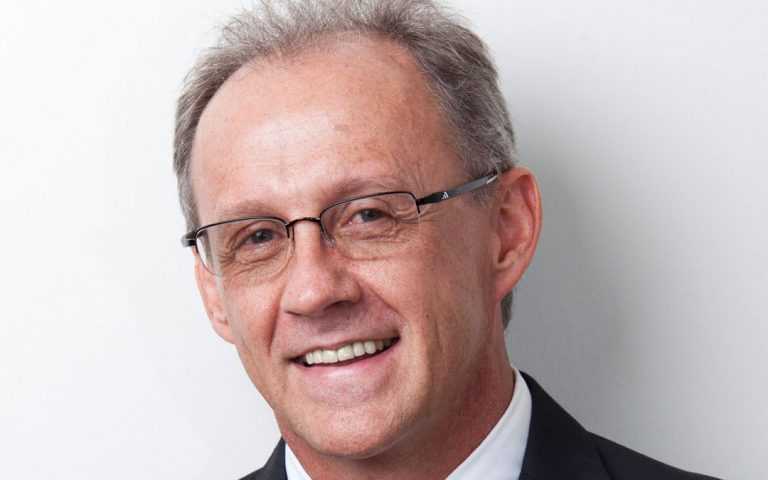
Adam Orlin, Head of Investec Import Solutions

Debt is often positioned as a bad thing. And while this might be true to some extent, small businesses, and in fact business of all sizes, can utilise this as a great tool to grow. So let’s examines how this might not necessarily be a contradiction of terms.

Think about it. You have want to start a new business. Unfortunately, the current economic climate means you do not have enough cash flow and cannot raise equity. Enter the world of managed debt.

Managed debt can be one of the most cost-effective forms of financing available to a growing business. A company that is stable and well-established, and has both assets to borrow against and the cash flow to service the loans, can utilise this form of debt strategically.

Managed debt should not be feared, but instead viewed as a tool that can help grow a business. This is often designed for low-risk situations so the finance capital specialists has the peace of mind that it will get the repayments and the business owner has access to one of the most cost-effective forms of financing around.

If the debt is not repaid, the bank can sell an asset belonging to the business to get the required funds. But does this not merely add to the pressure of a business-owner who already is in a challenging environment trying to ensure growth and make a profit?

Not necessarily, when factoring in a steady cash flow and the income generated from the future sales, the debt can be settled quickly while still providing growth with additional revenue from future sales. Of course, this does not mean debt should be used to gamble wildly on something that might not pay off. This could often leave the business in a far worse situation than what it previously was. However, if managed correctly and within terms that suit the business, there is no reason why the money cannot be used to provided added advantages to the business.

Additionally, managed debt can be budgeted for as there is a fixed amount to repay every month.

The adage of spending money to make money is great but you need access to those funds. Managed debt in the context of future revenues does provide a high return on the ‘investment’. It also enables importers to grow their product inventory and keep up with customer demand over the course of several months.

What’s more, managed debt can also be used for the maintenance and repair of equipment while the business capital can be used on identifying new technologies that are more effective and reflective of trends specific to your industry.

If the importer does decide on going the managed debt route, it is also good to know that there are high value import specialists such as ourselves that can finance the cost of goods as well as the associated forwarding and clearing costs.

This means the business owner can focus on using cash to fund new staff or offices, or even identify other opportunities for growth which – in a cash strapped market – is invaluable.

Continued local and international market volatility has many South Africans actively looking to create a property portfolio. Gary Palmer, CEO of Paragon Lending Solutions, looks at how to take advantage of stalling property prices and what’s shaping up to be a buyers’ market in order to get started.

Capital growth can’t be your cornerstone
Many new investors will see a great property in a good area going for a good price and think this equates to a good investment. Investors should be looking for properties which immediately generate income and have the ability to deliver sustained, secure income growth over time. Just focusing on the property appreciation over time will not yield the kind of growth your portfolio requires. Properties drain cash. Upkeep, increasing rates and taxes and other expenses mean investors must look for good cash-generating properties if they hope to build a growth portfolio.

The earnings and serviceability of your first property, rather than its resale value, will be closely scrutinised by lenders when you look to secure a loan for the next property purchase.

It’s also important to remember that it’s not just about maintaining a property, investors need to constantly find ways to nurture their investment over time. The days of yield compression are over, and you now need to find ways to add value to your tenants and the property itself.

Local is attractive
The lure of owning international property can be intoxicating and, if you can, you should spread your portfolio to include some exposure to foreign income. However, the local market is currently offering excellent value. More than this, being close to your asset means you can take a much more effective and hands-on approach in terms of managing and overseeing your investment. As one property investor wisely said, you will make more money from a property within a one kilometre radius of your head office than anywhere else.

Build a risk margin into your return forecasts
Buying a property that has great returns is the goal when starting a portfolio, but it’s prudent to be realistic about your future – especially when you are looking to add an additional property to your investments. Signing long-term leases with stable tenants is a sound first step, but even the best laid plans can hit a snag. When preparing your forecasts for lenders ahead of your next purchase, make sure you factor in a couple of months without your rental income. Should your tenants suddenly depart you don’t want your investment plans to fall apart – and you can be sure your potential lenders for the new property will have done the same when they assess your risk profile.

Consider partnering with a high net worth individual
Getting into the property market can be a challenge. South African lending models are generally geared towards people who either have a strong balance sheet or who have good equity. If you want to get a foot into the door you need to be out on the road and finding the really great opportunities. Fortunately there are a number of deals to be had at the moment and many investors are capitalising on this.

Partnering with a high net worth individual is one way for new investors to get started. As with all business partnerships, making sure there is a good cultural fit, a common vision and long-term expectations, and that all the partnership agreements and paperwork are settled is paramount.

Many a successful property portfolio has been built on a Find, Bind and Grind partnership. This is where someone puts in the work to find a great deal, the other puts together a great deal and business plan to make the investment work and finally the investment is made to do the work (grind). In this way, it may even work out that the partner who found the property doesn’t even put money into the deal, but rather does all the work required to make the investment profitable.

Whatever the method you choose when starting a property portfolio, it’s important to remember that there are independent lenders who can introduce you to a network of potential investors. More importantly, they can help you find one that best suits your unique needs and investment vision.

While data is becoming recognised as an organisation’s most important digital asset, coupled with the rapid rate at which data volumes are growing, business leaders in South Africa need to take action now to reduce their ‘Databergs’ to avoid spiralling future data management costs and the risk of sweeping sanctions, according to new research carried out by Veritas Technologies, the worldwide market share leader in enterprise data protection.

Veritas Technologies carried out a survey which was conducted by Positive Marketing with approximately 100 IT decision makers and data managers in South Africa. It revealed that South African organisations are beginning to take control of both their clean data (data which has been tagged and classified) and dark data (data whose value has not yet been identified, it may include business critical data as well as useless ROT data). From 10% in 2016, the amount of clean data held by South African organisations has almost tripled and now occupies 28% of stored data, 14% above the global average. Furthermore, on a positive note dark data has fallen to 13% below the global average.

Redundant, Obsolete and Trivial (ROT) data, however, which is known to be of low or no value, has only fallen 1% since last reported, which still makes up to 31%, almost equal to the global average of 32%. South African organisations need to pay close attention to ROT data even though some progress has been made. The survey also reveals that the average South African organisation has just 10% of its data tagged as Business Critical or clean data which has a recognisable business value, as compared to an EMEA average of 14%. Organisations have done a great job of tagging data, however, almost a third is data they know they don’t need.

The survey also reveals that in 2016, the majority of South African organisations – 52% – calculate the cost of storing and processing data by its business value. Size or the volume of data, however, has now overtaken the business value as the main consideration for IT executives buying new storage, with this figure rising from 41% to 56%.

Allocating budget on the volume of data rather than business value is not best practice but organisations are struggling to keep up with the huge growth in data. (IDC forecasts this to be 44zb next year which will increase to 163zb in EMEA by 2026). Again, the risk is South African organisations are wasting IT budget on storing unnecessary ROT or unknown dark data.

Currently the data for 39% of South African organisations is stored in the cloud, 9% less than what organisations predicted would be stored in the cloud two years ago. 89% of South African organisations want to adopt cloud services, however the cost of the adoption is hindered by contradicting views. On the one hand, 73% of organisations want to adopt the cloud to reduce backup and recovery costs, yet cost still seems to be a hurdle. 39% are concerned about the increasing cost over time when moving to the cloud. The degree of concerns about cloud adoption vary by job function.

Over half of Operations Directors, 52%, and 48% of IT Directors are concerned with increasing costs, whereas only 13% of CIOs are concerned about increasing costs over time. Perhaps CIOs are less aware than more junior and digital IT executives who have more direct experience of the cost of cloud implementations.

The survey also highlighted that financial firms in South Africa are confused about the move from old, expensive disk and tape devices, to the cloud. Over half, 56%, continue to store long-term data on primary devices as they believe these are more secure than the cloud. This belief is reflected further in the 67% of organisations whose main concern is security, double the 33% who are mainly concerned about the cost of moving to the cloud.

Testing the disaster recovery ability of its IT services has been side-lined in many South African organisations. If anything, disaster recovery is tested less frequently now than before. This is a worry because learning your disaster recovery has failed in a live situation is the real disaster.

From two years ago, organisations testing disaster recovery every six months has risen by 15%, most prominently in the finance and retail industries at 44%. Whereas, testing once a quarter has fallen by 13%. This means that although their cost-conscious culture is saving organisations’ money, security is being compromised.

David Mc Murdo, Regional Director, Veritas Technologies – South Africa, says, “whilst South African organisations are becoming more aware of the need to take control of their dark data, the rate at which data is growing is making it increasingly difficult for organisations to keep up with balancing clean data and dark data. Organisations need to realise the cost saving benefits of deleting stored data that is not being utilised. South African businesses are starting to put measures in place to stop the accumulation of dark data through the use of IT polices, workable information, governance, as well as setting up procedures to control how employees are handling company data.

Henk Olivier is the Managing Director of Ozone Information Technology. He is passionate about technology and the impact it can have on the business and the individual, and he is always looking to how to implement technology in such a way as to boost the potential of the small to medium business.

Describe your leadership style.
My leadership style is to lead by example and to be an inspiration to people so they can see where you want to go. I believe this empowers people as they always know the direction you plan to go. The other thing is to always understand and make sure you know the strength of a person and use their strengths to bring out the best in them.

Your top tip to beat procrastination?
That is sometimes difficult as a business owner as there comes many things during a day you need to deal with. Then you start by postponing things which can easily cause procrastination if it looks like there are just too many things to do or to manage. The key for me is to always complete tasks and handle matters as they arrive. If there are things that are of higher priority than other tasks, then I don’t just postpone the task, I postpone the tasks with a due date or set date. Never leave to-dos without a due date or action date.

Favourite getaway destination?
Thailand or the Seychelles – I love the peacefulness of nature and islands.

Who or what inspires you?
There are two people who will always be an inspiration to me. Steve Jobs, with the tremendous vision, determination and drive he had for Apple. The Dalai Lama – his words of wisdom on life and humanity.

Your one wish for South Africa?
My wish for South Africa is that the next generation takes the opportunity to embrace the fact that South Africa has a future. Most young people have the mindset that South Africa does not have a future, or that they won’t be able to have a future in South Africa.

If you could have any 3 people over for dinner, who would they be and what would you serve?
Unfortunately the people that really made a difference in life have already passed on, but people I should like to have dinner with are Warren Buffet, Bill Gates and Elon Musk – all of them have great stories to tell. My dinner will include some meat (I hope they’re not vegetarian) paired with great South African wine.

What five pieces of advice would you give to aspiring young business starters?
1. If you have a business idea, do research to see if it is a niche market. If it is a niche market, there is a good chance for success.
2. Be patient.
3. Don’t give up after the first or second failure.
4. Try not to start a business with taking out large loans.
5. Never create a product and think the market will want it. Create a product or service in accordance with what the market wants.

What is the one thing most people don’t know about you?
I like extreme sports like skydiving and power paragliding.

The 10th edition of Top 500 Best Managed Companies is set to be on the shelves in July 2019. In this celebratory edition, we showcase the leaders of South Africa’s new era.

South Africa has entered a time imbued with renewal, progress and purpose, and against this backdrop, we bring together a host of CEOs, government leaders and renowned economic analysts to share their assessment of the last decade for South Africa, themselves and their organisations.

Included in the latest issue, is an interview with respected business leader and CEO of Business Leadership SA, Bonang Mohale, who shares his optimism regarding South Africa’s future: “I really believe that we are on the right trajectory. The New Dawn has arisen. The Thuma Mina call has been heeded.”

Gracing our cover is the highly regarded former Minister of Finance, Mr Trevor Manuel, who, in this exclusive interview, echoes Mr Mohale’s enthusiasm: “I’m very confident. There’s no question about the deep commitment that we have to South Africa. If you have this commitment, you have to look at where you can influence the situation and improve on the observations that we make and share with many other people.”

Our tenth edition is our most eagerly awaited edition yet, promising to be a keepsake/collectible, meaning sustained brand exposure for participating companies looking to grow their impact and influence in our niche, high-end target market.

Where else would you want to be showcasing your company for the next year?

We therefore invite CEOs and MDs of participating brands and companies to take a look back at the history of their company in South Africa, and outline their vision for the next 5-10 years.

For participation/brand communication to corporate SA’s best, please contact Project Manager, Odelia Fester, at odelia.fester@top500.co.za / 071 5116 516”.

The way to go for corporate high flyers

By Michelle Moss

Obsolescence. It happened to VCRs. It also happens to executives, even high flyers; especially the tunnel-vision variety that obsess about the job on hand.

Obsolescence no longer takes decades. It can happen at pace as technologies change and businesses react to new legislation, heightened competition and more demanding customers.

Forward-thinking executives increasingly realise they have to be fit for purpose today and in five years’ time. Obsolescence is a career risk and like any risk can be managed by putting proper mitigation strategies in place.

Talent search and management companies – so-called corporate head-hunters – face increasing calls from individuals for a heads-up on changing competency requirements. Often, the request comes from the mid-life CEO, the high achiever who took a leadership role aged 45 and is determined to be in place (or to have moved on to bigger and better things) by the time he or she is 55.

Competency-focused future-spotting is driven by the desire to mitigate the risk of a stalled career. However, parameters widen almost immediately.

Reference to relevant literature like the World Economic Forum’s ‘Future of Jobs Report 2018’ and the work of the MIT Initiative on the Digital Economy indicate that personal competencies are inextricably linked to the corporate future.

The business or industry vision invariably shapes the personal quest for continuing relevance by individual executives.

A global player like Riverwaves (a world leader in bespoke competency-based HR solutions) is close to these developments. Alexandra Pascu, Riverwaves’ GM – Middle East and Africa, notes: “Customised competency models drive business strategy while delivering benefits across the board – at individual, HR department and organisational levels.”

According to studies on the statistical validation of competency models**, the tangible return on investment includes a 63% reduction in staff turnover through increased employee satisfaction (attributable to greater clarity on performance expectations), a 19% improvement in employee performance and a 12.5% rise in sales and profits (a by-product of competency-based training).

Adoption of a bespoke competency model enables organisational vision and values to be translated into employee behaviour.

According to Pascu, the corporate embrace of competency modelling has been accompanied by a global increase in demand for in-house competency training for line managers and talent professionals.

So, we see shared focus on future-ready skills by both the organisation and its people (including those in the C-suite).

Individuals looking to avoid personal obsolescence increasingly find themselves working in a de facto partnership with organisations that are just as eager to stay current and relevant.

The result doesn’t have to lead to a total immersion in new technologies. We may find ourselves working alongside robots and co-bots while dealing with digitisation and artificial intelligence, but very human attributes will make us special and keep us on top.

The World Economic Forum believes workforces will become even more diverse (multi-racial, multi-cultural and multi-generational with greater female representation). Orchestrating the input of ‘gig’ workers, freelancers, short-term project teams and consultants will be vital as structures become more flexible.

Such scenarios help explain a quick competency to-do list suggested by MIT’s Erik Brynjolfssons. He advises us to put our focus on:

  • Creativity
  • Emotional intelligence (interpersonal skills, teamwork and leadership)
  • Passion for our work


  • Apparently, love never goes out of style. Not even love for what you do.

    By Miguel Da Silva, MD of Funding at Retail Capital

    The SME sector – the lifeblood of our economy – has been taking significant strain in the last couple of years. Small and medium enterprises (SMEs) are an essential driver of our economy, providing 42-50% of GDP and employing 60% of our labour force. Yet over 80% of them have yet to embark on their digital transformation journeys, citing costs and lack of skills among many other reasons. But stagnation is dangerous – digital solutions are now needed in areas such as accounting, human resources, digital transactions, digital marketing platforms and cybersecurity. It’s easy to get entrenched in manual systems and traditional processes but here’s an advisory piece on how to switch to digital for the modern SME.

    As an SME, you understand all too well that digital has become the cornerstone of doing business today. With technology permeating every facet of an organisation, irrespective of size or industry sector, you must embrace it or risk losing momentum against competitors.

    But let’s face it, staying on top of technological change can be a costly and cumbersome exercise, especially with it evolving at such a rapid rate. However, there are some digital fundamentals you should keep sight of to get that competitive advantage.

    Stability for too long is doomed: here are five essential digital needs for the modern SME.

    Going mobile

    Even though you have a website that is frequently updated, have you checked whether it is optimised for mobile devices? In a mobile-driven country like South Africa, most people browse using their smartphones or tablets. If your site is unusable on a smaller screen, you are losing business.

    Marketing digitally

    Digital marketing drives traffic to your website or social network profiles. Relying on keywords (used on search engines and other platforms) is great, but you need to continually review them to gauge their success rate, especially if you are using pay-per-clicks.

    Personalise it

    Never undervalue the power of personalised service. Customers don’t want mass emails or generic announcements. Instead, you must communicate in a way that talks to your individual customers. This helps build a stronger relationship than what any ‘off-the-shelf’ campaign can do.

    User reviews

    People use social networking to stay in touch with one another, share content and complain about bad brand experiences. Use that to your advantage when driving user reviews of your products and services. And if somebody complains,respond quickly to address the matter. This gives your business a human face that people can identify with.

    Content is key

    Content drives many aspects of the digital business world. Instead of being talked to, customers want to become part of the conversation. So you must create content that informs in an interesting manner. For example, if you sell generators, publish articles on how to choose the best one and include a video explaining how to install one. Addressing these five digital needs can enable you to become more successful in this new technological-led environment. And the best thing is that these are really cost-effective ways to radically change how customers perceive your business and develop brand loyalty.

    Ian Goss-Ross is part of an elite group of international professional engineers affiliated to the International Union of Professional Engineers and the International Society for Professional Engineers. Armed with an impressive list of electronic engineering qualifications, the CEO of Elingo has a clear understanding of current and emerging computer telephony and call centre industry standards, technologies, applications, design philosophy, and implementation techniques.

    Describe your leadership style.
    I focus on individuals’ strengths and talents, and maximise teamwork to achieve the best results.

    Your top tip to beat procrastination?
    Do the tasks in the short term, but train and empower somebody else to do the tasks that don’t inspire you.

    Favourite getaway destination?
    Anywhere off the beaten track, in the bush or on the beach.

    Who or what inspires you?
    People who do and understand delayed gratification/reward and people who deliver exceptional value individually and as part of a team.

    Your one wish for South Africa?
    Financial growth and stability.

    If you could have any 3 people over for dinner, who would they be and what would you serve?
    Cyril Ramaphosa, Pravin Gordhan, Clem Sunter – A strategic discussion to get South Africa on track again. My wife would cook one of her amazing “never able to repeat by anyone including herself” meals in which she uses some of my best red wine.

    What five pieces of advice would you give to aspiring young business starters?

  • Google it! I speak to so many people (young and old) with bright ideas, and they think they have unique ideas… but they have not done the research.
  • Find out if it is a “scheme” or an “opportunity”. With a scheme there is no real contribution or skill that delivers value. With an opportunity you have to identify your niche that nobody else delivers and it requires hard work. If you are scheming, forget about it.
  • Starting a new business, even a very small one, usually requires a larger investment in terms of money and effort than what you think. Make sure you have the time and the funds. Starting a business on the side line, while you have a full time job, requires a real commitment.
  • Keep on spreading your risk. Every sport has its injuries. Build your business but keep on investing elsewhere.
  • Growing a business is all about the people you employ and work with. Your technical skill or ability is secondary.


  • What is the one thing most people don’t know about you?
    I am a craft gin fanatic and I am the co-owner of an amazing craft gin company.

    What would you do with an extra hour in your day?
    Learn something new, teach somebody else a skill, or distil another bottle of craft gin.

    World-class island escapes are right on your doorstep

    Few tropical destinations can compare with the islands rising out of the temperate gin-clear waters of the Indian Ocean when it comes to natural beauty and exclusive, luxury holiday experiences.

    “Brimming with tucked-away resorts, tropical seaside towns and some of the world’s most spectacular coastlines (National Geographic calls Anse Source d’Argent, La Digue, Seychelles the world’s most photographic beach), the Indian Ocean offers a variety of unforgettable exclusive travel experiences,” says Sue Garrett, GM of Product and Marketing at the Flight Centre Travel Group.

    With more cruise routes and daily flights, the Indian Ocean has become one of the easiest destinations to access, hassle-free, Garrett adds. “Beyond the beaches, it is the top-notch accommodation, quality service and warm island hospitality that is everything that should come with a luxury beach holiday, and more,” she says.

    Since the choice of destinations is as wide as this 70.56 million km² ocean, solve the quandary of where to book by choosing any of these premium experiences.


    Sustainable travel in Seychelles

    Take your pick from one of the shimmering islands of Seychelles offering the most stupendous luxury in immaculate hotels, where platoons of butlers and eye-stretching infinity pools are the name of the game.

    “Delve a little deeper and you’ll soon discover the tropical tableaus on North Island. “The whole island is a private resort making its beaches completely exclusive,” says Lena Hoareau, Director: South Africa for the Seychelles tourism board. “Seek out wandering turtles on the sandy shores of Fregate and champagne-hued sunsets from La Digue. As the first outer island to run completely on solar power, Alphonse Island is sustainability at its best without skimping on luxury.”


    Island culture in Zanzibar

    Set your watch to the pole pole (slowly, slowly) rhythm of Zanzibar, located just off the mainland of Tanzania. “With a dizzying array of resorts dotting the circumference of the island, there is a wide range of accommodation resort options,” comments Garrett.

    Don’t miss a visit to the Emerson on Hurumzi rooftop teahouse for a cuppa overlooking the labyrinthine streets of Stone Town, a UNESCO World Heritage Site.


    More adventure in Mauritius

    Soak up the sun-splattered ocean in Mauritius. Almost every resort hotel has a dizzying array of water-based activities (non-motorised watersports are often included) with specialist instructors to go with them.

    Or holiday on your terms in a studio apartment on the north-west coast, with a big hurrah for your own private pool surrounded by the exotic palms of Trou aux Biches, one of the best beaches on the island.

    Discover the exquisite natural beauty of Ile Aux Cerfs, relaxing on a catamaran cruise or snorkelling up a storm in crystal-clear waters. “Or venture to the island’s interior to see the Seven Coloured Earths of Chamarel and Botanical Gardens of Pamplemousse,” suggests Garrett.


    Follow whale sharks in Bazaruto

    Ideal for a long weekend, Mozambique is exotic and wears its Afro-Portuguese roots on its sleeve for all to enjoy. Savour flavours of piri piri chicken, prawns and other fresh seafood in Maputo Bay. For barefoot-chic, Mozambique’s Bazaruto Archipelego beckons.

    “There are several elegant lodges located on this archipelago, such as the Azura Benguerra and Anantara Bazaruto Lodges,” says Natalie Tenzer-Silva, Director of Dana Tours, a Maputo-based DMC and tour operator. “From June to September, visitors can encounter whale sharks, filter-feeding on krill near the surface in Bazaruto Archipelago National Marine Park. As long as you are comfortable in the water and can snorkel, then this is easy and safe.”


    Seek lemurs in Madagascar

    “Ponant is the world’s only French five-star luxury yacht-liner and has amazing expedition cruises on offer,” says Divan Viljoen, Marketing Campaign Manager at Cruiseabout, a division of the Flight Centre Travel Group. “Travel to the ‘Vanilla Islands,’ from Victoria in the Seychelles to Madagascar via the Comoros and Mayotte. This 10-day itinerary aboard Le Bougainville features an on-board diving instructor,” says Viljoen.

    Discover La Digue, and the Aldabra Atoll, a largely untouched natural sanctuary listed as a UNESCO World Heritage Site, before venturing on to the Glorioso Islands, part of the Scattered Islands.

    “Ponant also ventures through Madagascar‘s west coast, Nosy Komba, also known as Lemur Island, where you’ll find large colonies of these small, agile primates.” On the east coast, pleasure-seekers will fall in love with Île Sainte-Marie, promises Viljoen. “Once a lair of pirates, it has successfully retained its authentic character, offering a great variety of hotels and resorts, which don’t overpower the setting.”

    An amendment to the South African Income Tax Act – introducing the ‘Expat Tax’ – will have hard-hitting consequences for South Africans working outside South Africa. South Africans earning an income abroad should be considering their options. One of the best could be Malta.

    Currently, South Africans working abroad for more than 183 days – of which 60 days are consecutive – are able to earn foreign employment income free of South African tax. Following the enactment of this amendment, South Africans will be required to pay tax in SA of up to 45% of their foreign employment income once it exceeds ZAR1-million (approx. US$75 000) per annum.

    Doing nothing certainly isn’t advisable, so South Africans will need to assess their situation as soon as possible. Broadly there are three options available to South Africans who do not want to suffer this tax – setting up a structure through which you invoice the employer, notifying the South African Revenue Services (SARS) that you wish to tax emigrate or financial emigration. If the latter two options appeal to you, you may need to consider establishing a new residency outside SA.

    Many countries encourage immigration through citizenship by investment (CBI) or residency by investment (RBI) schemes – often known as ‘golden passports’ and ‘golden visas’ respectively. RBI and CBI schemes provide a clear delineated process to acquire a passport or alternative residence in exchange for specified investments and with minimum disruption to your life. The Malta Individual Investor Programme (MIIP) was the first EU-approved citizenship programme. It offers citizenship of a European Union member state and the freedom to reside, work, establish business, move capital and travel anywhere in all EU countries, as well as EEA and EFTA states. It also offers visa-free travel to 165+ countries worldwide, including all of the EU member states and Canada and Australia.

    An archipelago of islands in the central Mediterranean, Malta was admitted to the EU in 2004 and became part of the Euro zone in 2008. It has two official languages – Maltese and English – and offers a high quality of life with good education and health systems, modern infrastructure and excellent flight connections to many European countries and beyond.

    The MIIP grants full citizenship and passports to the applicant and included family members – spouse, parents, grandparents and dependent or unmarried children. Malta has no restrictions on holding dual nationality and there is no requirement to physically reside in Malta before, during or after the approval of the citizenship application. Maltese citizenship is valid for life and transferable to dependents.

    There are no tax consequences of citizenship in Malta. Non-resident citizens of Malta are only taxable in Malta on Maltese-source income. There is no minimum annual remittance and no tax is applied to the movement of capital into Malta. There are no inheritance, gift or wealth taxes and Malta has double tax treaties in force with over 70 countries worldwide. This is one of the reasons why Malta is a popular jurisdiction for Intellectual Property Holding companies, which offers a favourable corporate tax regime.

    Applicants must make a €650 000 contribution to the Maltese government and must also acquire or lease a suitable property and purchase €150 000 worth of government bonds or bonds/securities that are listed on the Malta Stock Exchange. The property and the bonds/securities must be held by the main applicant for a minimum period of five years.

    Eligible applicants must also have held Maltese resident status for at least one year and Malta offers a number of residency programmes. The Malta Residence and Visa Programme (MRVP) offers the main applicant and their dependents the right to reside or settle in Malta indefinitely and acquire an EU residence card that offers visa-free travel within the Schengen area.

    MRVP applicants must make an investment in government bonds of €250 000 and acquire or lease a suitable property, which must be retained for a minimum period of five years. They must also evidence an annual income of not less than €100,000 arising outside Malta or capital of not less than €500 000.

    Non-EU citizens do not have a right to settle or work in Malta and residency therefore depends on the provision of a work permit or special residency status. The Global Residence Programme (GRP) grants permanent residency rights to economically self-sufficient applicants keeping a permanent address in Malta in the form of purchased or rented residential property. Successful GRP applicants benefit from a 15% flat rate of tax on foreign-source income received in Malta, subject to a minimum tax payment of €15 000 per year.

    Both the MRVP and GRP benefit from a three-month processing time and provide the right to reside indefinitely in Malta and an EU residence card giving visa-free travel within the Schengen area. There is no minimum physical residence requirement and tax residency status is available on showing ordinary residency in Malta.

    There is now less than a year before South Africa’s ‘expat tax’ comes into force so it is time to act. The process of financial emigration could have potential tax implications, as well as opportunities to implement tax-efficient arrangements. Sovereign can assess your personal circumstances and advise you on the best course of action.

    Similarly, the process of obtaining citizenship or residency consists of a series of important steps that need to be implemented carefully. Sovereign has a wealth of international and local expertise and a high success rate of delivering citizenship or residency within a minimum time frame. We will assist clients to identify the most suitable investor programme to match their circumstances and requirements and then manage each step of an application.

    Citizens of countries that are politically or economically unstable often wish to emigrate or acquire an alternative citizenship or residency as an insurance policy – in case things at home take a turn for the worse. For South Africans working outside South Africa that time may be now – and Malta may be the answer.

    “I think the most critical skill an entrepreneur needs to learn as he grows his business is how to identify and find the right people and to match people that will form a good team,” says Elmar Conradie, CEO of FlySafair. “Opportunities are everywhere, but in order to be able to take full advantage, you need the expertise and efforts of a group of motivated people who between them can offer a fully rounded set of insights into how best to take advantage of what lies ahead.”

    The first thing to do is to figure out exactly what it is that you are setting out to achieve. The most key thing is to understand your business/product before you launch it. We launched the airline twice and the second time around our product offering and even our brand looked a lot different because we spent an extra year understanding our market, our business model and our product.

    Once you’ve clearly defined what your business/product is you then have to make sure that you work towards that vision and stick to your business model. As your business grows, it gets easier to deviate what you set out to do and what your vision was. It’s very easy to get distracted when new opportunities come along, but the key is to constantly question whether or not that next exciting project actually helps you to achieve one of your core objectives. What goes hand in hand with that is to always keep in mind that your business will hopefully start growing exponentially if you are successful, so you have to think the whole time how you will scale your business to meet increased demand.

    How entrepreneurs can manage financial projections in a tightened economy

    Entrepreneurs or any business for that matter should always take a conservative view when they do their forecasts and make sure that their business can withstand shocks from the outside. One of our key objectives has been to ensure that flying is affordable, but in aviation we are hugely exposed to macroeconomic factors like the price of oil and the exchange rate. It is good to know what the impact of these kinds of factors will be on your business and what your reaction to it will be – even if it means that you decide in advance there is nothing you can do about it.

    Elmar’s leadership mantra and how it translates to his business approach

    You have to love what you do to do great work, but you also have to do great work to love what you do. I often say that we must not get used to things or situations – it is easy to start taking things for granted or that things should always work a certain way. This way you keep on challenging what you do and question whether it is the best way of doing it.

    From strategic manager to software developer, Chris’ business mind and experience allows him and his team to take real-world problems and design solutions that deliver value. Having been thrown in the deep end when his business partner passed away, Chris’ entrepreneurial skills had to take off and led him to take the lead. Chris’ role of managing director has seen him focus more on the development of his company, its operational management, and market understanding to enable the delivery of real solutions which are innovative and add value. Chris is the MD RubiBlue

    Describe your leadership style.
    I shoot from the hip. If I had to define it, I would say lead from the front. Fair but also driven by targets and deliverables balanced by a hefty dose of pragmatism.

    Your top tip to beat procrastination?
    Don’t procrastinate. Deliver on commitments, define your goals, be realistic, and, most importantly, be true to your word.

    Favourite getaway destination?
    The beach or alongside a river would be two of my top destinations, although I equally appreciate a long distance motorcycle adventure.

    Who or what inspires you?
    My mentor, family and incredibly committed employees.

    Your one wish for South Africa?
    That all races are treated equally. I am not a visionary, but if we all aimed towards the same goals, nothing could stop us as a collective, but we need get over some hurdles before that can happen.

    If you could have any 3 people over for dinner, who would they be and what would you serve?
    Tony Hsieh, Dalai Lama and Jeff Bezos. I would serve us lamb in a weber.

    What five pieces of advice would you give to aspiring young business starters?

  • Find your gap and do the homework to ensure this is a relevant gap and people will pay you for it.
  • Don’t sweat the small stuff.
  • Create a business where you surround yourself with smarter, harder working people or else you will end up doing everyone’s jobs yourself.
  • Budget, set goals and plan strategy to meets those budgets and expectations.
  • Have fun. This is a long haul journey, be ensure what you are doing motivates and inspires you or the business will die with your passion.


  • What is the one thing most people don’t know about you?
    I am an avid motorcyclist and if I don’t give this passion attention I get really frustrated.

    What would you do with an extra hour in your day?
    More time for strategy and the implementation of that strategy.