500 NEWS

In the west, it is widely thought that robotics, AI and digitisation will drive the Fourth Industrial Revolution, but in the east, it’s believed that renewable energy will fuel the new age.

The consensus at the 2019 World Economic Forum in Davos, Switzerland, was that the rise of exponential technology will be at the forefront of the Fourth Industrial Revolution. But at an equivalent forum in the east which took place in Dalian, China, delegates’ attention was squarely focused on renewable energy. Michael Power of Investec Asset Management is placing his bets on the east.

Power explains how thermodynamics evolve economies. In other words, each industrial revolution is preceded by an ‘explosion’ of energy: a change in the way energy is created, harnessed and then utilised to drive the world forward to the next level.

There have been three big explosions in the modern era, explains Power: “The age of steam gave us the first industrial revolution; the second was the age of electrical energy around the 1880s, and the third was the age of computing energy after World War II.”

Power believes we are now at the apex of the third industrial revolution, which has been flowering with things like digitisation, artificial intelligence (AI) and automation. But these are not, in themselves, the start of the next industrial revolution.

Using transportation as an analogy, Power explains that the first industrial revolution, steam, gave us mechanisation (think railways); the second, electricity, gave us assembly lines (think car production); and the third, computing energy, is giving us digital technology (think self-driving cars).

The problem with the west, says Power, is that its productivity is now gravitating towards zero: “It’s been called The Great Stagnation by [USA economist] Tyler Cowen. The west, if it is to continue growing in any meaningful way, needs a massive boost of productivity to reignite growth; it basically needs an energy revolution.”

The advent of ‘free’ energy

Power believes that a true industrial revolution is defined by four hallmarks. The first is that a new energy source is released into the system. The second sees the two arms of economics – supply and demand – take that energy source and create ‘magic’ with it.

“Third, on the demand side,” says Power, “we see the adoption rate of that energy grow geometrically. People suddenly can’t have enough of it. But the real magic happens on the [fourth] supply side, because the people who produce that energy are able to produce it at lower and lower costs.”

So, what burst of energy will drive the next industrial revolution after steam, electricity and computing energy? Renewable energy in the form of wind, solar and hydropower, which also brings us into the age of ‘free’ energy, says Power.

“I put ‘free’ in inverted commas for a very important reason. Up until now, virtually every feedstock that we’ve used to provide energy, we’ve had to pay for – whether it be oil, uranium or coal. But we will not have to pay for wind and sun – the feedstock will come free.”

What we will need to pay for is what we need to combine with the feedstock in order to create the energy; solar panels, for example ‒ the price of which, notes Power, is dropping at an unbelievable rate. “This is going to have a huge effect on boosting productivity all over the world.”

Renewables around the world

“The interesting thing about renewables for South Africa is that we end up being in the best of both worlds – we have good wind and good sun. So, the opportunity here is greater than is generally found in most other parts of the world. The question is going to be: To what extent is the government going to allow us to harvest wind and sunshine?

For now, though, it’s predominantly in the east where countries are seriously moving into this space – to produce energy from renewable sources, at a cheaper price, than they can from coal and gas.

Using the Gobi Desert as an example, Power notes: “Mongolia has 250 days a year when there isn’t a cloud in the sky. So, the Chinese are now building sun farms there; they’re harvesting sunlight in the middle of nowhere. They’re taking a part of their country which, up until now, has been a waste of space and are turning it into an incredible opportunity.”

This includes developing a system to send huge volumes of ultra-high voltage transmissions, which had previously resulted in a huge loss of electricity over long distances. With the new system in place, the loss has been reduced from 40% to 5%.

“The Chinese are putting solar panels everywhere – in deserts and on lakes, including the largest floating solar plant in the world, in Huainan.”

The Chinese are harvesting sunlight in the middle of nowhere

Imagine, says Power, what this could mean for South Africa: “What’s happening at the moment is that the private sector – and sometimes at the very micro-level – is taking it upon itself to move forward.” He cites De Aar in the Northern Cape, which has gone off the grid by selling farmland to Spanish developers, who have put in a solar panel farm. The town is now home to the biggest solar energy farm in the southern hemisphere.

A water revolution

“The interesting thing about the renewable revolution is that it’s a one-two punch: “The obvious ‘one’ is the energy revolution. The ‘second’ – though less obvious, but especially here in South Africa, is just as important – is the water revolution that follows.

“Desalination is something we know how to do. We just haven’t done it in a widespread way because the cost of energy required for desalination has been so high. But if you can give me free energy, I’m going to give you close to free water, and that is what we here in South Africa can start to look forward to if we can get our act together. In fact, not just South Africa – India and Australia will also be huge beneficiaries from this ‘first energy – then water’ revolution that is coming.”

Storage – the ‘Holy Grail’

Another area in which the Chinese have also become adept, along with a number of northern European countries, is wind: “The UK is number one in harvesting offshore wind, as it lies at the end of a wind tunnel that blows off the North Atlantic. Then, in order, come Germany, China, Denmark, the Netherlands, Belgium and Sweden. They’re just in the right places to capture it,” says Power.

Even the world’s largest sovereign wealth fund, Norway, which made its money from oil, now rather wants to invest in oil companies that are diversifying into renewable energy. The storage of renewable energy is what has, however, become the “Holy Grail”. But, notes Power, strides are being made that will see this market double six times by 2030, just as battery costs will continue to fall. And again, China leads the race, with a number of companies dealing with the production of electric batteries.

The one to watch is Contemporary Amperex Technology Co Ltd (CATL), having just listed on the Hong Kong Stock Exchange, says Power: “Within a couple of years, CATL will be the biggest producer of batteries in the world.”

The move away from nuclear

Indeed, renewable energy is causing a paradigm shift in the way most countries and companies think: the biggest worldwide producer of nuclear at a national level is the French utility EDF, and it’s now shifting to solar. North Korea is abandoning nuclear. China has cancelled 103 coal-fired power plants. General Electric is on a campaign to save itself and is going into wind power to rebuild the company’s earnings.

Adds Power: “The big players are all investing in renewable energy, from Chevron and BP to Shell.”

How does this affect implications for investors? Power is clear on this: “Green is gold. What we’re experiencing at the moment is profound.”

Sibley McAdam has always known that he was an artist – tracing this passion back to his childhood in Zambia. Without any formal training, he designed furniture and houses which has since evolved into a lucrative and successful nationwide business. Block & Chisel has been in existence for 30 years and continues to grow from strength to strength.

As a boy, Sibley was dyslexic and would express himself better with pencil. “It was a comfortable place for me at the time. But the real transition came when we need art for the stores and I decided to pick up my paint brush.”

At the time, he visited the well-known astrologer Rod Suskin who explained that Sibley has always been an artist and a ‘spiritual dreamer’. “It gave me the freedom to let go and truly pursue this and it came at a time that we were growing the business. I was able to hand over to someone who could use my furniture designs and increase production.”

Sibley says he’s not quite sure where his inspiration for his paintings come from. “I am, however, drawn to the work of the post impressionists. They allow me to express myself in a way that feels authentic.”

The message he wishes to evoke from his art is to tell a story of his life’s experiences. “I am also inspired by what I read and it gives me a reason to return to the canvas. I do love the freedom to start the painting simply with an outline of a woman, for example, and then allow it to take me where it needs to go.”

The uptake of his art – both locally and internationally – has been exceptionally good. “My work sells in the UK, US, Canada, Italy, France, Australia and Bermuda. When I started, I had no intention other than to paint. It’s quite mad really – beyond what I could have imagined.”

Sibley had his first solo exhibition at the age of 68. Commenting on why he eventually decided to take the leap, he says: “There comes a time when I just knew I had to do it. I took a deep breath and a leap of faith and I put myself out there. Perhaps it helped a great deal the way my wife Lynne set it up with her friend and great art lover and collector, Penny Dobbie. It was great. I took me a few months to get over it. Success can be as difficult as failure sometimes. For a while I found it difficult to finish a painting as nothing was ever ‘good enough’ and then I started to let go once again.”

So, what’s next for Sibley? “At the moment it’s just about painting for me. I’m driven and I love it. I suppose there will be another exhibition. Oh my word, I can’t face it! (laughs). Right now, it’s been a wonderful process of meeting people approaching me to represent the art, which has been exciting, and seeing it make its way into magnificent homes and hotels. The Silo Hotel has a large number of my paintings and has been enjoying such wonderful reviews.”

Some of Sibley’s portraits


For centuries, we’ve put our trust in a third party when it comes to all our financial dealings. So, what happens when a new technology emerges that is engineered to automate trust?

Earlier this year, three topics dominated the 48th World Economic Forum in Davos, Switzerland: tax laws, inequality in the workplace and blockchain. Of the three, blockchain, a nascent distributed ledger technology, is likely to have the biggest impact on commerce and finance. That’s because, at its most basic level, blockchain is a technology that promises to automate trust.

Can you put a price on trust? Here’s a sobering fact: we do it all the time. When we use or accept a credit card swipe as payment, we trust that the funds will somehow clear, and we pay a bank for that assurance. When we hand over a deposit for a house to an estate agent, who in turn lodges the funds with the conveyancing attorney, we trust that the money will be transferred to the seller in return for the front-door key.

A large part of what we pay to intermediaries in these sorts of transactions is, in effect, a fee for trust: trust that the other party will live up to its obligations or the comfort of recourse if they don’t. But what if there was a way of securing this trust without needing to pay a middleman? Well, it would seem that there is, and the solution goes by the name ‘blockchain’.

What is blockchain?

Invented in 2008 to serve as a public or open transaction ledger for bitcoin, blockchain’s purpose was to record transactions between two parties efficiently, in a verifiable and permanent way. But unlike a traditional ledger, the blockchain is replicated simultaneously across thousands of computers, each one of which must verify any change in order for the change to take effect. So, once data has been recorded in any block, it cannot be altered or removed without altering all subsequent blocks, which in turn requires the consensus of the network.

When a transaction is recorded in the blockchain, all details of the transaction – such as price, the nature of the asset and ownership – are captured, verified and settled almost instantaneously.

Decentralised technology

Nasreen Saunders, founder of Cape Town-based Umphakathi weAfrika, a decentralised marketplace that connects Africa’s blockchain and crypto enthusiasts, explains it simply: “Picture an Excel spreadsheet. Now visualise multiple copies of this spreadsheet, and any copy is the most updated copy. That’s blockchain. It’s an open, distributed ledger that is immutable and decentralised. The one difference between it and something like Google Docs is that the latter is centralised. Somebody owns that, whereas blockchain technology is decentralised. Nobody owns it.”

To understand why such a ledger is so important, consider the centrality of trust in commercial transactions. Take the simple example of buying a used car. Has the car been in a serious accident? When last was it serviced? Is the person you’re buying it from the rightful owner?

Currently, we pay trusted intermediaries like insurance companies and banks to perform the due diligence and give us peace of mind. But imagine if the entire life cycle of a vehicle could be recorded in one central, transparent database that tells you everything, from its previous owners and their outstanding fines to the car’s accident history? That’s where blockchain comes in.

Closing the ‘trust gap’

The internet heralded a new era in the global exchange of information, making it a lot easier for anyone, anywhere in the world, to transact and do business. But, in and of itself, the internet did little to address the trust gap between transacting parties. So, we simply continued using the same old intermediaries to close that gap for us.

Because of its immutability, blockchain holds out the promise of verifying that no party to any transaction can misrepresent itself to the other. The most famous application of this feature is in cryptocurrencies. Blockchain ensures that you can only spend cryptocoins that you actually have, and that you can only spend each coin once. But this is by no means the only application. Blockchain can also be used to store digital records, exchange digital assets and execute smart contracts – all without the need for an intermediary.

How blockchain will disrupt financial services

According to Chris Becker, blockchain lead for Investec, to understand how blockchain will disrupt financial services, think of what the Internet did to publishers. “The New York Times had this tremendous network of consumers buying newspapers every day. The internet democratised the creation and distribution of content. Now, blockchain technology is doing the same thing to financial services.”

The hallmark of what Singularity University’s website regards as “exponential technologies”, is that they go from a “deceptively slow pace of development to a disruptively fast pace”. (Singularity University is a Silicon Valley corporation which offers educational programmes and a business incubator.) People generally disregard these so-called exponential technologies at first, until they start changing the way we do things. The internet, digital cameras and smartphones are all cases in point.

Becker regards blockchain as such a technology. “Blockchain will disintermediate financial services companies across the world and will democratise access to, and the creation of, financial services products – because you don’t need to work for a bank in order to build financial services products anymore.”

But Becker is also quick to note that many large financial services companies are still dismissive of blockchain technology because the use cases for it – such as share trading, identity management and smart contracts – are not yet well developed. John Haynes, head of research at Investec Wealth & Investment UK and chairperson of the Global Investment Strategy Group in London, concurs: “The killer app for blockchain has yet to be invented,” says Haynes. “But I am sure it is out there. It will be the plumbing that runs a large part of the financial systems at some point in the future because it will take a lot of cost out of the system and that will be good for consumers.”

The end of banking?

But while blockchain may inject new efficiencies into the workings of banks, it is hardly a death knell for financial services. Rather, it may result in lower costs for banks, which will be passed on to clients in the form of lower fees and enhanced services. Potential uses include cross-border transactions, securities trades, syndicated lending, trade finance, swaps, derivatives or any other financial instrument where counterparty risk arises.

In fact, according to a recent paper published by Santander Bank, ledger technologies could save banks $15-billion to $20-billion a year by 2022, just by reducing the infrastructural costs of cross-border payments, securities trading and regulatory compliance. In addition to reducing the costs of transactions and speeding them up, the greater transparency and traceability offered by blockchain transactions is very appealing to regulators. No wonder, then, that the SA Reserve Bank undertook a recent blockchain experiment with eight banks.

Project Khokha, a proof-of-concept settlement platform based on distributed ledger technology, built a system that handles gross settlements in real time. It was also able to process the entire daily transaction volume of all South African financial institutions within two hours, without the need for the Reserve Bank to check and approve all the transactions. Instead, banks were able to approve the transactions on the network themselves.

Blockchain in Africa

Blockchain is also being used in the registry of title deeds. Nathana Sharma, principal of the faculty in blockchain, law and governance at Singularity University, points out that in Africa two-thirds of land ownership is insecure.

“When you can’t prove that you own your land, it gets really hard to borrow money based on that land. But, if you can prove it, you can go ahead and buy capital needed to improve your farm, for example. This is a key aspect of taking people out of poverty. What blockchain technology does is that it supports cooperation among parties that no longer trust, or never trusted, each other.”

Sharma references the startup Bitland, which is helping towns in Ghana to put land records on a blockchain database. “This is really important because once the land records are on a blockchain database, when new people come to power they cannot just change or alter the database. The blockchain records are secure.”

In addition to tracking precious metals and minerals, Sharma says that blockchain is also being used effectively to track fake pharmaceuticals – a scourge that kills 100 000 people a year, according to World Health Organisation estimates.

Five to 10 years before we truly feel the impact

It seems clear that blockchain is a foundational technology that will disrupt several industries, including financial services, within the next five to 10 years. But, disruptive as these changes will be, the technology itself may remain largely invisible to those who use and benefit from the new technologies.

“I suspect we’ll see a diminished usage of traditional bank ledgering systems,” says Becker. “What I think will also happen is that people will not necessarily know that they are using blockchain; they will bank with a company that uses the blockchain in their back-end.”

Like the internet, which underpins so many of the services we use today, blockchain seems likely to become the invisible spark behind a host of services that will one day be as indispensable as email or online news. And, like the internet, this invisibility will come to be a hallmark of its ubiquity.

Born-and-raised in Durban, South Africa, with a passion for people, Murray has developed a socially conscious property business that uplifts entrepreneurs and communities across the globe. By age thirty, and with the help of an incredible team, he built a R500-million shopping centre portfolio with additional private equity investments generating a combined annual revenue of R250-million.

In 2015, Murray founded GOOD, a company which empowers entrepreneurs through a unique retail platform to help grow their start-ups into sustainable success stories. Each GOOD location is designed to create an immersive and experiential shopping experience for its surrounding community. The next phase of their growth will see them rolling out GOOD locations in South Africa, the UK and abroad, as well as launching our E-Commerce platform in 2019.

Having grown up in a humble home, Murray is especially passionate about mentoring young business owners with limited resources.


Please describe your leadership style.
For me, leadership starts with our people. Focus on recruiting the best talent, then inspire people to reach their full potential. Establish a clear vision and then empower the team to lead the company’s future growth. Leadership is also about courage. It’s the courage to take on a big challenge, to do what no one else will, to question the status quo, confront a difficult situation, and to not give up.

Your top tip to beat procrastination?
To realize that GOOD is better then perfect and having a proper understanding that procrastination suffocates progress and progress is what’s required to create results.

Favourite getaway destination?
Anywhere quiet that my wife and I can sneak off to that involves a good book and delicious morning coffee.

Who or what inspires you?
People who are driven by causes greater then themselves that have a positive impact on the world around us.

Your one wish for South Africa?
That we might find a way to alleviate the levels of unemployment and poverty which exists across the country through entrepreneurship.

What five pieces of advice would you give to aspiring young business starters?

  • Understand that you have to love what you do more then anything in this world because being the road is filled with challenges that need to be over come and if you don’t love your craft they will be that much harder to overcome.
  • Patience is a prerequisite to enduring success. Things don’t happen over night. Don’t expect them too.
  • Great companies are built by great people. Make sure you surround yourself with them.
  • Always err on the side of optimism. There are always a million reasons not to do things but great entrepreneurs find a way.
  • I don’t believe in work/life balance as a start up work/life balance implies spending equal time on both and that’s not possible when you are building a company. Rather find work-life harmony where you understand the task at hand and are prepared to put in the hours to achieve it but at the same time not at the sacrifice of your personal or home life. Harmony between both is paramount because EVERYTHING is connected.

    What is the one thing most people don’t know about you?
    If never became an entrepreneur I would have become a teacher.

    What would you do with an extra hour in your day?
    Spend it in silence.

  • Spoilt for choice and digitally empowered, today’s customers want exactly what they want, when they want it and the way they want it. It’s all personal. They put far more weight on free recommendations from their social media networks than they do on expensive brand messages. The vast majority won’t bother to complain if they are unhappy with your product or service; and they have little to no reason to give any business a second chance. After all, they can click away from you in a split second and find your competitors the next instant.

    According to Nathalie Schooling, CX specialist and CEO of nlighten, South Africa’s leading client experience company, research shows that 70% of buying experiences are based on how customers feel they are being treated. It’s personal, and emotional. Schooling highlights the importance of customer retention when acquiring a new customer – it can cost five times more than keeping a current one. “Loyal, repeat customers are not something that’s ‘nice to have’,” Schooling points out. “When you consider that a 2% rise in customer retention can make the same impact on profits as cutting costs by 10%, then it’s clear that CX is a major driver of business growth and sustainability.”

    The Millennial generation, with its insistence on personal attention and cautious, well-informed spending is now the largest customer segment of our times. Across the board, the economic landscape is tough and more and more consumers are highly selective about how and where they spend their money. Tech innovations are changing customers’ expectations from wanting responsiveness to their demands, to assuming the business will be able to accurately predict what they want when they want it.

    Today’s customers have undeniably raised the bar, not just for one-time sales service, but at every touchpoint during their entire experience with your brands and your business. Studies show that we remember negative events with greater clarity and accuracy, and they re-trigger our emotional responses more than our positive recollections. According to Right Now Technologies, 87% of all consumers will not go back to an organisation after a bad experience. So, one shoddy engagement with your brand, website or employee carries far more weight than what has made them feel good on their customer journey with your business so far. This facet of human psychology is why business owners have their work cut out to properly manage CX, and ensure client satisfaction.

    “From our research, development and testing of various CX models, what we know for sure is that client satisfaction and sales need to be linked. Formulating, executing and then, measuring your end-to-end CX strategy is arguably, the greatest business challenge of our time,” says Schooling. “Like all great challenges, it is both daunting and incredibly exciting. This is the opportunity for businesses to really purposefully engage with their customers. This demands a new and deeper than ever understanding of who your customers are and what matters to them most. It means getting your entire team on board to put your customers at the very heart and soul of your business. It means getting a handle on your data and investing in new generation tech that enables you to unlock instant insights about your customers and keep monitoring their satisfaction.”

    Latest tech developments are moving customer service forward and enabling the design of end-to-end customer-centric experiences. According to Schooling, in 2017, 63% of marketers were prioritising technological investments to improve CX. This percentage will continue to grow as more business leaders come to appreciate the value in digital advancements.

    Schooling also prioritises multi-faceted research to empower business owners to inform the CX design and strategy that can truly put the customer at the centre of their companies. “You can’t get personal with someone you don’t know well,” she points out. “You can’t make them feel good in their engagement with you if you don’t understand what makes them feel good or what’s important to them. Investing in research is critical to accurately mapping the CX journey.” However, Schooling doesn’t see research as a mere starting point. She advocates ongoing measurements and metrics, so that you stay in tune with the rapidly changing market forces in the interests of continuous improvement of CX.

    What going through the process of mapping the CX journey does for the business is highlight how everyone’s work ultimately impacts on customer satisfaction. This is the bedrock for training your entire team to deliver the behind-the-scenes or customer-facing services that are necessary for a customer’s seamless experience with your brand or business.

    Getting CX is right is not a one-stop, top-down affair. It is complex and multi-faceted, but don’t let that put you off. We’ve got the tech available to draw insights, meaning and understanding out of the biggest data. With a sound process, deep-rooted expertise and appropriate investments in research, design, training and ongoing monitoring and evaluation businesses can rise to the challenge of delivering high quality CX. This is going to be the difference between the winners and the losers of the near future.

    At a snapshot, here are Schooling’s 5 fundamentals of getting customer service right:

    1. Play the name game – when communicating with your customers, use their names. This is Business Communication 101 and may be stating the obvious, but you’d be surprised at how many businesses still do not go this extra little mile to win their customers’ trust.

    2. The customer journey and all-important personae – The potential for personalisation presents itself at many stages along the customer journey with your organisation. This includes the channels, platforms and devices you use to communicate with customers, as well as what days of the week or time of day consumers tend to engage with you.

    3. Getting to know your customer – personalising services or products means tailoring messages to individual customers based on their behaviour and has been one of the biggest marketing trends in the last two years. However, to personalise effectively, you need to spend time getting to know your customers.

    4. Involve your team – An organisation’s most valuable asset is its human capital and, when personalising, it is important to get the input of your teams, especially customer-facing employees. Invite them to brainstorm ideas on ways in which you can offer your customers a more personalised experience.

    5. Measuring and tracking – It is important to ensure that you measure and track the impact of a more personalised approach. First you will need to identify what it is you want to measure and track, then establish a baseline against which to measure future performance and do so meaningfully.

    By Sean O’Toole

    Analysis is the backbone of investing, even for a non-traditional financial investment like art.

    As it stands, though, there is currently no reputable report analysing aggregated data relating to the sale of art in South Africa. This means trends in the two biggest art sectors – art sold at auction and art sold by private dealers, including at forums like the Investec Cape Town Art Fair – are hard to track.

    This is not to say that there haven’t been attempts to analyse broad trends and the individual performance of artists. As its name suggests, the Global Africa Art Market Report offers an all-encompassing continental overview. Published since 2014 and produced by Paris-based entrepreneur Jean Philippe Aka, the report is heavily reliant on auction data. Private dealers rarely disclose their turnover.

    The use of auction data forms the bedrock of most analyses and reports on the art market.

    South Africa’s historically robust collector market has seen South African auction houses outperform their London-based rivals, at least when it comes to the sale of South African art. Despite increasing competition from Bonhams and Sotheby’s in London, Strauss & Co remains the leading auction house for the sale of South African art.

    It achieved combined sales of R255-million in 2018. Local rival Aspire Art Auctions, which established seven new world records in 2018, doesn’t publish its results but claims its turnover grew by 25% in 2018.

    Unlike the global art market reports published by TEFAF and Art Basel/UBS, Aka’s report includes a ranking of top artists.

    Irma Stern, who between 2005-15 achieved $92,359,264 in sales at auction, dominates the modern category. This astounding sum saw her become the ninth most valuable woman artist sold at auction globally. William Kentridge and Marlene Dumas often top Aka’s contemporary category.

    Were Aka to only use sales data, his tables would be almost entirely dominated by South Africans. Instead, he arrives at his diversified list of African artists, usually topped by Ghanaian sculptor El Anatsui, by drawing on a variety of metrics ranging from sales and average price of “characteristic artworks” to exhibition history and “level of recognition among independent art critics” to score artists.

    There is currently no reputable report analysing aggregated data relating to the sale of art in South Africa.

    His methodology, which aims to challenge a purely mercantile or transactional understanding of art, is by no means new.

    In 1972, following on the success of her book Art & Artists of South Africa (1970), art historian Esmé Berman self-published The South African Art Market 1971/72. On one level the book is an analogue precursor to online price databases like AuctionVault.co.za and Artnet.com. Berman’s book however also included complicated tables detailing the average size of works sold by an artist and their geographic appeal.

    Supported by helpful articles on trends and how to identify forgeries Berman’s modest volume was nonetheless controversial. On the day of its publication, Larry Scully, an abstract painter and disciple of Walter Battiss, called her to complain about the unfavourable sale data. The book would ruin his reputation, he claimed. Berman pre-empted further criticism by withdrawing the book – it is now, ironically, highly collectable.

    In 2011, wealth management firm Citadel launched the Citadel Art Price Index as a service to high net-worth individuals who wanted “to improve risk-adjusted returns and to diversify their financial portfolios” to include art. According to Citadel’s George Herman, hedge funds, art insurers and charities supporting contemporary artists all referenced the index.

    The index’s chief source of data was local auction houses – their results are freely available online. The use of auction data forms the bedrock of most analyses and reports on the art market. This is not without problems. Auction prices globally are loaded with fees, commissions and taxes. An index that is solely based on auction data also ignores the fact that aggregated dealer sales, which are confidential, generally tend to exceed those at auction.

    Is art investment a good way to diversify an investment portfolio?

    The Citadel index stopped in 2016. Its findings nonetheless formed the basis of a 2015 research paper by three economists at Rhodes University. Interested in testing the hypothesis that art investment is a good way to diversify an investment portfolio, they compared the Citadel index with three other indices: the FSTE/JSE All Share Index, the Absa House Price Index and the South African Government Bond Index.

    Investing in art, noted Ferdi Botha, Brett Scott and Jen Snowball, “seems to be the most risky of the four asset classes, followed by shares”. One possible criticism of their finding is that it dwells on aggregated performances. Savvy collectors will tell you that buying art for investment, if that is your motive, requires nous. It often boils down to picking the right artist and work.

    “If you buy the right piece it will perform incredibly well, but if you buy the wrong piece it won’t do much.” says Jonathan Bloch, joint head of Investec Wealth & Investment.

    Viewed more broadly as a category, investment-grade art has “performed exceptionally well” over the last decade, Bloch said. Despite attention-grabbing headlines about the inflationary value of art, it remains a marginal investment category.

    Savvy collectors will tell you that buying art for investment, if that is your motive, requires nous.

    “If you are looking at art purely in terms of the diversification of assets, as an investment, one would have a small percentage in art. With our global clients, art may be five to ten per cent of the portfolio,” said Bloch.

    “From my perspective, though, I have never looked at art purely as an investment. I think you get so much more out of art. It is good for the soul. Through the journey, you meet some wonderful people. For me, the investment side is the least important, and if you happen to get it right, it is a huge bonus.”

    R15-billion: the annual cost to the South African economy from absenteeism. Every day, 15% of the workforce takes sick leave – more than 6 million people. Even though South Africa offers a healthy climate, access to nutritious food and an environment designed for the active lifestyle, empty workstations continue to plague top companies. Now companies are investing back into employees in order to see healthier business performance.

    More than 11 000 executives from 124 countries participated in Deloitte’s Human Capital Trends report for 2018, including 354 South African business and human resources leaders. In the context of South Africa, the majority of respondents stated that the top six employee wellness/work-life programmes in place at their organisation include:

  • Wellness counselling
  • In-office wellness services (i.e. health screenings, chair massages, etc.)
  • Employee assistance programmes
  • Mental health counselling
  • Flexible work schedules
  • Group wellness or fitness activities


  • 68% of these respondents felt that employee well-being programmes promote employee productivity or improve bottom line results and 59% felt that well-being programmes support employee retention.

    In May 2018, Top 500 and Bestmed Medical Scheme joined forces to raise more awareness around the benefits of wellness, to both employers and employees, by launching the national Workplace Wellness Award at the annual Top 500 Awards. The trophy was taken by Nestle South Africa.

    Insights by Investec

    How do we prepare our children for a future we can’t predict and careers we can’t even imagine? Here’s what you can do to get your kids ready for Industry 4.0.

    The relentless pace of technological innovation is transforming the way we work and live. Developments in artificial intelligence (AI), machine learning, automation and robotics pose a real threat to human jobs, but it’s not just menial and repetitive trades at risk.

    The ability to compute billions of data points in seconds, without the veil and influence of human emotion, will supplant professions like diagnostic medicine, accounting and actuarial science. Thankfully, though, the technologies that characterise the Fourth Industrial Revolution will do more than simply replace existing jobs. They will also create new career opportunities and forever reshape the context of work in our lives.

    New career paths will emerge

    The question that plagues parents and teachers is, how can learners and scholars today prepare for such an increasingly uncertain future? To participate in the digitalised workplace of tomorrow, today’s youth will require a new set of skills and a vastly different approach to education.

    Sameer Rawjee, founder of the Life Design Lab at Google and the current CEO of O-School, explained to pupils, parents and teachers at a recent event that the impact of AI and other Industry 4.0 technologies will reshape traditional career options for today’s youth. “We’re effectively trying to prepare our children for a new world of work where traditional careers may no longer exist, and new, previously unimagined options will emerge. It’s a world for which we have no knowledge or experience, which is enough to make anyone anxious. But I’m also hopeful that this uncertainty excites us, at least a little, for the many possibilities and opportunities it holds.”

    Our children’s ability to exploit these opportunities and thrive in a future technology-dominated world will depend on the skills and abilities we empower them with today. It is, therefore, pertinent to ask if our current formal education system, which is predicated on a predetermined set of outcomes, is sufficient to prepare them for this future?

    How can schools future-proof kids?

    Rawjee believes that the basic subjects of maths, science and biology will remain relevant. “These are building blocks of knowledge. Children need this foundation to apply their acquired knowledge. If we’re always focused on the leaf of knowledge, we don’t know which branch it came from or know anything about the source of that knowledge – the trunk from which it extends or the soil from where it began.

    “We need to understand the entire ecosystem of first-principle thinking to know where knowledge came from and what it means. As such, there is still immense value in this kind of education, but is it enough?”

    According to Rawjee, the obvious answer is, no. “We also need to think about how we connect this knowledge, which is why some schools are introducing the STEAM syllabus – science, technology, engineering, arts and mathematics. This is based on the idea that technology is just a tool that humans apply.

    “However, you can only learn about humans through the arts and humanities. By adding the arts to our curriculums we are, in a sense, connecting all of these topics to determine how best to apply technology and layer this approach with new ideas.”

    In this context, it’s worth questioning whether a loss of jobs and traditional career paths deserves such concern, because our current concept and understanding of work is an archaic social construct that emerged during the first industrial revolution.

    Career prototyping

    “We need to understand that there’s no specific career for which a child can prepare. We can only impart the skills needed to envisage and create different careers – what I call career prototyping,” explained Sameer.

    This requires a focus on a concept he refers to as systems thinking. “It’s basically an understanding that the world is just a series of systems. When we understand that every subject is connected to every other topic within a bigger system, we can begin to organise information and deliver it in a school format that helps to connect the dots through systems thinking.”

    This is an essential skill required to function in an augmented world, where man increasingly works with machine, rather than being disintermediated by technology. This collaboration between machines and humans will enhance workplace efficiency and will free human resources from mundane and menial work to focus on areas that can add value to the business and redirect human intellect to work on tasks from which we can derive greater meaning and purpose.

    “This new workplace paradigm will fulfill the promise of work, giving humans the ability to be creative, express their ideas and spend their time building solutions that will move the world forward. Technology will help us achieve this dream because all of the so-called grunt work will happen in the background by AI, which is truly exciting.”

    “Instead of thinking about a career in a particular craft that you have for 30 years, you need to think about being multi-skilled, independent and massively flexible in as many different working environments as possible,” says Marc Kahn, global head of organisational development and human resources at Investec.

    “So you think about yourself on a horizontal axis of capabilities rather than a vertical axis of specialisation. You need some specialisation but the idea of being multi-skilled and being able to work independently in different environments will be the differentiator for those who are more successful in the future,” says Kahn.

    Focus on what makes us uniquely human

    Carving out man’s new niche in this technology-dominated world will require a focus on developing the human faculties that intelligent machines and robots can’t mimic or acquire, stated Rawjee.

    “We need to think about those attributes that make us human; that elevate us.” In this regard, Sameer believes that our education programmes should focus on developing key aspects of human intelligence, as per the philosophy of education expert and author, Sir Ken Robinson. He defined five kinds of intelligence that make us human. These include intellectual, emotional, physiological, intuitive and spiritual intelligence.

  • Intellectual intelligence
  • This is the capacity to reason and apply logic to solve problems and comprehend what we’re learning. This intelligence allows humans to make inferences or interpret what we’re reading and studying. Those are all aspects of cognition – of intellectual intelligence – which is what mainstream education, business and society deems important. However, this is just a small piece of what makes us human.

  • Emotional intelligence
  • This is an aspect of intelligence that we know very little about – how it works in practice or how to develop it. What we know for certain is that it’s something we will need in our future society because we’ll work closely with other people to create and nurture partner, client and human relationships in a business world where technology increasingly takes care of everything outside of these human interactions.

  • Physiological intelligence
  • Movement, activity and sport affects and contributes to our intellect and our thinking. The body and mind are interconnected, so what you eat and how (and how often) you move can determine or influence how smart we become.

  • Intuitive intelligence
  • In a world obsessed with data and evidence-based research, it is easy to lose our creativity. Without a keen sense of intuition, humans will fail to produce anything creative in this new world. The ability to make decisions without analysis is a distinctly human trait that we need to nurture.

  • Spiritual intelligence
  • Spiritual intelligence is about more than religion. It’s about the notion of spirit – that aspect of our being that makes us distinctly human which goes beyond our mind-made self. This is the ‘higher self’ that controls our thoughts and functions.

    “These are the intelligences that help us realise our greatest levels of human creativity. These aspects of intelligence are what future employers will look for in potential employees so that they can effectively navigate their future uncertain paths,” elaborated Sameer.

    “In this regard, I whole-heartedly believe that if we focus on what it means to be human, follow our passion and think about and contemplate why we are here, then we will, without doubt, align our future trajectory with a career that will help us realise our best self and find true meaning in the world.”

    Chris Botha is the Group Managing Director of Park Advertising, the owner of two of South Africa’s most prominent media agencies: The MediaShop and Meta Media. A Bloemfontein boy by birth, Chris started his life in media at the University of the Free State’s local campus radio station. He was appointed to The MediaShop management team in 2006 and to the Board of Directors in 2008. In January 2010 he was appointed Joint Managing Director of the Sandton operation, and one year later in January 2011, was made Group MD of the entire MediaShop operation. Under his guidance The MediaShop has shown massive growth in billing and initiated various industry-first initiatives that has set the agency apart from its competitors. In 2018 the group launched a new media agency called Meta Media. It further launched a large number of new services, including Econometric Modelling to a full digital capability.

    Describe your leadership style.
    I built a lot of my leadership style on the writings of Liz Wiseman. I see myself as a multiplier. My job is to make sure that I get the best out of the team around me and empower and equip them to do their jobs exceptionally well.

    Your top tip to beat procrastination?
    Start with a plan. I start every week with a plan, and every day with a more detailed plan. Then focus on doing all the difficult work first. Get that out the way otherwise your mind won’t be free.

    Favourite getaway destination?
    Free State. I am a Bloemfontein boy and there is something uniquely beautiful, peaceful and calm about the area.

    Who or what inspires you?
    Jesus does. His word is more relevant now than ever before. I pray to him every day and he guides my steps.

    Your one wish for South Africa?
    That we as a population realise that the government can’t change our day-to-day circumstances. No matter which party rules. It is up to us as civil society to stop looking to the government for answers and step up and make the country the place we want to live in. Once every citizen has that attitude, we will succeed.

    If you could have any 3 people over for dinner, who would they be and what would you serve?
    My favourite writer is John Bevere, he would be a definite. I think Donald Trump would have some interesting things to say – I’d have him over too. And then Serena Williams – she’s one of my favourite sports heroes. I would have them over for a delicious braai.

    What is the one thing most people don’t know about you?
    My first job was as a sports journalist. I was a cricket and rugby reporter for some regional radio stations and was one of the first-ever writers for Supersport’s website when it launched.

    What would you do with an extra hour in your day?
    Read more. I love reading, but struggle to find enough time to do more of it.

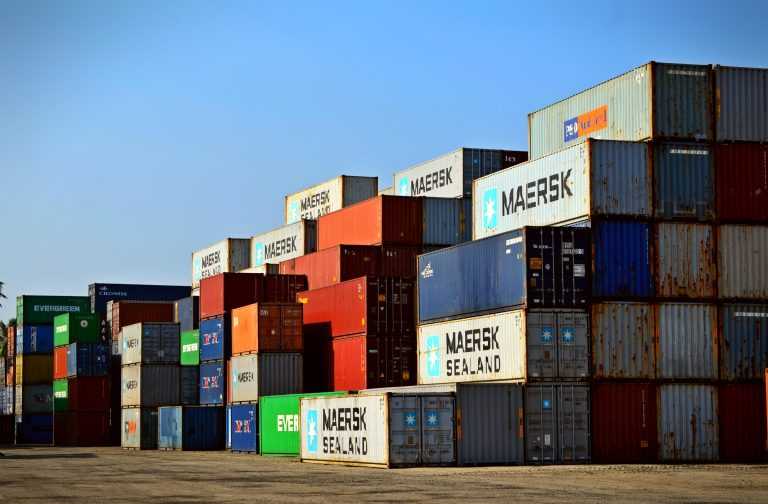
    Shipping container fraud has been prevalent globally for the last couple of years and millions are lost to criminal syndicates annually. The South African industry has also become a target and it is estimated that approximately R250 000 to R300 000 per day are lost to these scams in SA alone – lost revenue that could have created employment opportunities and improved the local economy.

    Scammers often have fraudulent documentation in their possession, ranging from CIPC verification, bank letters, VAT registrations, B-BBEE certificates and more. What can you do to empower yourself as to not become a victim as well?

    Kashief Schroeder, co-founder and owner of Container Intermodal Trading (CIT), provides the following useful tips:

    If it sounds too good to be true – it usually is
    Beware of container scammers with cheap pricing. You might think you have stumbled upon a bargain, but it might cost you in the end. If container pricing is significantly less with one company compared to others, this should immediately raise some red flags. Find out what the average market price is of what you are looking for and if you are quoted well below that, you are most likely being taken for a ride.

    Do not be fooled by a website or Google ads
    It has become so easy these days to register a domain or run an advertising campaign online that you should not be fooled to think that you are dealing with a legitimate company. Many fraudsters will just copy content from a reputable company and even register a domain that is closely linked to a reputable company’s name by adding an extra letter or word to it. Just because it looks legitimate, it does not mean it is.

    Beware if the only contact number is a cellphone number
    A reputable business should at least have a landline number. If your only means of communication is via cellphone, this could be an indication that you might be the next victim of fraud. Most of these fraudsters are from West Africa, so they won’t necessarily have a SA landline number. After you have paid for a container, they will simply destroy the SIM card they have been using – you won’t be able to track them down.

    Fraudsters do not always operate alone
    In most cases, they are syndicates working together.

    Don’t let documentation fool you
    It may look legit, but it’s easy to fake information.

    Ask questions
    Don’t be shy to ask as many questions as you want. If you are purchasing a container, ask if you can meet the person you are dealing with. Ask if you can view the container. If you are being pushed to pay some kind of deposit before they agree to this, run.

    Ask for proof of ownership
    If they cannot prove ownership, you should be very wary. Also, 99% of the time containers are stored at a depot. The people working at this depot should be able to vet for the company you are dealing with.

    You should be depositing money into a business account
    Be very aware if you are asked to deposit money into an individual’s bank account and not a business. Any reputable company will have a business account.

    Ask if the container is customs cleared
    Any container should be domesticated when entering the country (when purchased) and SARS will then issue the necessary documentation to state that it has been customs cleared. Proof of this should be provided to you.

    The ever-growing digital era is upon us and it’s moving at a very fast pace. One of the most important aspects of winning this digital war is to make sure you’ve developed a clear strategy. Leading through-the-line advertising agency, Decimal Agency, takes us through the top five points to consider when developing a successful social media strategy for your business.

    Set goals

    The first step to building an effective social media strategy is to set yourself goals. Ask yourself what it is you want to achieve for your brand, and figure out what you want to gain out of social media at large.

    In today’s digital world, brands should strive to set goals that are attainable. For example, aiming to gain a million new Instagram followers in 2019 isn’t going to happen, unless you’re a celebrity or your brand is guaranteed to change the world. By tackling smaller, more realistic goals, you can scale your social efforts in a way that’s both reasonable and affordable.

    Audience

    Your audience is your third kidney…essential! Whether you’re an agency providing insights for your clients or an enterprise company discovering your own demographics, an all-in-one dashboard solution is critical. Define them, communicate with them and build your brand with them.

    Metrics

    Engagement metrics are essential for building meaningful, lasting relationships with your followers. Large audiences and likable content is great, but there are some additional metrics to keep an eye on in 2019: reach, clicks, engagement, hashtags, organic vs paid and sentiment.

    Competitors
    Before you start creating content, you should have a good idea of what your competitors are up to. Learn from their mistakes and avoid making the same.

    Content

    It’s a saying that has been used in the world of advertising one too many times, but there’s truth in it. Content is indeed king! Yes, we are a data-conscious nation, but the need for brands to produce video content is greater than ever. Across all networks, social media video content is among the most viewed and shared, hands-down. Facebook and Instagram, in particular, are pushing video hard right now, which is notable given how their respective algorithms will continue to evolve in 2019. From live, long-form videos, to short, looping videos, our audiences are increasingly consuming and sharing video content.

    KwaZulu-Natal makes waves

    While Cape Town and the iconic Table Mountain tend to represent South Africa to most international tourists, awareness around the country’s east coast rose noticeably in 2018, with KZN taking four categories at the 2018 October’s World Travel Awards, known as the “Oscars” of global travel.

    Durban ICC was crowned as Africa’s leading meetings and conference centre – for a 17th time – while Durban was named both Africa’s leading city destination and meetings and conference destination. The Port of Durban was also awarded. Adding to the city’s good year, the number of international arrivals at King Shaka International Airport rose by 2 000 during the first three months of 2018, compared to the same period previously.

    Best to book early

    According to PwC’s fifth edition of the Hospitality Outlook 2015–2019 report, the overall occupancy rate across all sectors in SA will continue to increase by 2019, seeing a rise to around 58.3% from 54.4% in 2014.

    Nikki Forster, Hospitality Industry Leader for PwC: “The hotel occupancy rate reached its highest level in 2014, of 59% since 2008. The hotel occupancy rate is expected to increase to 62% by 2019 but still remain lower than the 68.4% achieved in 2008.” Five star hotels are expected to achieve a high of 80% occupancy in 2019, she added.

    Key factors

    Overall room revenue in South Africa is expected to expand at a 5.6% compound annual rate to R21.8-billion in 2022.

    Growth is dependent on how well the local and global economy performs and grows over the next five years, although the outlook remains positive for South Africa.

    International visitor numbers to South Africa continue to grow, despite challenges faced by the tourism industry. The total number of travelers in South Africa is expected to reach 19.5 million by 2022; a 4% compound annual increase from 16 million in 2017.

    Setting the tone

    According to travel advisory IHG, one of the key trends in travel is the creation of one-of-a-kind event spaces for non-traditional business gatherings. Three unique destinations to visit in Johannesburg:

  • InterContinental Johannesburg Sandton Towers where tourists can experience an Imbizo – a unique traditional tribal gathering.
  • Crowne Plaza Johannesburg, The Rosebank is the ideal location for a meeting; it combines creative fun and flair with effective teamwork and goal-driven outcomes.
  • Holiday Inn Johannesburg is where wellness is not only a state of mind. Guests are invited to invent refreshing herbal teas from micro herbs, to create personalised and unique flavours.

  • Looking ahead: tourism’s decade

    GDP: direct contribution – Travel and tourism’s direct contribution to GDP is set to rise by 3.6% year-on-year until 2028.

    GDP: total contribution – The total contribution of travel and tourism to GDP is set to rise by 3.5% year-on-year to R598-billion, or 10.1% of GDP, by 2028.

    Employment: direct contribution – Travel and tourism’s direct contribution to job creation is expected to rise 2.9% year-on-year, resulting in 980 000 jobs by 2028.

    Visitor exports – Set to grow by 5.3% year-on-year until 2028, to reach R219-billion.

    Investment – Travel and tourism’s investment is set to rise 4.4% year-on-year over the next decade, to R112-billion by 2028


    Sources
    www.pwc.co.za
    www.fin24.co.za
    www.iol.co.za
    www.tbcsa.travel