500 NEWS

Assessing the health of your business requires far more than just a healthy cashflow.

A healthy cashflow in your business is in no way the only indicator that your business is necessarily in good form. Hanno Bekker, founder and director of Bekker Attorneys, provides insight into the tools you should be using to assess the wellbeing or your enterprise. You should be doing three things on a daily basis. No matter what stage of your business you are in, you should always strive towards being able to move out or away from the business, with it still remaining healthy without you at the core of it. In order to get to that point you need to look at the following three numbers per day, as well as five factors you should look at on a weekly basis.

The the first three numbers you should look at daily are:

1. How many new or prospective customers did you gain for that day? This is far more important than looking at what your sales for the day were. You should see your enterprise as a funnel – how full is this funnel on a daily basis? It really does not matter what kind of business you are running – you should be winning over new clients all the time.

2. How many existing clients repurchased? It does not necessarily mean that they have to purchase the same product or service as what they did before, but that they now trust you, knowing that you are reliable and that they have made the best possible investment from their side. So they should repurchase within your ecosystem with trust and without hesitation.

3. Do you have cash on hand – if you have to pay something right now, will you be able to do so? Many entrepreneurs make the mistake of overspending when money is available. Make sure you stick to your budgets and do not add personal items to your checkout when purchasing items for the business. These small amounts can very quickly add up to astonishingly big amounts, leaving you cash-strapped.

The five figures that are crucial for you to investigate on a weekly basis are:

1. What is your Total Marketing Cost (TMC)?
2. What is your Cost Per Lead (CPL)?
3. What is your Cost Per Conversion (CPC)?

When taking these calculations into account, you will be able to determine at the end of the day what your net profit is when these costs are deducted from sales that have been generated as a result. Take a look at where your leads convert into sales and make sure you adjust and invest accordingly.

The other factors that should also always be top of mind, include:

4. What is your Lifetime Value (LTV) per client? How much money do you foresee you will be making out of a client during their lifetime? This will help you in making strategic decisions with your time on how much time you should invest in each client. Remember that this type of client might not always be the kind that you should consider valuable only on how much money they spend with you personally, but it might also be the type of client that you receive a multitude of references from. Therefore it is their Lifetime Value and not Lifetime Income that is the vital factor.

5. This leads to what your Lifetime Relationship (LTR) with such a client will be. Time is money. And with only so many hours available in a day, it is vitally important that you spend it with clients that will provide you with the maximum return on investment. Also look at how long it takes you to build this relationship, and how long you expect these relationships to last.

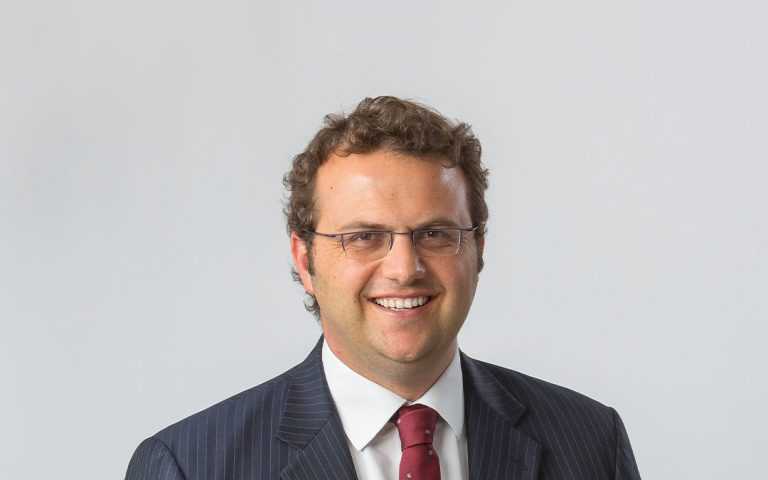
Michael Sassoon graduated with an MBA in Finance from the Simon School of Business in Rochester New York. Michael joined Sasfin in 2009 and after having fulfilled multiple roles across the Group was eventually appointed Group CEO in January 2018. He is passionate about growing businesses and wealth in South Africa and using technology more effectively to support clients. Michael is committed to family. He is married to Esther and together they have four young children.

Describe your leadership style
I enjoy leading leaders. This entails creating a collaborative environment especially in generating strategic thinking – nobody has a monopoly on good ideas. However, once we agree on the way forward, it is critical that the individuals demonstrate strong commitment to our agreed upon values and drive performance.

Your top tip to beat procrastination?
I am still waiting for the tip. Sometimes I feel the need for time to get to the right answer, but I am always reminded of the dictum… ‘If not now, when?’

Favourite getaway destination?
The Wilderness

Who or what inspires you?
Any successful entrepreneur, especially in South Africa and where the entrepreneur is delivering real value to their clients.

Your one wish for South Africa?
A thriving small business environment.

If you could have any 3 people over for dinner, who would they be?
At this moment, I am feeling particularly passionate about helping small business in South Africa. Therefore, right now I would have our President, our Finance Minister and the Governor of the Reserve Bank. I would hope by the end of the dinner they would be committed to doing whatever it takes to cut out the red tape for doing business in SA. Given the corruption scandals in business and government we lean towards more regulation. This may ultimately strengthen the big players, do little in preventing the crooked and probably hurt the small guys.

What is the one thing most people don’t know about you?
I enjoy a good pillow fight with my kids.

In such a rapidly evolving environment, it’s not always easy to forecast what the future holds, but there are certainly some clues as to what the private equity (PE) industry might expect in the coming year. From evolving skill sets to a rapidly changing investor base, there are a number of emerging trends on the cards for 2019.

Panel member and Managing Partner of Egon Zehnder, Xavier Leroy, says that of all the trends rising to the surface for General Partners (GPs), the evolving skill set of fund managers is right at the top. “The new skills that private equity practitioners will require revolve around storytelling and the narrative. You can’t tell a story if you don’t have facts and you haven’t put your mind to it.” Storytelling skills, however, are not readily available in the industry, says Leroy. “Most of the PE professionals I talk to lack that storytelling skill. They need to add a dose of inspiration and charisma; something that appeals to emotions and to people’s hearts. Today, investors and family offices particularly, pay a lot of attention to this. You are leaving money on the table if you aren’t skilled at storytelling and are unable to communicate the true impact you have on employment, the economy and the environment,” he adds.

Allied to this so-called soft skill is the need for private equity practitioners to be mindful of the psychology of the entrepreneurs or management teams they work with. Samantha Pokroy, CEO of Sanari Capital, says that more than half of her time is spent dealing with the psychology of the various players, particularly because of her firm’s focus on founder-run, owner-managed and family-owned businesses. “As a private equity professional, you have to know the numbers, do the value-add, support the strategy – all of that is important. However, shifting the mindset and helping entrepreneurial businesses to make that often painful transition to being more professionally managed, scalable businesses; that is where the magic is. That is where you create equity value and wealth that is de-linked from the founders,” notes Pokroy.

Southern African Venture Capital and Private Equity Association (SAVCA) CEO, Tanya van Lill, says another trend gathering momentum is that of pension funds wanting impact to underpin their investments, beyond just returns. “Last year, the sorts of enquiries we got at SAVCA were from investors who had not yet allocated to the asset class, but were doing their due diligence because they are starting to see the value and question why they haven’t made allocations in the past. This is coming particularly from pension funds wanting to make a positive impact on the lives of their current and future members.”

Lastly, John Bellew, the Head of Private Equity at Bowmans, believes that the evolution of the African model for private equity will continue to attract innovative solutions. “The whole African model for private equity has been under discussion for several years and we are definitely seeing it evolve, with different managers employing different strategies.”

It’s this sort of flexibility and adaptability, says van Lill, that GPs will be well advised to refine. “Be it in their fund structures, partnering with portfolio companies, or when communicating with investors, flexibility will prove key to successfully riding the crest of the new wave of trends that will wash over the industry in 2019,” she concludes.

By Cecilia Russell

Innovative business practices and the growth of renewable energy sources could provide a light at the end of South Africa’s power crisis, says Andre Wepener, the head of Power and Infrastructure Finance for Investec.

Many are pessimistic about the country’s energy situation and see a future with rising costs and constant blackouts wrecking business and impacting homes. The role of an affordable, reliable and accessible power supply in the growth of the economy cannot be underestimated. South Africans were alerted to a crisis in the power supply with the return of depressingly familiar load-shedding in early December 2018, and public hearings are currently underway for a 15% increase in power tariffs.

The return of load-shedding, just as the country celebrated a 2 per cent growth in the economy moving the country out of a potential recession, led to some economists revising their forecasts for 2019.

It is clear that another model for the provision of electricity is needed.


Cleaner fuel by 2030?

At the moment there seems limited comfort in the draft Integrated Resource Plan (IRP) where the country’s programmes lag other economies in exploiting sun, wind, and gas as alternative energy resources.

France and the United Kingdom have set stringent deadlines of 2020 and 2025 respectively to end carbon-based energy reliance, but South Africa’s proposed IRP still factors in the country’s reliance on coal being close to half of its total energy mix by 2030.

Wepener, however, believes that the final IRP, expected by mid-2019, envisages a different scenario, with reduced reliance on carbon-based energy and the easing of limitations on embedded generation or “self-generators”.

“We are expecting a significant shift away from coal as envisaged in the draft report,” he says. “It will show a significant decrease in reliance on carbon-based energy. By 2030 we will see a 32 GW shift toward cleaner fuel, which includes 24 GW of energy from renewable sources,” he says.

“8.1 GWh gas-fired power generation is also envisaged in the draft IRP. Natural gas burns cleaner than coal and, in combination with renewables, i.e. solar and wind, can compensate for the base load generation that will be removed from the energy mix as Eskom’s existing coal-fired power stations reach the end of their useful lives.”


A tricky transition

The transition, however, is not a simple one. Coal provides the base load power to industry, and there are limitations in both wind and solar as alternative energies when it comes to battery storage and consistency (even in sunny South Africa the sun doesn’t always shine, and the wind does not always blow), he explains.

Nevertheless, battery storage innovation is continually improving, and it’s in an energy mix that the solution lies. “There is a significant difference between us and European countries like the UK and France. They transitioned away from coal decades ago and moved toward gas, which is in abundant supply in the region,” he says. South Africa is better compared with Australia, which has a significant reliance on carbon-based energy because both countries have rich coal resources.

Alternative energies provide solutions to both households and industry, Wepener says. At the lowest level, it could be a combination of solar panels on a roof and battery storage which supply a household or small business with its energy requirements.


Will renewables cost more?

Wepener cites a study done by Jörg Peters of the University of Passau which found contrary to expectations that electrification reduced expenditures on energy in a study conducted in Rwanda.

“The average amount that connected households spent on grid electricity was 1 500 FRW (about $2) per month after they had replaced traditional energy sources like kerosene and batteries. And they no longer needed to spend money on charging their mobile phones outside their homes. In total, they reduced expenditures on energy by around $2.50, which is an equivalent of about 4% of their total monthly expenditure,” the study found.

This is apart from yielding other benefits to households which had done away with torches, wick and hurricane lamps. The study found after-dark study time increased for children, it benefitted micro-enterprises like hairdressing shops, small kiosks, bars and restaurants and significantly gave the community access to information.

The study concluded that due to the relatively low levels of energy consumption in rural areas – a mere 2kWh per month per person – off-grid solutions like solar would make more sense.


A “virtuous cycle” of price reduction

There has been much debate about whether renewables will cost South Africans more. “There is a lot of political noise about this, but the cost of renewables is coming down,” Wepener says.

Futurist Ramez Naam, at the 2018 SingularityU Summit in South Africa, talks about how alternative energies are disrupting traditional coal-based energy sources. He said moving towards renewables makes sense both economically and morally, as there are significant health risks associated with carbon-based energy.

Naam says as more renewable energy is used the less it costs, bring innovation into the equation and the benefits are clear-cut. He calls this a “virtuous circle” with prices of alternative energies coming down and, in the end having the ability to produce electricity in some countries for as little as US 5-6 cents per KWh (about 67c in South African currency).

Wepener says the cost has dropped even more in recent rounds of the Renewable Energy Independent Power Producers’ Programme (REIPPP), tariffs were bid as low as 60-65c per KWh. Consumers in some regions in South Africa are currently paying as much as R2.20 per KWh.


Promising use cases

Already there are good news stories to be had concerning renewables in South Africa. The Karoo town of De Aar in the Northern Cape supplies Eskom with 85 458 MWh energy per year, enough to supply more than 19 000 average households. The town effectively supplies its own power and sends some to the grid.

This will soon no longer be an isolated good news story, says Wepener.

Business is looking to supply their own power too and sell excess back into the grid and is lobbying the government to remove regulatory controls that limit the amount of power generated for “own use”. This has become a priority of Business Unity South Africa.

In addition, the recent signing of a R1-billion joint commitment between Investec and UK Climate Investments to form “Revego”, a majority black-owned and managed fund manager, for managing investments in renewable energy, will boost the sector. Revego will list on the stock exchange later in 2019. “Independent Power Producers will be massive, private households that produce excess power can push this back into the grid.”

Greenfield projects are funded by the bank too, says Wepener, so there is a package of investment opportunities for businesses within the renewable energy space.

Looking toward the future Wepener says the next 20 years should bring an open and transparent power market. “We see a future where Eskom maintains the grid, and power producers and power consumers can trade power in accordance with their requirements, creating a win-win situation.

“Independent Power Producers will be substantial, private households that produce excess power can push this back into the grid. Online trading of power with the combination of IPPs, households and businesses will mean the cost of electricity will be lower. Consumers and businesses will both benefit. Let the free market drive the process, that’s what we hope to see.”

By Auguste (Gusti) Coetzer, Director of Signium Africa

Do search engines and other online innovations have the power to redefine professional relationships across industries?

The question gathers urgency among corporate achievers looking to take the reins of major companies as an ongoing digital revolution threatens to overturn established business models, even in areas where long-established practice seemed entrenched.

Perhaps the biggest single indicator of the impending shake-up is the current rethink of marketing strategies that have traditionally dominated the global pharmaceutical industry. The old norm was characterised by facetime with doctors, free samples to encourage product trial and perhaps ‘gifting’ to cement relationships between pharma brand and physician.

According to industry-watchers in the USA, this model is being overtaken as the medical sector adjusts to new online realities. The pharma industry’s traditional target audience – physicians – confront an online challenge in the shape of ‘Dr Google’ as search engines create instant consumer access to medical information.

Online tools called symptom-checkers make it easy for consumers to obtain a DIY diagnosis. Research shows 35% of US adults have gone online to identify a medical condition. Hypochondria now has a digital equivalent, cyberchondria. As a result, doctors are witnessing huge behavioural shifts, requiring pharmaceutical concerns to do the same.

The Journal of the American Medical Association says occasional misdiagnosis by doctors is a concern, though a recent JAMA paper indicated physicians significantly outscore computer algorithms for diagnostic accuracy (84.3% against 51.2% by one measure). However, flesh-and-blood doctors gave an incorrect diagnosis 15% of the time.

Doctors – initially hostile to Dr Google – increasingly look at ways of augmenting their services by the use of digital tools while trying to educate patients to the difference between medical data and medical advice. Some even recommend that patients visit sites that provide credible assistance.

Meanwhile, the Google trend and related developments have alerted the pharmaceutical industry to opportunities for a new relationship with medical professionals.

Physicians were early adopters of mobile technology, including beepers, pagers, PDAs, smartphones, tablets and handheld devices for consulting patient records and reference works. As long ago as 2009, one US source put the healthcare sector’s investment in handheld devices and similar technology at $8.2-billion.

Clearly, gadget-friendly doctors are open to new avenues for marketing interaction. The process is already underway. Facebook, LinkedIn and Twitter create space for physicians to organise online communities while US sites like Physicians Interactive and Sermo (for MDs only) reach nearly a million medical professionals.

Such platforms enable pharmaceutical companies to engage doctors in new ways. Some pharmaceutical companies are therefore looking to retool their marketing strategies and embrace the cyber-future. Hiring medical communication specialists to engage online with doctors is one route forward.

One marketing consultant says online interventions could help doctors cut information clutter and facilitate links with clinical trials, research papers and opinion-leaders.

The retail, hotel and travel industries have already had to adjust to new cyber-realities. A second wave of industries looks set to make similar adjustments. It is little wonder major companies increasingly look for leaders who show acute awareness of digital trends and demonstrate flexibility and a spirit of innovation in the face of change.

Being steady and dependable is no longer enough. To lead an organisation into the future, you may have to be radical, even revolutionary, thinking out of the box.

Blockchain Proof of Concepts (POCs) and rollouts increase
Organisations now comprehend the value that blockchain delivers and as a result, we have seen a signicant change in blockchain’s uptake.

Regulations force change in business
The European-based General Data Protection Regulation (GDPR) and Protection of Personal Information (PoPI) Act in South Africa are top of mind for businesses. Many organisations are now revising their terms and conditions due to the rollout of GDPR. However, the PoPI Act is still on the back-burner in South Africa.

Increase in Artificial Intelligence (AI) and the concern of job losses
AI has been noticed by many organisations in the past few years. These companies are now leveraging it to improve customer service, automate interactions and streamline business processes.

The Digital Twin slowly but surely makes an impact
The adoption of Digital Twin technology in South Africa is likely to be slow, however, we will see it gaining momentum over the next few years, especially in conjunction with IoT. A ‘digital twin’ is the virtual embodiment of a real-world system which, linked to that system, promotes improved understanding of its relevance and connection to the overall picture, improving response times and decision-making.

Quantum computing comes to the fore
Quantum computing will be very prevalent and talked about in the coming months. This high-end computing power is able to work faster than any other computing technology available today. Quantum computers are incredibly powerful machines that take a new approach to processing information and because of this, the technology will soon make headlines in South Africa.

Sources
In2IT Technologies
Ruckus Networks’ “State of Wi-Fi in South Africa” study

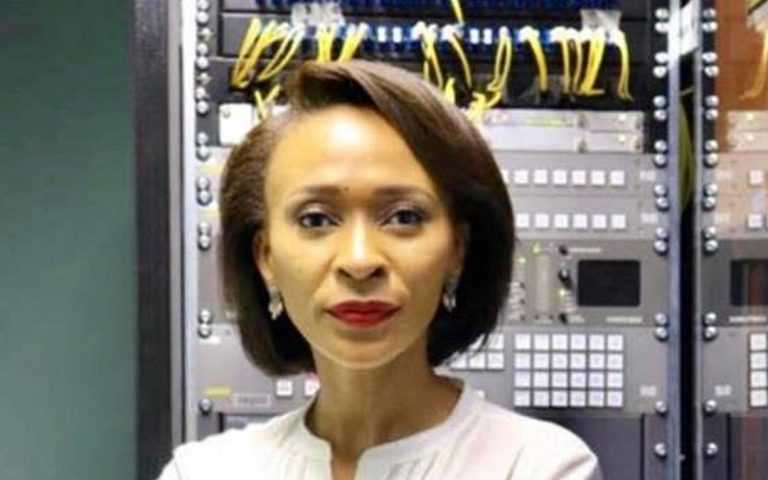
Unathi is the newly appointed Chief Technology Officer at Grindrod Bank. She has many years of experience in the IT industry under her belt, having worked for both the public and private sector, leading a number of portfolios across a wide spectrum of ICT technical disciplines. She has also led multi-disciplinary technical teams across the entire ICT spectrum. With a career that started at First National Bank 20 years ago, Unathi also held key positions at Business Connexion, SITA, and the Parliament of South Africa, and has spent the past decade in senior and general management roles, culminating into the C-Level in IT leadership and management in the last five years.

Describe your leadership style
My leadership style is flexible and firm on non-negotiables; it’s inclusive and accommodating, with adequate engagement followed by decisiveness.

Your top tip to beat procrastination?
I start with something that inspires me so that I can have the energy to deal with my ‘to-do list’.

Favorite getaway destination?
Definitely New York!

Who or what inspires you?
My parents. I marvel at their consistent unwavering love and support. Any demonstration of a human spirit beating the odds is always an inspiration to me.

Your one wish for South Africa?
Incremental progress in the education and health sector. I feel like improvements in these sectors will automatically solve lots of societal ills.

If you could have any 3 people over for dinner, who would they be and what would you serve?
My late grandfather Mbuzeli Merriman Mtya, Michelle Obama and John F. Kennedy, Jr. I would serve my favourites: seared salmon with green leafy vegetables, a rack of lamb with mint sauce, and samp and beans with oxtail.

What is the one thing most people don’t know about you?
I’m strong, but I am also quite sensitive.

What would you do with an extra hour in your day?
Sleep!

The new basics: Organic, natural, and sustainable attributes are increasingly becoming an entry-level expectation for consumers rather than a luxury, so retailers are competing to offer these at compatible prices.

Next level farming
Vertical farms may finally become mainstream. The rise in urban farming shows the increasing demand for fresh produce. According to the UN, the global population is set to increase by 2050, making the need for reduction of carbon footprints more pressing.

Food tech
Silicon Valley is not only reimagining food, but making its high-tech spin on nutrition accessible. This will extend to emerging markets, including South Africa.

Veganomics
Vegan food has become increasingly popular. Consumers are adapting their diets to prevent the effects of meat on their health and on meat production’s carbon and water footprints.

Mood food
Food has an impact on mood and mental health, as certain studies have found. Consumers now bear this in mind, expecting brands to not only provide food that tastes good, but that makes them feel good as well.

Algorithmic food design
Change is to be expected as creative innovators are using new technology to create and cultivate unique food shapes.

Trending teetotalism
Today’s wellness-focused consumers are turning their backs on alcohol, but still looking for a premium non-alcoholic experience. Globally, the alcohol market has seen a steady decline recently, according to stats from the International Wine and Spirits Record. However, the global non-alcoholic beverage market is still set to reach USD$1.6-trillion by 2025.

AI food
Image recognition is soon set to be the easiest route to counting calories. It is predicted that AI will become common in the sector, enabling consumers to point their phones to their food and be equipped with all the information they need in real-time.

Sources:
www.engineeringnews.co.za
www.foodstuffsa.co.za
www.za.investing.com
www.statista.com
www.bizcommunity.com

By Patrick Lawlor, Content Editor, Investec Wealth & Investment

From taxes to insurance and maintenance costs, here’s what art collectors should consider when leaving their art collections as a legacy.

For many an art collector, the idea of leaving a legacy through one’s collection is as much a motivation as the pleasure derived from owning and appreciating the art itself. Indeed, surveys show that for most art collectors, the idea of legacy and the pure love of art surpassed any considerations of investment and profit.

According to The Art Market 2017 – an annual report by Art Basel and UBS – the chief motivating factors for collecting are:

  • appreciation of beauty (71%)
  • a desire to follow their passions (54%) and
  • a desire to support and nurture artists (32%)


  • Furthermore, 65% of collectors have never sold any works of art or pieces from their collections and have no intention of doing so. And as many as 87% plan to leave their collections to their heirs. This squares with the findings of Deloitte’s Art & Finance Report 2017, which notes that of the collectors who had made formal estate planning arrangements for their collections, 67% plan to bequeath their collections to their family. Fourteen percent said it would be sold, with the proceeds going to the family, with the balance choosing to bequeath the collection to their foundation or be donated to a museum.

    Key considerations

    In the light of these ideals, it seems clear that collectors should adopt a strategic approach, both in terms of building a collection and in ensuring a lasting legacy.

    Unfortunately, this is not always the case. UBS finds that 88% of collectors do not have an adviser to guide them in their purchases. And, according to Deloitte, only 28% of clients of banks that offer art and estate planning services have made adequate provision for their art collections in their estate plans, while 31% have not made any provision for their art collections at all.

    How do you value your collection?
    There is much for collectors to consider when building their collections. Deloitte highlights some of the challenges facing collectors on the estate planning front. For example, where pieces are passed on individually to a number of heirs, there is the issue of valuing the works of art – these may change considerably between the time of drawing up a will and the inheritance taking place.

    What are the tax implications?
    Tax issues are also important when passing on art to heirs. According to Rene van Zyl, senior tax adviser at Investec Wealth & Investment, where a collector bequeaths to heirs in his or her name, the executor would have to get a valuation and it will be included in the estate for estate duty purposes. The valuation is a long and expensive process.

    “Furthermore, if there is not enough liquidity in the estate some of the assets including the art will be sold to pay for the liabilities if the necessary planning was not done during the life of the client,” says van Zyl.

    Do your heirs share your passion for art?
    Then there is the matter of heirs’ interest in keeping the art. Do they share the same passion for the art? Do they have the resources to keep and maintain the art? In these cases, selling the art may be the right option, but tax considerations need to be taken into account.

    One solution is to buy the art in the name of a trust. Says van Zyl: “The art piece is no longer in your estate for estate duty purposes but even if it is a family heirloom and you would like to keep it in the family for legacy purposes then the trust will give you this continuity.”

    Donating your art
    For those who choose to go down the road of donating their collections, there are other challenges to face. Does the museum you have in mind value the pieces you plan to donate as much as you do? And if the pieces go to your private foundation, have you made provision for maintenance and insurance costs, for example?

    Collectors should perhaps think of engaging alternative museums about pieces that might interest them. Donations to charities or museums during one’s lifetime could also be considered.

    Donating art can be tax efficient, says van Zyl: “If you donate to a charity that is a registered NPO/ PBO, your estate will get a Section 18A [of the Income Tax Act] deduction. The same will apply if you make a donation during your lifetime – you would be able to get a deduction in terms of Section 18A.”

    As with managing other areas of one’s wealth, an art collection requires the same process of thought, consultation and planning, if one is to leave the legacy that one wants.

    With an unemployment rate of 27.1% at the end of last year, South Africa has much to gain from the venture capital (VC) industry, which not only encourages business development, but enables entrepreneurs to expand their businesses, driving employment opportunities.

    This is according to Tanya van Lill, CEO of the South African Venture Capital Association (SAVCA), who presented a case study session on the topic at the first-ever joint SAVCA Private Equity and Venture Capital in Southern Africa Conference, held in Stellenbosch at the end of February 2019. “While small businesses are vital job creators, many require growth capital to do this effectively. And because young companies generally don’t have access to more traditional sources of funding, investments by VC firms become an essential form of financing,” van Lill explained.

    She referred to SAVCA’s 2018 Venture Capital Survey, which revealed that 97.1% of VC-backed businesses would have ceased to exist or developed slower, were it not for the VC investment. “The same study found that, for 77% of companies which have received investment from a VC firm, it has increased the business’ capability in terms of increasing the number of full-time positions.” One of the case studies that van Lill explored was that of the successful tech startup, SweepSouth. An on-demand online platform for booking home cleaning services, SweepSouth has more than 11 000 cleaners registered on its platform.

    SweepSouth co-founder and CEO, Aisha Pandor – who was also speaking at the conference – said that the business is about so much more than giving jobs to domestic workers. “It’s about upskilling, educating and uplifting South Africans through employment. Aside from the 11 000 SweepStars, we have also been able to build a team of about 42 in-house employees, ranging from call centre agents to tech developers. As we grow the base of domestic workers on the platform, we are also able to continually grow this internal team.”

    Janice Johnston, who is the Fund Head of the Vumela Fund at Edge Growth – the fund that invested in SweepSouth – says that SweepSouth has shown that there is a lot of opportunity in the gig economy. “SweepSouth has allowed domestic workers to increase their earning potential and provides a flexible option for them to augment their existing working arrangements.”

    Pandor notes that there have also been instances where domestic workers have progressed from being SweepStars to actually joining the company’s internal team. “Domestic workers who were able to acquire skills or educate themselves further while working part-time on the platform are better positioned to seek other employment opportunities. We’ve had multiple SweepStars progress to join our operations team and recently even had a SweepStar join our engineering team as a junior developer.”

    This, van Lill says, is just one of many businesses across the country that have been able to make a positive impact on employment, as a result of VC funding. “At the end of 2017, the Southern African VC asset class had a total of R4.39-billion invested in 532 deals. In addition to funding, VC investors also provide valuable support and mentorship to their portfolio companies, which helps them to grow and ultimately employ more people.

    “While VC is by no means a cure-all for unemployment in the region, its impact on creating work opportunities is certainly meaningful,” van Lill concludes.

    Since the co-working movement started in the US in the mid-2000s, it is estimated that the number of co-working spaces across the globe has doubled each year, and the model is now disrupting traditional office space rentals.

    It was back in 2005 that San Francisco-based software engineer Brad Neuberg first coined the phrase “co-working” to describe the physical environment he had created in which like-minded individuals in his field could come together and share the structure of an office space.

    At the time, and as the idea began to blossom, the concept was aimed at freelancers who had traditionally worked from home and who had begun to feel isolated, as well as startups trying to bridge the gap between home and committing to their own office space, uncertain of their future or the amount of space they would require when their ideas took off.

    But successful co-working spaces have always been about far more than just the physical environment in which they operate; perhaps even more importantly, they’ve also been about building communities of “open-source” individuals who want to collaborate and exchange ideas with other people in a socially interactive community.

    Fast-forward nearly a decade and a half from the early days of Brad and his co-space inhabitants, and co-working has become a business model that is shaking the traditional office environment to the core, especially with employees being able to access shared networks from anywhere in the world and the increase in traffic and, therefore, the longer daily commute to get to work.

    The old way: sign a lease for a few years and lock yourself into both space limitations and financial obligations, spend your capital to buy furniture and office equipment, and then cough up relatively unknown amounts of cash each month for utilities and all the added extras of running your own office.

    The new (co-working) way: bring your laptop or computer, plug in and play, and incur no additional costs other than a daily, weekly or monthly fee. No obligations to sign leases, no FICA requirements to fulfill and no need to lay out the capital to equip an office on your own. Never mind the ongoing expenditure of keeping up to date with the type of technology that enhances a working environment.

    In a co-working space, it’s the landlord who provides all the essentials, from shared services and facilities that include the basics such as desks or even a private office, as well as rooms for meetings, training, seminars and product launches to copiers, printers, telephone exchanges and cleaning, maintenance and reception staff. On the IT side, the most jacked-up venues will also include high-speed fibre-optic internet, video conferencing, biometric access, and environmentally friendly lighting with motion sensors.

    David Seinker of The Business Exchange notes that co-working spaces are no longer restricted just to solo freelancers or startups. “The concept is starting to make a great deal of sense to big business as well, with increasing numbers of corporates now looking either to create additional space for project-based work, or to test the waters before committing to permanent space, or even as an alternative altogether to permanent lease agreements,” says Seinker.

    “Another plus for big business lies in one of the core values behind the origin of the co-working space – the opportunity to network with like-minded or complementary professions.”

    This, too, is becoming extremely appealing to larger companies as well: with disruption now key to the way in which businesses are evolving across many sectors, co-working spaces can also bring traditional corporates into contact with innovative startups (and the talented mavericks behind them) who are disrupting the business environment.

    In the US, for example, even technologically advanced corporations such as IBM, Microsoft, Apple, Alibaba, Samsung and Verizon are testing the co-working waters to be close to these disruptors.

    Closer to home, businesses are collaborating with co-working clients to fill the vacancies left in office blocks they own, setting the scene in turn for new business models for existing commercial landlords.

    A further motivator for big business is that placing their own employees in close proximity to hard-working industry innovators producing great ideas spur on their own staff to be more productive themselves. There’s a vibe and motivational focus to be found in co-working spaces that’s often missing from a traditional corporate environment. Not to mention the scalability that these offer professionals in operations across the board – from small and medium enterprises to large corporates – as business wanes and waxes with the current economic climate.

    Teresa Richardson is the Managing Director of TTC SA, a group of 8 diverse travel companies encompassing different travel experiences. With over 35 years of experience in the travel industry and having visited no fewer than 70 countries, Teresa consistently grows her expertise in a variety of subjects, her most recent being a certified behavioural consultant. She loves pitting her skills against the elements, which could be zip lining, scuba diving, white water rafting on rivers around the world or even summiting Mt. Kilimanjaro. Teresa was awarded TTC Global Executive of the Year in 2016.

    How would you describe your leadership style?
    My leadership style is bold and daring as well as direct and decisive. I am quick to seize an opportunity and am definitely not afraid to meet challenges head on.

    Your top tip to beat procrastination?
    My motto is “just do it”. If you procrastinate you lose momentum and the opportunity that is being presented to you in the moment.

    Favourite getaway destination?
    I have a few depending on my business travel schedule. In summer I love to travel to Europe – Italy and Portugal are two of my favourite spots and I enjoy these countries for the people, the culture and the divine food. For a full dose of culture and a taste of something exotic, I absolutely love Egypt. I’ve enjoyed many parts of Egypt and I learn something new each time I visit this fascinating and diverse country. My last visit included a visit to the port city of Alexandria and I managed to see the famous lighthouse which ranks among the Seven Wonders of the Ancient World as well as the ultramodern Bibliotheca Alexandrina. Egypt will always rank highly as a firm favourite.

    Who or what inspires you?
    I like being surrounded by optimistic people; people who look for solutions and not problems.

    Your one wish for South Africa?
    A country of unified people. What an absolutely amazing country we could become with such diversity of interests and abilities. We have the ability to be a country to be followed.

    If you could have any 3 people over for dinner, who would they be and what would you serve?
    I would invite Celine Cousteau, a socio-environmental advocate who does the most incredible work through the TreadRight Foundation, Angelina Jolie, a humanitarian amongst other things and Prince Harry. I would serve them my favourite vegan dishes paired with my favourite South African wines from Bouchard Finlayson.

    What is the one thing most people don’t know about you?
    Family is a very strong influence in my life. They keep me grounded and able to face whatever comes my way with grace.

    What would you do with an extra hour in your day?
    Learn something new that would enhance my ability to be a role model to others and therefore, in turn, enriching their lives.