500 NEWS

Review your ransomware response plan
Organisations need to have a ransomware response plan in place. This plan tells everyone in the organisation what they need to do if there is a ransomware attack.

Check your power supply
Availability is one of the three pillars of cybersecurity, along with integrity and confidentiality. If your systems don’t have power they are not going to provide availability.

Map data for better security and compliance
Organisations’ data uses should be documented so that it can be protected, and compliance data privacy requirements met.

Update server protection
It’s imperative for businesses to make sure that their servers are protected against outsider attacks.

Push IT security training wider and deeper
Organisations need training that is tailored to the specific needs and policies of their company, as well as specific roles within the company.

According to Nicholas Stopforth: Managing Director at Amdec, these are the top trends in South Africa’s property sector.

Security
Buyers are prioritising security features when investing in property.

Smart cities
The future of development. The ‘live, work and play’ concept offered by mixed-use developments was highly sought after in 2018. Smart cities like Melrose Arch in Johannesburg are incorporating electric car charging stations, precinct-wide WIFI, fibre to the home, enhanced 24-hour security, license plate recognition cameras and in-home assistance.

Mimicking international trends
Local property developers are garnering inspiration globally to put themselves in the same league. Harbour Arch on Cape Town’s foreshore is modelled on the universal trend for walkable precincts such as Darling Harbour in Sydney and Canary Wharf in London.

International investors set sights on SA
South Africa offers significantly lower prices for initial purchases compared to similar developments around the world, attracting investors who are looking to expand their offshore property portfolios.

Sustainability is key
Globally, developers are under pressure to drastically minimise water usage and incorporate eco-friendly building methods and technologies. Think refuse recycling, water-saving devices, low-energy LED lighting, grey water and rainwater harvesting, dual-flush plumbing systems, water storage facilities and on-site desalination.

Furnished apartments
Both local and international investors who plan to rent out their properties are calling for pre-furnished apartments in high-end developments across the country. Buyers form consortiums to invest in buy-to-let properties, looking for a ‘hassle-free’ purchase experience.

Convenience
Buyers want to live, work and socialise in the same place where everything they need is within easy walking distance from home.

CBD investment boom
Cape Town’s CBD, with its world-class restaurants, beautiful architecture and spectacular views is seeing strong demand especially from young investors looking for a safe, convenient, urban lifestyle.

Millennials are investing
Millennials are opting for inner-city living, choosing apartments over free-standing homes; notably developments with a range of added features designed for modern living.

Nature
While trends are leaning towards inner-city living, buyers still want to be surrounded by green spaces, driving developers to incorporate nature into building design. Think parks, tree-lined streets and pedestrianised walkways, rooftop gardens and urban farming initiatives.

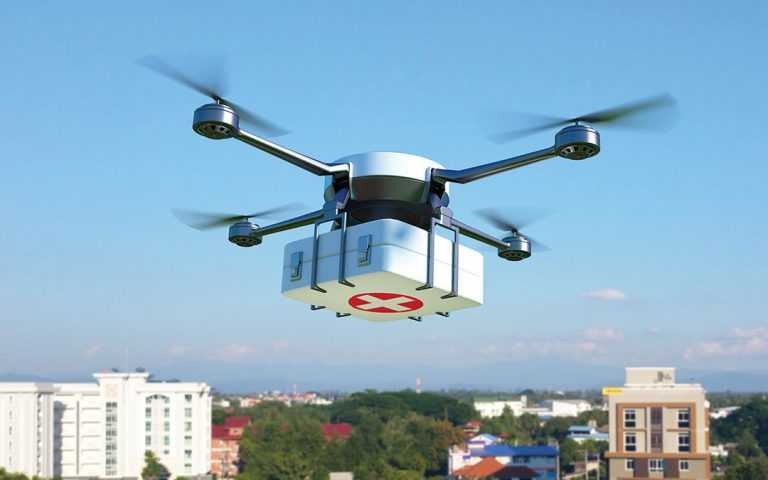
Delivery of healthcare in Africa is winging its way into remote areas, thanks to a revolutionary new medical drone delivery initiative rolled out into rural areas of Rwanda. While drones are a billion dollar industry, more can be done to apply it for humanitarian purposes.

Globally, the popularity of drones is soaring. Want to know just how popular? A bit of keyboard clacking (simply type ‘commercial drones’ in your Google browser) reveals an 11 million search result in less than a second.

Last year, e-commerce giant Amazon announced that it will roll out a drone delivery system capable of carrying and delivering 3 kg packages. Energy plants use them for oil and gas rig maintenance, conservationists for hunting down poachers and the real estate market have been using drones to sell property to prospective buyers for several years.

The commercial and recreational use of drones has become a lucrative industry, but how are unmanned aerial vehicles (UAVs) applied in the medical and humanitarian space to help those with limited-to-zero access to basic medical healthcare?

KPMG’s 2016 ‘State of Healthcare in Africa’ report found that Africans live, on average, 14 years less than the average world citizen and 21 years less than the average European. HIV/AIDS, tuberculosis and malaria together cause nearly a quarter of deaths (2.5 million) in Africa every year.

Some say that the real killer is Africa’s lack of adequate access to essential and basic medical products. Because of challenging terrain and poor road infrastructure, nearly 2.9 million children under the age of five die every year. A total of 150 000 pregnancy-related deaths could be avoided annually if mothers had reliable access to safe blood.

The ‘last mile’ problem

In many African countries the access to lifesaving and critical health products is hampered by what is known as the ‘last-mile’ problem. It’s the inability to deliver much-needed medicine from a city to rural or remote locations due to a lack of transportation and poorly maintained (or non-existent) road networks.

For residents in Rwanda’s rural regions, travelling between towns and villages can be a long and arduous journey, and the situation is exacerbated during the rainy season when dirt roads can become impassable. These delays can be fatal for patients in need of urgent medical supplies or attention.

The solution to Rwanda’s road infrastructure problem is not to build new ones, but to avoid it completely. In 2016, US-based robotics company, Zipline launched a drone blood-delivery initiative that could save thousands of lives and revolutionise both the healthcare and transport industries on the African continent.

Zipline spokesperson Justin Hamilton says the company got the idea from a project that researchers had implemented across Tanzania two years ago. By distributing cellphones to rural clinics, health workers were trained to send text reports every time a patient came in with a life-threatening condition that could have been prevented if the patient had access to basic medicine.

“The reality was terrifying. Researchers collected a database of deaths where every entry was a life that could have been saved had they been able to get the medical products quick enough. We’ve designed Zipline to solve this problem. We know who needs medicine, when and where. Now, we can get them that medicine as quickly as possible.”

Care by air

In October 2017, Zipline initiated its first commercial drone flight to a medical centre in the western region of Rwanda from the newly constructed drone base in the Muhanga District. The fixed-wing drone flew five minutes before dropping its package and landing safely on the lawn outside of the Kabgayi District Hospital. Inside the package were cartons of blood, needed for life-saving transfusions.

In Rwanda, post-partum haemorrhaging is the leading cause of death for pregnant women. Blood requires storage and transport at safe temperatures, and can spoil quickly. Because there are many different blood products and no way to accurately project future needs, many transfusion clinics do not often keep blood in stock.

Before Zipline’s drone delivery initiative, Kabgayi hospital had to dispatch a car to bring back blood from Rwanda’s capital, Kigali. This round trip takes a minimum of three hours, but usually much longer due to the poor (and often impassable) roads.

Hamilton says that drone delivery is the solution for delivering medical supplies across the challenging terrain of the ‘land of a thousand hills’. “The lack of paved roads makes it difficult, often times impossible, to reach hospitals and health clinics. Zipline flies over mountains and washed-out roads to provide on-demand delivery of emergency medicines to people who previously had no access to care. Every delivery is saving a life.”

Zipline currently operates 15 drones from its Rwandan base, each capable of carrying a 1.5 kg bag of blood (enough for a transfusion for one patient) on a 150 km round trip.

It claims to be able to respond to orders directly from clinics within 30 minutes, and is eventually planning on making 50–150 flights per day to 21 transfusion clinics in the region (right now, it only serves two). Each delivery will be charged at roughly the same price as a motorcycle courier.

“Our autonomous aircrafts, called Zips, were built from scratch. We developed a custom avionics system that manages all guidance, navigation and controls for the aircraft, capable of robustly tracking its position to within a few centimetres,” says Hamilton.

He adds that Zipline can fulfill delivery requests across Rwanda in under an hour. “Zips are fully-electric, releasing zero emissions and have a large environmental benefit over gas and diesel trucks. We’ve also sourced biodegradable materials so our entire packaging is both recyclable or compostable.”

Zipline drones are able to operate in any weather conditions. “Medical emergencies don’t wait for good weather, so the ability to operate in a wide range of meteorological conditions is essential to our mission. Zips can complete delivering through strong winds and heavy rain.”

Hamilton adds that Rwanda plans to have expanded Zipline’s drone delivery service to the eastern half of the country by early 2017, providing nearly every one of the country’s 11 million citizens within reach of instant delivery of life-saving medicines.

By partnering with the Rwandan government, Zipline has been able to communicate with hospitals as well as with the locals to explain how the Zipline system operates. “Every day, we have hundreds of Rwandans lining up along the fence of our distribution centre to watch. They call our Zips “sky ambulances”. The drone’s presence reassures them that if a member of a family has a medical emergency, they’ll have access to the medical products they need to save them.

Hovering risks

Drones or unmanned aircraft systems have the potential to become a multi-billion dollar business and deliver problem-solving technologies across numerous industries. However, aviation insurer Allianz Global Corporate & Specialty (AGCS)’s new report, entitled ‘Rise of the Drones: Managing the Unique Risks Associated with Unmanned Aircraft Systems’ says that more drones in the skies raise a number of new safety concerns.

The report says that risks range from collisions and crashes to cyber attacks and terrorism. To ensure safe UAV operations, systematic registration of unmanned aircraft and robust education and training of operators is necessary.

“UAV in commercial use will increase greatly in the next decade because they are effective at carrying out menial or dangerous tasks,” explains Thomas Kriesmann, senior underwriter-general of aviation at AGCS. Work accidents such as employees falling off the roof on building inspections and workers’ compensation losses are expected to decrease as a result.

Bryan Verpoort, head of ITOO’s international division, an underwriting partner of Hollard Insurance, says: “Rwanda borders DRC, where civil unrest is rife. There could be challenges with drones flying into hostile areas. We’ve also seen cases where people mask drone usage as being humanitarian when in actual fact, it’s used for terrorism.”

Kriesmann says that new risks and the potential for misuse of drone technology needs to be considered too. “Drones raise a few safety concerns: mid-air collisions and the loss of control. A mid-air collision could happen if the pilot cannot see or avoid a manned aircraft in time, especially those that fly below 500 feet, such as helicopters, agricultural aircraft or during landing and taking off.”

A pilot losing control of a drone during a building inspection could result in a total liability claim in excess of $5-million (R70-million), should that drone crash into a truck or shop, for example. Even a small drone could cause as much as $10-million (R140-million) in damage alone when hitting an airplane engine. An emerging peril is the potential terrorist threat from drones targeting critical infrastructure such as nuclear power stations or live events.

“Other scenarios include hackers taking control during a flight, causing a crash, or hacking the radio signal and transmitting valuable recorded data from the aircraft from another control station (spoofing). There are also many public concerns over drones around privacy issues,” says Kriesmann.

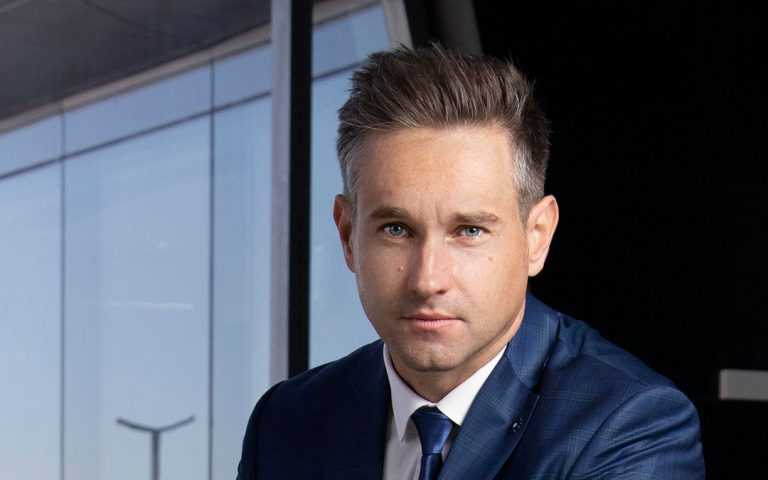
Jaco Gerrits is one of South Africa’s leading technology entrepreneurs. He founded Dynamus Technologies at the age of 22, a company that has researched, designed, developed and implemented multiple award-winning technology solutions across various industries over the last 16 years. Jaco believes that it is possible to do good while doing well – where enterprise and investment are used as powerful forces for good.

How would you describe your leadership style?
I firmly believe that you should create an environment in which your employees are able to excel, and therefore prefer a transformational leadership style. Helping group members fulfill their potential, by inspiring and playing a motivational role, assists greatly in achieving overall organisation goals.

Your top tip to beat procrastination?
Break bigger goals into smaller, actionable steps. Take the first step ASAP – you’re most likely to build momentum along the way.

Favourite getaway destination?
Cusco Peru, gateway to Machu Picchu

Who or what inspires you?
Those who fight for their dreams, to make a difference and have a meaningful impact on the world.

Your one wish for South Africa?
To come together as a nation and unlock the amazing power we have collectively.

If you could have any 3 people over for dinner, who would they be and what would you serve?
Elon Musk, the late Steve Jobs, and the late Nelson Mandela. I’m not the best of cooks, and also know Steve Jobs is a fussy eater, so might have to call in some external help!

What would you do with an extra hour in your day?
Spend time with family and self-improvement activities.

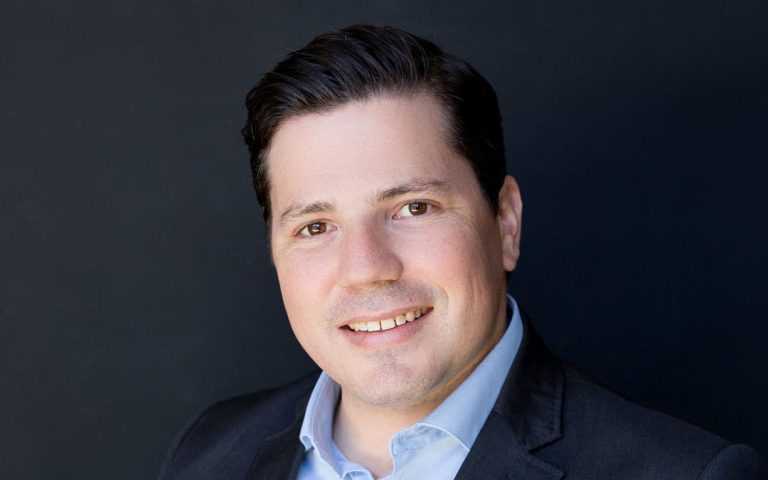
Michael Liffmann is General Manager at AC Hotels by Marriott, the first hotel of its kind to open its doors in Africa and the Middle East. Liffmann has held a number of senior positions in several establishments in South Africa, as well as the UK and USA. After being appointed as acting General Manager at the Westin Cape Town, Liffmann was handpicked to lead AC Hotels Cape Town Waterfront.

Describe your leadership style
I like to lead from the front working hand in hand with my teams, but at the same time also giving the team a sense of ownership for their areas as this is essential for their growth. It is important to me that I not only guide the hotel but also help to build future leaders within our industry.

Your top tip to beat procrastination?
What helps me to beat procrastination is that I always look for the fun and exciting side of the task. The key is to not simply just do it, but to have fun while you do it…

Your favourite getaway destination?
My now wife and I went on a world trip, whilst on this trip we spent some time in Laos, Vietnam. It was magical and I would love to go back there one day. Locally I would have to say that the wine lands are a favorite of mine.

Who or what inspires you?
Without a doubt my family. They not only inspire me to focus, but to also find balance in life which is essential.

Your one wish for South Africa?
After more than two decades of democracy, my main wish for South Africa is stability. With stability we can all have a prosperous future together.

If you could have any 3 people over for dinner, who would they be and what would you serve?
Ricky Gervais, Michael McIntyre and Jack Black. Boerie rolls and slap chips, with Malva pudding for dessert (Jack Black looks like he would like Malva pudding)

What is the one thing most people don’t know about you?
That I only took one week of after finishing high school before diving head first into 22 years of working in the hospitality industry.

What would you do with an extra hour in your day?
Sleep a little bit longer, and then have a lovely breakfast with my family.

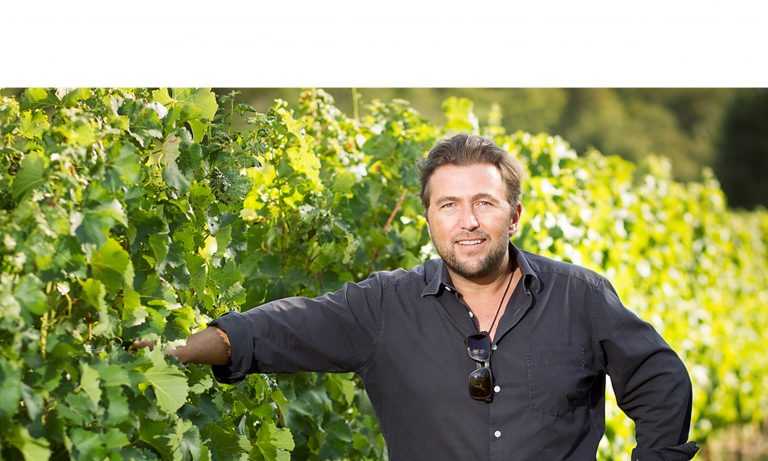
Michael Ratcliffe is a respected figure in local and global wine industries. He was nominated for the USA Wine Star Award for Global Innovator of the Year in 2015 and 2017. Michael is also the founding trustee of the fundraiser Cape Wine Auction, and founder of Rootstock – organisations heavily invested in education. He is a founding partner of the joint US/South African luxury wine venture Vilafonté established in 2002, and in 2018 was elected Chairman of Stellenbosch Wine Routes.

Describe your leadership style.
Leadership is best translated through inspiration and from action. I find my leadership most powerful when I am able to lead from the front.

Your top tip to beat procrastination?
Just do it. The best way to start something is to just start it. Making proactive mistakes is always better than stagnating and making no mistakes at all.

Favourite getaway destination?
Stellenbosch wine country

Who or what inspires you?
I am inspired by great leaders who have challenged convention, defied the status quo and who have risen up against insurmountable challenges.

What is the one thing most people don’t know about you?
I am a qualified Yacht Master through the Royal Yachting Association in the UK and have successfully navigated a number of Atlantic Crossings.

What would you do with an extra hour in your day?
I would spend it with my family.

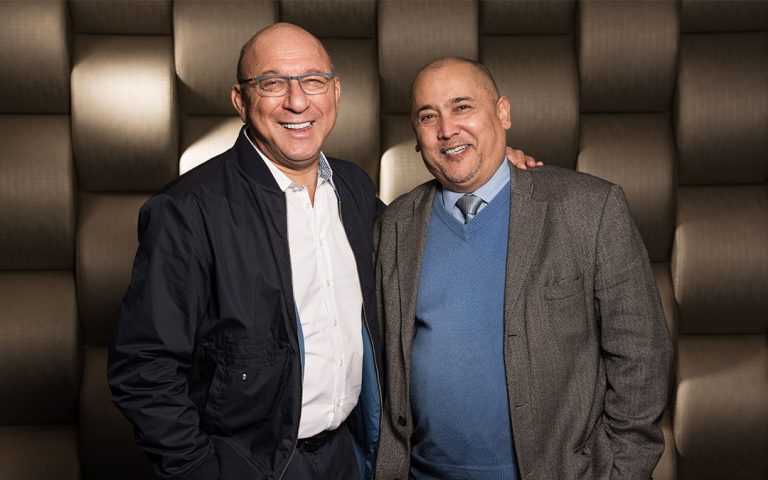
Trevor Manuel gives Ryland Fisher an earnest interview on the struggle years, the Zuma era and the future as he sees it.

Despite his reservations, he remains positive about South Africa.

“I can’t be negative about the country. I don’t have a foot in any other country. I don’t own property in any other country. I don’t carry the passport of any other country. My family is here. I’m very confident. There’s no question about the deep commitment that we have to South Africa. If you have this commitment, you have to look at where you can influence the situation and improve on the observations that we make and share with many other people.”

Get the latest copy of Top 500 Best Managed Companies to read the full interview. Contact daniel.bouwer@topco.co.za to get your copy.

As the baby boomer generation enters the end phase of their working lives, the newest generation of workers, millennials, are entering the working world in vast numbers. This new generation, born between 1980 and 2000, are very different to their ‘generation X’ and ‘baby boomer’ predecessors; they have different career expectations and are motivated by different things.

Considering the fact that by 2020 millennials will make up 50% of the global workforce, according to a PricewaterhouseCoopers (PwC) report Millennials at work: Reshaping the work space, it is critical that employers adapt their policies to attract and retain this influential generation of employees, poised to reshape the world of work.

Attracting the next generation of talent
A good place to start when it comes to understanding what appeals to millennials is to look at the companies considered pioneers in crafting an entirely new kind of company culture.

An international example of such a company is Facebook. Having worked at their San Francisco office for a year, Phillips paints a picture of this new approach to company culture.

“Facebook certainly challenges the previous generation’s approach to the office culture and have grown an incredible culture of their own,” he says. “For me, the big thing they do is to focus on making sure that their employees have everything they needed to do their jobs, including all the small things.”

Engineers have the freedom to explore interesting product ideas; managers aren’t there to micro-manage, they are there to move your ideas forward. The campus has incredible on-site facilities such as a gym, arcades, restaurants, and a sweet shop.

Employers need to shift focus in terms of the benefits offered to employees; to offer new opportunities for growth and development, ways for employees to work their way up the ladder faster if they are willing to earn it, and mentorship from more senior employees. Mix teams generationally.

Let employees learn from one other and see things from new perspectives. Give millennials the freedom they crave to get the job done unconstrained by rigid work styles. Give them positive and helpful feedback in real time – and then stand back and watch them grow.

Ultimately, employers need to understand millennials and plan ahead when it comes to new recruitment and management policies. With this understanding comes the acknowledgment that millennials may not stick around as long as previous generations. They are always looking
for ways in which to advance their careers, which means that employers should expect them to move on, and plan accordingly.

What do millennials wnat?
It’s not all about the money for millennials. So what else is important to them?

  • Fast progression: The opportunity to learn as much as they can in order to fast-track their careers.
  • Flexibility: The freedom to work where and how best suits them, as long as they get the work done.
  • A work/life balance: They will work hard when it counts, but millennials are aware that work is not the sum total of their existence.
  • Travel opportunities: Most millennials would like their job to include some overseas work experience.
  • Regular feedback and praise: Annual performance reviews are just too infrequent for millennials. They prefer to know how they’re doing much more regularly, and how they can improve.
  • Common values: Millennials look for employers with corporate social responsibility values that match their own.

  • Democracy: They like to feel like their opinions are heard.
  • As elements of the Fourth Industrial Revolution (4IR) continue to permeate more areas of our lives through global hyperconnectivity, digitisation is shaping the way business is conducted while bringing new developments in industry and changes in how services and products are offered.

    Let’s take a look at some of the trends for 2019.

    Reskilling for the digital age with closer alignment between educational qualifications and institutions with workplace
    In the digital age, the rate of change within the workplace has far outpaced the ability of universities to adapt formal curricula to meet these requirements. As a result, the “non-accredited” online short course arena will be used to fulfill the need for digital skills within the workplace, particularly in areas like cybersecurity and Artificial Intelligence (AI).

    Another key area is that of the Internet of Things (IoT) where billions of devices can communicate via sharing and collecting data via internet connectivity – from computers, cellphones, security systems, to home appliances which can be programmed remotely to sensors which alert a driver to adjust tyre pressure or any physical object (natural or man-made) connected to the internet and with an IP address. CVs populated with micro-credentials of these skills and workplace experience will increase in importance.

    Formal educational arena
    In the formal educational arena, educational institutions will need to align themselves more closely to commerce and industry. Formal educational providers will move to implementing graduate programmes geared towards workplace practicalities. Companies will look to hire graduates who are able to display a combination of formal skills and the ability to apply these skills in the digital world.

    Disruption of employment via IoT
    Driverless cars, automation being applied to various industries like call centre operators, stockbroking, automated farming operations etc. will result in a complete disruption of the formal employment sectors as we currently understand them. This will lead to a migration of people looking for new skills and new careers. Researchers estimate that within the next 5 years more than half the existing jobs will need reskilling by adopting new technologies and retraining of individuals into new careers.

    Consumer data facilitates personalised commercial experiences
    Greater emphasis on personalising commercial initiatives based on big data analysis of consumer data integrated from multiple sources. Consumer choice has expanded significantly due to online suppliers who are able to supply products irrespective of geographical limitations, coupled with ability of the consumer to research products and features in an online mode. As a result, personalisation of products and services will become a greater differentiator in the supply chain.

    Disruption of traditional banking
    Digital banking options will continue to disrupt the traditional banking arena with multiple players offering personalised banking solutions, from cell phone companies through to social media giants offering mobile banking applications and multiple payment gateways.

    Cybersecurity
    Increased importance of cybersecurity to prevent fraud and abuse of data as the world gets more connected and ability to hack systems for financial gain becomes more prevalent. Cybersecurity will become a key consideration when developing new systems so that it’s an intrinsic part of a company rather than an after-thought in response to a particular cyber threat.

    We are living in exciting times where digitisation is opening up new opportunities for growth and development with an emphasis on a big data-derived customised experience which drives service.

    One thing’s for sure and that is whatever happens, digitisation is going to be at the core. The year promises to bring new innovations as more people take advantage of digitisation and the 4IR.

    Hold onto your seats. It’s going to be an exciting ride.

    South Africa’s nascent gin culture has seen exponential growth over the last couple of years, evident from the variety of gin bars and brands (both local and international) to be found, in Cape Town specifically. We unpack some of the trends in the industry.

    Commenting on the global evolution of gin over the last couple of years, Travis Tober, global brand ambassador for Aviation American Gin, says, “The global gin market is on fire! The Asian market, especially, has embraced gin very quickly. With gin-focused bars in the region, there’s absolutely no slowing down.”

    With so many an offering in the market, it’s important that brands distinguish themselves from competitors out there. “It’s imperative to stand out from the crowd,” says Travis. “With our gin, for example, we pioneered the ‘American’ or ‘western’ style: lighter juniper with the other botanicals working together. Our gin was also the first to be made with cocktails.”

    Travis says one of the most interesting pairings is a glass of gin on the rocks with a lemon peel and buttered movie popcorn. “I know it sounds crazy, but it’s absolutely fabulous and really makes the movie-going experience way better.”

    Travis’s top two gin trends

  • Old Tom will make a comeback. It first started coming back, but it was too early in the gin renaissance that people’s pallets weren’t ready for the complex taste.
  • Gin and club soda will be the go-to drink. My recipe: 443ml gin, 740ml Fever Tree club soda, a lime wedge and a green olive.
  • He’s been called many things: charismatic, blunt, controversial, notorious, genius, ‘South Africa’s Donald Trump,’ and more commonly, the ‘Sun King’. But despite what you might think of South Africa’s most famous billionaire and legendary hotelier, Sol Kerzner remains undoubtedly, a true business visionary. We sat down with the Sun King for a quick-fire Q&A session.

    Describe your leadership style?

    A leader is someone who would do whatever is necessary to ensure they’re surrounded by the best possible team. A team that can effectively communicate with personnel will get the best out of any business. People form a business. I always made a point of recognising the good work of staff. Surround yourself with the right people and understand your product.

    How important is tourism for the economy?

    It’s very important. Take Sun City for example. We worked closely with government at the time, as it was in both our interests. It built a town and created thousands of jobs for people from surrounding communities. The Atlantis resort in the Bahamas was the country’s biggest employer after the government.

    Your biggest wish for South Africa?

    My biggest wish is for political stability. Things are very uncertain at the moment. This is a country with great resources and natural beauty. Good leadership is key if you want to inspire confidence and see the country flourish.

    Advice for aspiring hoteliers?

    Be prepared to start at the bottom and work your way through to the top. It’s a valuable learning curve. In a business that operates 24/7, you need to be unquestionably dedicated and excited about what you do. Get the best possible experience and learn from it. It also helps to be creative if you want to stay ahead of the competition. BE A LEADER, NOT A FOLLOWER.

    By Pieter Scholtz, ActionCOACH SA Director

    2019 brings about many exciting opportunities, notwithstanding the many changes that business is not only driving, but having to face. Outlined below are some the of the trends that will shape the business world in the year ahead.

    Customer service
    Consumers are sitting in the privileged position in that not only do they have an increasing choice of products to choose from, but they also have access to unprecedented amounts of information related to the products concerned.

    Customer service will become increasingly important in an era where cost effective delivery, pricing, choice and availability of products across a number of channels will drive uniqueness.

    Customer user experience will also become increasingly important.

    Personalisation of marketing
    Developing marketing messages that build genuine relationships with customers will become key, as customers become increasingly sophisticated and discerning. With the growing use of AI and algorithms across business platforms, customers make purchase decisions based on the quality of the relationships built – this is not something that technology can replace.

    Decisions based increasingly on customer reviews
    With the rising implementation of online customer reviews, more future clients are basing their purchase decisions on the online product reviews for a wider range of products. Companies and brands will have to ensure that they obtain customer reviews, as well as make them available for future customers to review online before making a purchasing decision.

    Digital banking platforms
    A massive trend towards digital banking platforms will continue to disrupt the traditional banking model. Customers want more access and control over how they bank, plus where and which platform they bank from.

    Here we will see an increasing use of algorithms that will enable new banking platforms to tailor make products based on customer data that has been collected.

    The future of the office is in danger
    There is a greater demand to spend less time commuting and given the access to high speed internet, employees will want to be able to work increasingly from remote places.

    This will also break the traditional model of work as we know it, where employees want to be able to control when they work, resulting in a focus towards measuring outcome and delivery, rather than time spent at work.

    Data privacy
    Over the last year we have seen a number of breaches in data privacy by large corporates, resulting in consumers becoming increasing aware of how their personal data is being used. This will place mounting pressure on companies that collect data to ensure that consumer data is being strongly protected.

    Mental health in the workplace
    The advancement in technology and access to workplace systems have resulted in the proliferation of people never switching off. This has resulted in a significant surge in mental health issues in the workplace. This year will see an intensified focus on managing metal health in the workplace, providing a happy working environment.

    Mental health has been reported as one of the fastest, if not the fastest, health trends globally. In order to retain top performers and manage employee costs, companies will have to give added attention to this trend in 2019 and beyond.